Early Childhood Education plays a vital role in a child’s development, yet many myths and misconceptions still surround it. From doubts about play-based learning to misunderstandings about structured programs, these myths can make it difficult for families to feel confident about choosing the right childcare or early learning environment. In this weeks blog, we are exploring some of the most common childcare and early childhood education misconceptions and the unpacking the truth behind them.
Myth 1: “Play isn’t real learning”
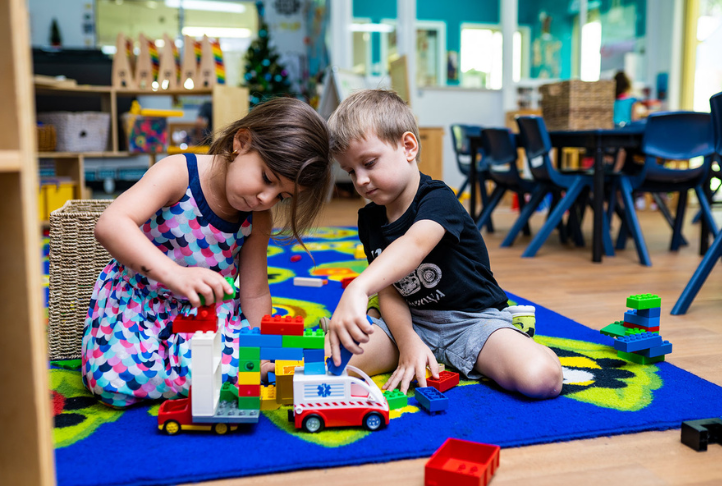
Many people think that when children play, they’re just having fun. In reality, play is a powerful learning tool. Through play, children develop critical social, emotional, and cognitive skills. Activities such as building with blocks, exploring sensory materials, or engaging in imaginative play help children learn problem-solving, communication, and cooperation, all while having fun.
Myth 2: “Children are too young to benefit from structured programs”
Some parents worry that structured learning isn’t appropriate for young children. Modern early childhood programs, however, balance gentle structure with flexibility. Teaching and learning strategies such as the Abecedarian Approach Australia (3a) introduce learning through meaningful interactions and responsive routines, giving children the building blocks for literacy, numeracy, and social-emotional skills, all in ways that feel natural and engaging for their age.

Myth 3: “‘Child-led learning’ means children do whatever they want”
Child-led learning is often misunderstood. It doesn’t mean children have no guidance. Instead, it’s about following the child’s interests while providing supportive frameworks and rich learning opportunities. Educators observe, scaffold, and introduce new ideas, helping children explore and develop skills at their own pace while maintaining clear learning goals.

Myth 4: “Early Childhood Education is just babysitting”
High-quality childcare is so much more than supervision. It’s about creating an environment where children feel safe, nurtured, and stimulated. Through intentional teaching strategies, rich play experiences, and strong relationships, Early Childhood Educators actively foster a child’s curiosity, independence, and lifelong love of learning.
Myth 5: “Children don’t need social skills yet”
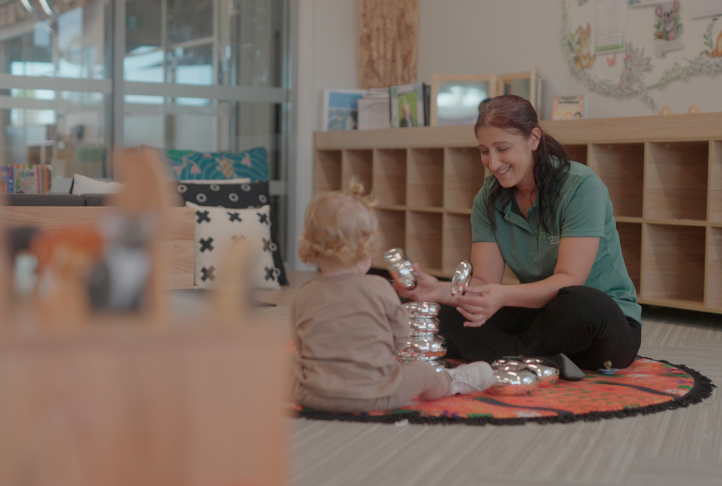
Social development starts early. Interacting with peers and adults in a supportive environment helps children learn empathy, turn-taking, conflict resolution, and self-regulation. Early Education settings provide guided social experiences that children can’t easily get on their own at home.
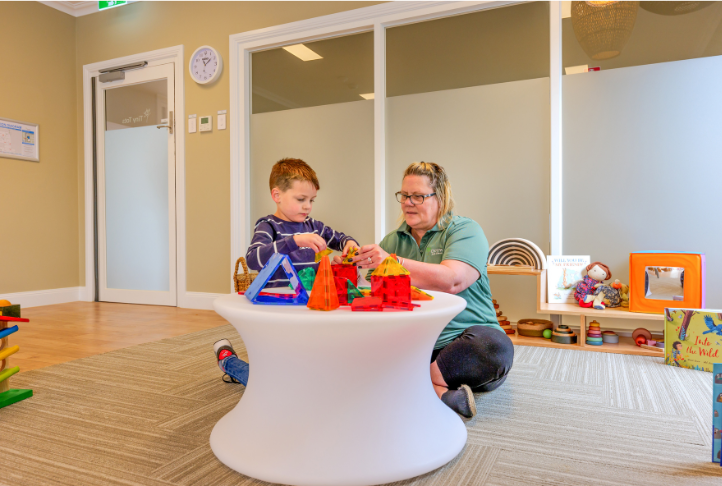
Modern Early Childhood Education is research-backed, intentional, and designed to support every child’s growth. Approaches such as the Abecedarian Approach and play-based learning ensure children are developing academically, socially, and emotionally, all in ways that feel natural, enjoyable, and meaningful.
Across our Grow Early Education centres, we see these principles in action every day. Children serve their own snacks and lunches, help tidy up educational resources, and even prepare their beds for rest time, fostering independence, confidence, and responsibility all while learning through play.
If you’ve ever wondered about the value of Early Education, we invite you to explore our classrooms and see firsthand how children learn, grow, and thrive in a nurturing environment.
Discover how Early Childhood Education could be a great fit for your family by booking a tour of your nearest Grow Early Education centre:
- Grow Early Education Darling Heights
- Grow Early Education Bridgeman Downs
- Grow Early Education Park Ridge
- Grow Early Education Toowoomba
- Grow Early Education Hervey Bay
- Grow Early Education Dalby
- Grow Early Education Riverton
- Grow Early Education Gunnedah
- Grow Early Education Kelso
- Grow Early Education Nowra Central
- Grow Early Education Narre Warren North
- Grow Early Education Heathmont
- Grow Early Education Frankston
- Grow Early Education Tarneit
It is never too early to introduce and encourage independence. When children are given small responsibilities, they not only learn essential life skills but also build confidence, a sense of accomplishment, and a feeling of being capable. Age-appropriate chores are a fantastic way to introduce responsibility and independence in a fun and supportive way.
Chores aren’t just about keeping your home tidy, they’re opportunities for learning. By participating in everyday tasks, children:
- Develop fine and gross motor skills
- Learn to follow instructions
- Build confidence and pride in their abilities
- Practice problem-solving and teamwork
- Gain a sense of responsibility
Even simple tasks can make a big difference. When children are trusted with responsibilities, they feel valued and empowered.
Here are some ways you can match chores to your child’s developmental stage:
Toddlers (2–3 years)
- Put toys back in their place
- Help water plants
- Wipe up small spills
- Place napkins on the table

Preschoolers (4–5 years)
- Set the table for meals
- Help pack away groceries
- Feed pets
- Help with dishes and laundry

Early school age (6–7 years)
- Make their bed
- Help prepare simple meals or snacks
- Take out recycling
- Sweep small areas or dust

- Keep it simple; choose tasks your child can realistically do while making it fun by turning chores into games or challenges. Children thrive within routine, by making sure you remain consistent in the chores helps children to understand the expectations and feel secure.
- Handling Resistance; It’s normal for children to resist chores at first. Offer choices (“Do you want to put the toys away before or after you snack?”) and keep a calm, encouraging tone. Avoid turning chores into power struggles, consistency and gentle guidance work better than pressure.
- Making Chores Enjoyable; Make it a family routine, children often engage more when they see adults participating alongside them. Use songs, timers, or small challenges to turn chores into fun activities.
- Celebrating Progress; Encourage intrinsic motivation by focussing on how proud they feel rather than just rewards. Consider a “chore chart” for older children to visualise their achievements.
- Teaching Problem-Solving; If a child struggles with a task, guide them to figure it out rather than doing it for them. Ask questions such as, “what’s the first thing we need to do to clean up this space?”
- Balancing Expectations; Remember: independence grows gradually, some tasks will be messy or incomplete at first, but that’s part of the learning.
Even small accomplishments deserve recognition! A high-five, sticker, or verbal praise reinforces positive behaviour and encourages children to keep trying. Over time, these small responsibilities grow into lifelong skills and a strong sense of independence.
At our Grow Early Education centres, we see this in action every day when children serve their own lunch and snacks, tidy up after meal times, help prepare their beds for naps, and pack away the educational resources they use throughout the day. These daily routines not only support independence but also foster confidence, responsibility, and pride in their abilities.
Follow us on Facebook to stay up to date with each of our Grow Early Education centres:
- Grow Early Education Darling Heights
- Grow Early Education Bridgeman Downs
- Grow Early Education Park Ridge
- Grow Early Education Toowoomba
- Grow Early Education Hervey Bay
- Grow Early Education Dalby
- Grow Early Education Riverton
- Grow Early Education Gunnedah
- Grow Early Education Kelso
- Grow Early Education Nowra Central
- Grow Early Education Narre Warren North
- Grow Early Education Heathmont
- Grow Early Education Frankston
This week across our Grow Early Education centres, children have been reaching for the stars as we celebrate Space Week 2025. Our Educators have been sparking curiosity about the wonders of the universe through play, creativity, and exploration.
From glowing stars and swirling planets to astronauts floating in zero gravity, space is a topic that instantly excites children, there’s something truly magical about exploring what lies beyond our planet and for young children, learning about space isn’t just about facts and science, it’s about nurturing wonder, discovery, and a love for learning.
While Space Week is a wonderful opportunity to focus on the cosmos, our Educators and Curriculum Teams work together to find ways to nurture curiosity about science and discovery all year round.
Introducing early concepts of space in early education helps children:
Develop curiosity and questioning skills, “What’s out there?” “Why do stars twinkle?”
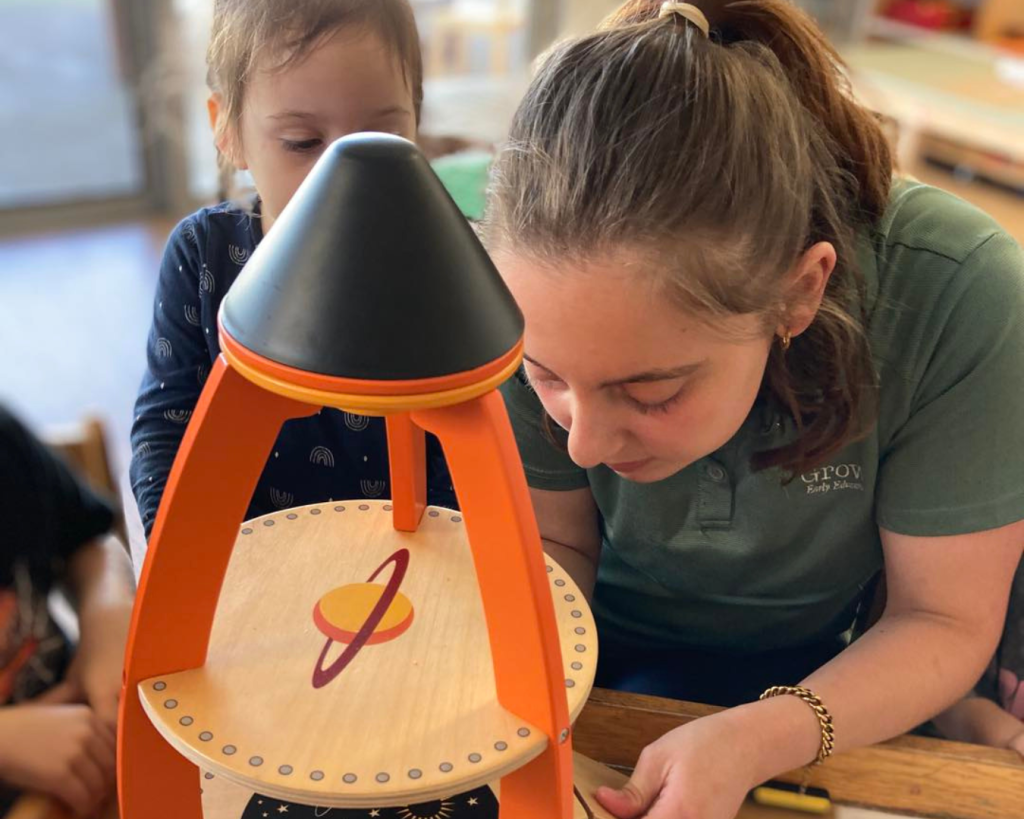
Explore STEM (Science, Tech, Engineering, and Math) concepts in playful ways such as counting planets, building rockets, or comparing sizes and shapes.
Engage their creative thinking through imaginative play by pretending to be astronauts, aliens, or scientists.
Strengthen language and literacy learning new words such as “orbit,” “gravity,” or “galaxy.”
When space is introduced through hands-on, age-appropriate experiences, it becomes a gateway for big thinking and helps children connect what they know about their world to what exists beyond it.
Across our Grow Early Education centres, Educators bring the theme of space to life through creative, sensory, and play-based learning experiences.
Here are just a few of the ways children explore the cosmos at Grow Early Education:

One of the children’s favourite experiences is creating paper mâché planets. Using balloons, newspaper, and paint, children can design their own colourful versions of the solar system. This activity offers so much more than just art, it becomes a rich opportunity for learning and skill development.
As children shape and paint their planets, they also develop fine motor skills through tearing, gluing, and brushing, express their creativity by choosing colours and textures, and strengthen their scientific thinking as Educators guide conversations around the planets’ sizes, orbits, and characteristics.

Another engaging experience is exploring space-themed sensory trays, filled with foil, natural materials such as wood, cotton, and rocks, and cut-outs of moons, rockets, and friendly aliens. This inviting setup encourages children to explore different textures, materials, and imaginative ideas as they play.
As children scoop, sort, and create stories within the tray, they develop their sensory awareness, fine motor coordination, and language skills, while also building an understanding of how materials and environments can represent the world — and universe — around them.

Painting planets is another classic Space themed activity where children add colour and texture to paper cut-outs representing the planets of our solar system. Using brushes, cotton buds, or fingers, children experiment with mixing and applying paint, creating unique patterns and designs.
This creative experience supports the development of fine motor skills as children hold and control tools, express their creativity through colour and pattern choices, and build early scientific understanding as educators talk about the planets, their colours, and positions in the solar system. It’s a hands-on way to make the universe feel close, exciting, and full of possibilities.
Each of these experiences encourages children to think like little explorers, asking questions, making predictions, and sharing their discoveries with peers.
Exploring space connects seamlessly to many areas of the Early Years Learning Framework (EYLF), including:
Outcome 4: Children are confident and involved learners — as they experiment, investigate, and problem-solve through play.
Outcome 5: Children are effective communicators — as they express ideas, share knowledge, and engage in rich conversations about what they discover.
Outcome 2: Children are connected with and contribute to their world — as they begin to understand their place in the wider universe.
Through these experiences, children not only learn about space, they learn about possibility. They dream, imagine, and explore the idea that there’s so much more to discover.
By turning space into a hands-on, sensory-rich experience, our Educators are building a foundation for lifelong curiosity and learning.
Follow us on Facebook to stay up to date with each of our Grow Early Education centres and explore how they celebrate Space:
- Grow Early Education Darling Heights
- Grow Early Education Bridgeman Downs
- Grow Early Education Park Ridge
- Grow Early Education Toowoomba
- Grow Early Education Hervey Bay
- Grow Early Education Dalby
- Grow Early Education Riverton
- Grow Early Education Gunnedah
- Grow Early Education Kelso
- Grow Early Education Nowra Central
- Grow Early Education Narre Warren North
- Grow Early Education Heathmont
- Grow Early Education Frankston
In today’s digital world, screens are everywhere, from smartphones and tablets to TVs and even smart toys. While technology can be a helpful tool, especially for learning and entertainment, it’s important for young children to have boundaries around screen time. For children aged 0–5, establishing these boundaries early helps them develop healthy habits, encourages social interaction, and supports cognitive and physical development.
Research shows that excessive screen time for Toddlers and young children can impact attention spans, sleep quality, and social development. Young children learn best through hands-on exploration, imaginative play, and face-to-face interactions. Setting boundaries ensures that technology complements, rather than replaces, these essential experiences.

Practical Tips for Setting Tech Boundaries at Home
-
Start with Clear Rules: Decide on daily limits that suit your family’s routine. The Australian guidelines suggest minimal screen time for under 2s and no more than 1 hour per day for 2–5-year-olds. Communicate rules clearly to everyone in the household. For example: “Screens are only for 30 minutes after lunch.”
-
Be a Role Model: Children imitate adult behaviours. Reduce your own screen use during family time and demonstrate mindful tech habits.
-
Schedule Screen-Free Zones and Times: Make bedrooms, mealtimes, and outdoor playtimes screen-free zones. Consistent screen-free times encourage creativity, conversation, and family bonding.
-
Choose Quality over Quantity: When screens are used, choose age-appropriate, educational content. Co-viewing and interacting with your child during screen time can make it more meaningful.
-
Offer Engaging Alternatives: Encourage active play, arts and crafts, reading, and sensory activities. For example, create sensory trays, building blocks, or simple backyard games that captivate your child’s attention.
-
Teach Digital Literacy Early: Even for young children, you can start introducing simple lessons about safe and balanced technology use, like asking permission before using devices and understanding that screens are just one form of entertainment.
-
Gradually Adjust Boundaries: As children grow, their needs and understanding of technology change. Review and adjust limits to suit their developmental stage.

Creating tech boundaries isn’t about completely banning screens, it’s about balance. When children understand limits, they develop self-regulation, learn to enjoy offline activities, and build stronger connections with family and peers.
At home, consistency, patience, and open communication are key. Start small, celebrate successes, and remember that your guidance shapes lifelong habits.
Follow us on Facebook to stay up to date with each of our Grow Early Education centres:
- Grow Early Education Darling Heights
- Grow Early Education Bridgeman Downs
- Grow Early Education Park Ridge
- Grow Early Education Toowoomba
- Grow Early Education Hervey Bay
- Grow Early Education Dalby
- Grow Early Education Riverton
- Grow Early Education Gunnedah
- Grow Early Education Kelso
- Grow Early Education Nowra Central
- Grow Early Education Narre Warren North
- Grow Early Education Heathmont
- Grow Early Education Frankston
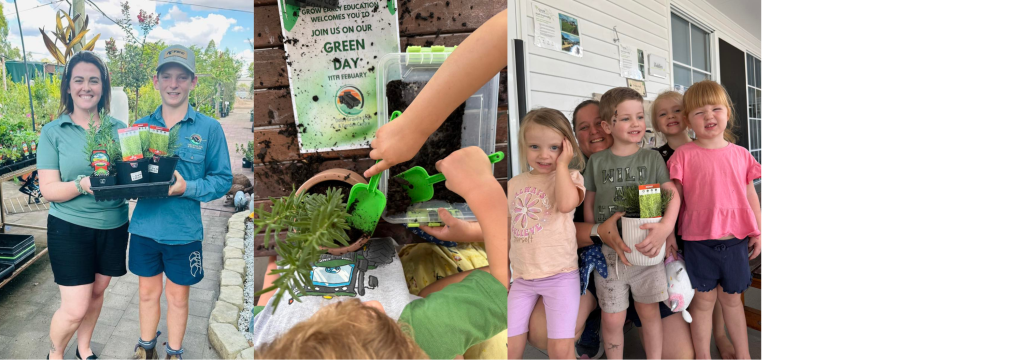
At Grow Early Education, we believe that learning goes far beyond the classroom, and one of the most powerful lessons begins right in the garden. As part of our all-inclusive childcare programs, gardening is a key component of our curriculum for children across all of our classrooms. Through our hands-on gardening lessons, children are learning valuable life lessons on curiosity, wellbeing, and healthy habits.
Gardening provides a wealth of benefits during the early learning years, from Toddlers exploring the textures in the soil to Kindergarten and Preschoolers nurturing growth from seeds through to harvest. This type of sensory-rich, outdoor activity supports holistic development across physical, cognitive, social, and emotional skillsets.
Here’s how gardening at our childcare centres helps young children thrive:
Physical Development
Digging, planting, watering, and harvesting help build fine and gross motor skills. Children develop strength, coordination, and dexterity while staying active and engaged outdoors.
Cognitive Growth
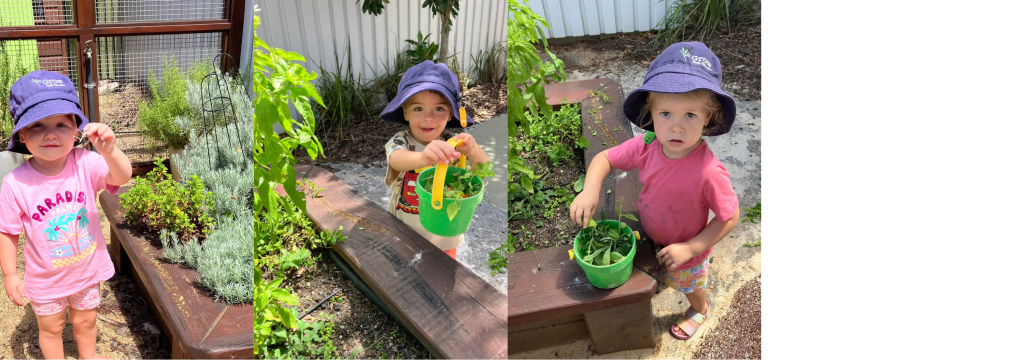
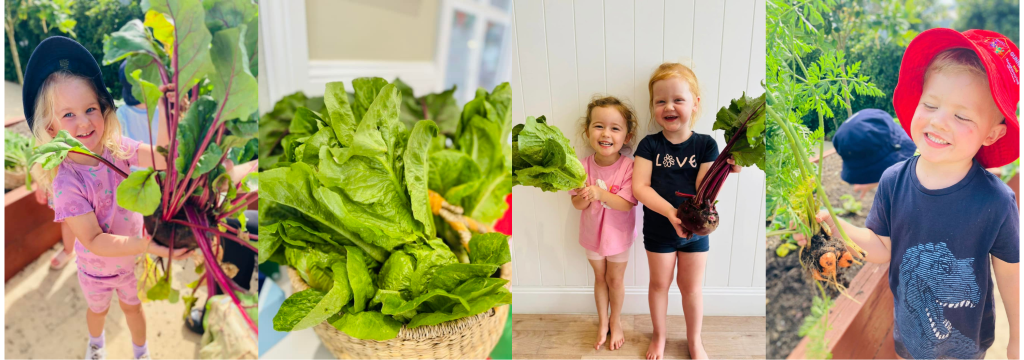
Gardening teaches science in real-time. Children explore plant life cycles, weather patterns, and ecosystems, helping them understand the world around them. They also learn responsibility and patience as they care for their growing plants.
Emotional Wellbeing
Spending time in nature has been proven to reduce stress and increase calmness in children. Gardening builds self-esteem and pride, as children see the results of their efforts bloom and grow.
Social Skills
Whether they’re working in teams to tend to a veggie patch or taking turns with watering cans, gardening encourages cooperation, communication, and empathy.
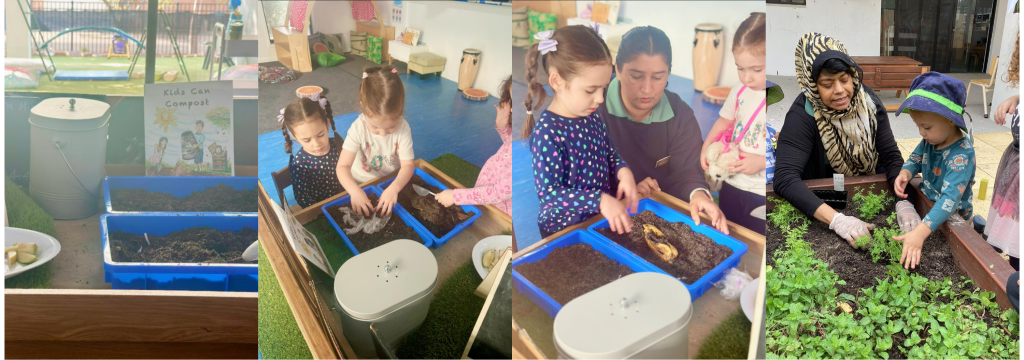
At Grow Early Education, we’re proud to offer gardening experiences at all of our daycare centres as part of our all-inclusive fee structure. That means families can enjoy the benefits of this enriching activity at no extra cost. Our outdoor learning environments are purposefully designed to include edible gardens, flower beds, and even worm farms, giving children a deeper connection to nature and sustainable living.
Our passionate Educators integrate gardening into our daily routines and learning programs, aligning with both the Early Years Learning Framework and the Abecedarian Approach Australia to nurture a love of the environment from an early age.
Whether it’s tasting and smelling the herbs they’ve grown or spotting the first sprout from a seed they planted, children at Grow Early Education are constantly discovering, experimenting, and learning. And as any gardener knows, those early roots make all the difference.
Stay up to date with our Grow Early Education centres on Facebook to see how they use gardening in their everyday curriculums.
- Grow Early Education Bushland Beach
- Grow Early Education Bundaberg North
- Grow Early Education Darling Heights
- Grow Early Education Bridgeman Downs
- Grow Early Education Park Ridge
- Grow Early Education Toowoomba
- Grow Early Education Hervey Bay
- Grow Early Education Maroochydore
- Grow Early Education Dalby
- Grow Early Education Riverton
- Grow Early Education Gunnedah
- Grow Early Education Kelso
- Grow Early Education Nowra Central
- Grow Early Education Narre Warren North
- Grow Early Education Heathmont
- Grow Early Education Frankston
The journey began with Simon Kerle, the visionary behind Yoga Bears Kids Yoga, pondering the benefits he reaped from his yoga practice. The question echoed in his mind: "Why not extend these advantages to children?"
Fast forward to 2023 and Grow Early Education to date has eight (8) of its long day care centres across Queensland, New South Wales and Victoria with children’s yoga provided as an extra-curricular activity - offered through Yoga Bears of course!
Simon speaks about the collaboration between Yoga Bears and Grow Early Education, “We believe that you’re never too young to benefit from and fall in love with yoga. This is why we formed a strong partnership with Grow Early Education and their long day care centres across Australia. We place our accredited children’s yoga teachers into their childcare centres to host yoga classes for 1 to 5-year-old children,” said Simon.
Children's yoga is gaining popularity as a holistic approach to fostering physical fitness and nurturing emotional and mental well-being in children. Simon thinks that providing children’s yoga as an extra-curricular activity in our centres is a great reason for parents to choose a Grow Early Education centre for their child to attend.

“If parents see the benefit of yoga for children and realise that they (Grow Early Education) are offering something unique in their childcare centres and that it will really help their kids, I think it would be an easy choice for them,” he said.
Children's yoga is more than a physical activity—it's a holistic approach to nurturing the mind, body, and soul of a child.
The Yoga Bear classes for children are of course, very different to an adult yoga class. They incorporate games, storytelling, singing, and other engaging activities tailored to captivate young minds with shorter attention spans.
Simon describes their Yoga Bear classes as “A mix of song, dance, yoga postures, stories and games, all designed to keep children engaged and aware. Relaxation time with breathing & meditation techniques brings about mindful behaviour at the end.”
Despite the difference between an adult’s and a child’s yoga session, the benefits are evident—higher engagement, a regulated nervous system, improved concentration to name a few…

The Benefits of Children's Yoga
Physical Health: Children's yoga poses are designed to enhance flexibility, balance, and strength. Through these gentle exercises, children develop better coordination and body awareness, laying a foundation for a healthy lifestyle.
Emotional Regulation: Yoga encourages children to connect with their emotions and understand them better. Through breathing exercises and mindfulness, they learn how to manage stress, anxiety, and anger, promoting emotional resilience.
Improved Concentration: Yoga teaches children to focus on their breath and body, enhancing concentration and mindfulness. These skills can translate into improved behaviour.
Boosted Confidence: Mastering yoga poses boosts children's confidence and self-esteem. As they achieve physical milestones, they develop a sense of pride in their abilities, fostering a positive self-image.
Social Skills: Children's yoga classes often involve group activities, encouraging social interaction and cooperation. This collaborative environment helps children learn important social skills like communication, empathy, and teamwork.

Certified yoga instructors visit Grow Early Education centres weekly to deliver the yoga program as an extra-curricular activity. Best of all, this is included as part of our daily fee so there is no extra cost.
We are proud to provide children’s yoga as an extra-curricular activity at the following childcare centres:
- Grow Early Education Frankston, VIC
- Grow Early Education Narre Warren North, VIC
- Grow Early Education Kelso, NSW
- Grow Early Education Riverton, QLD
- Grow Early Education Maroochydore, QLD
- Grow Early Education Toowoomba, QLD
- Grow Early Education Darling Heights, QLD
- Grow Early Education Bridgeman Downs, QLD
By integrating yoga into the weekly routine, Grow Early Education equips children with invaluable tools to navigate life's challenges with grace and resilience, guiding them toward a healthier, happier, and more balanced future. Namaste!
If you are interested in finding out more about our children’s yoga program and other extra-curriculars we offer as part of our service, please phone us on 1300 934 769.
