At Grow Early Education, each day is a journey of discovery, growth, and fun. Our centres are thoughtfully designed to provide a nurturing environment where children feel safe, valued, and inspired to learn.
In today's blog, we are unpacking the routines at Grow Early Education, including child-initiated play, curriculum-led activities, and mealtimes.
Mealtime
At Grow Early Education, we offer fresh, healthy meals and snacks as part of our all-inclusive fee structure. Mealtimes are a valuable part of our educational program, and all meals are prepared fresh daily by our in-house chefs, with seasonal menus designed to provide over 50% of each child’s recommended daily intake of essential nutrients.
As children grow, they are encouraged to practice self-help skills, including serving themselves and cleaning up afterwards, building confidence, fine motor skills, and independence in a supportive environment.
For our youngest children in the nursery, we follow their home feeding routines as closely as possible. This helps create consistency between home and care, supporting both the child’s wellbeing and family routines.
Mealtimes at Grow Early Education are calm, social experiences where children learn about food, practice manners, and connect with others—all while enjoying healthy, delicious meals made with love.
Child-Initiated Play & Exploration
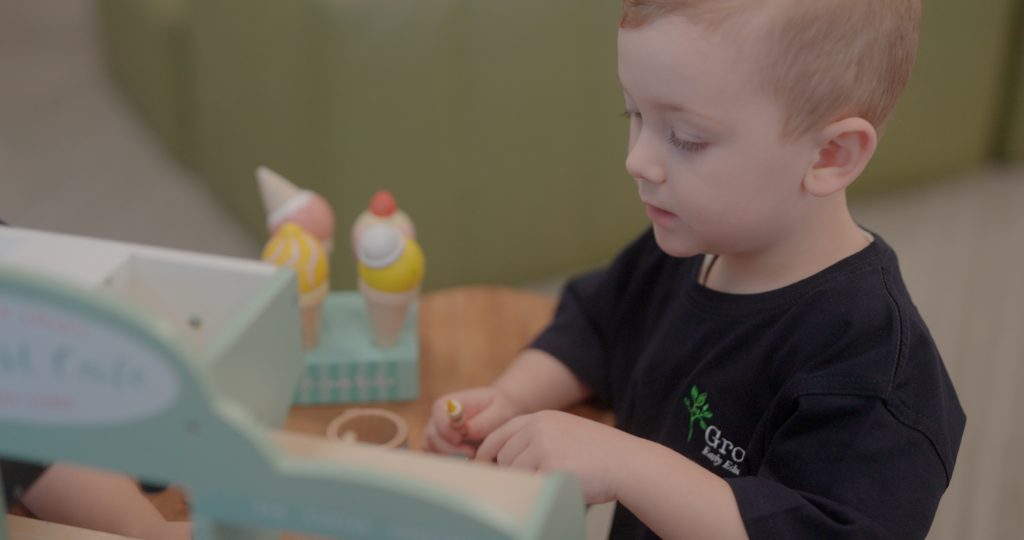
Children choose from a variety of inviting learning experiences, both indoors and outdoors. This time supports independence, creativity, and social interaction. Our environments are thoughtfully curated with open-ended materials that encourage exploration.
Group Time and Curriculum-Led Learning
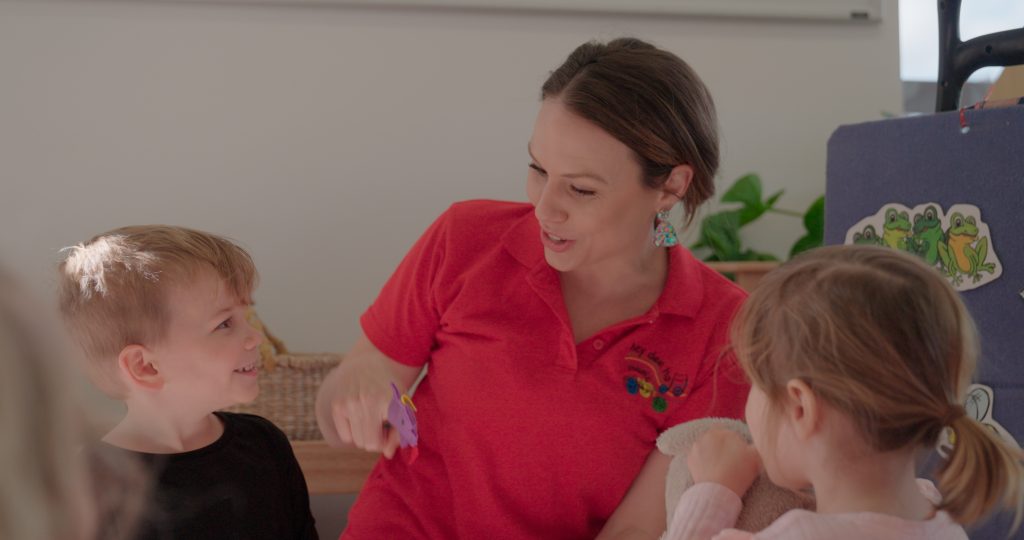
Educators introduce intentional, curriculum-led experiences based on children’s interests and developmental needs. This might include:
- Language and literacy activities
- Numeracy games
- Science and nature exploration
- Group discussions or stories
Children collaborate with their peers and continue working on their learning experiences based on the Early Years Learning Framework and curriculum. Educators use a play-based approach and exploration through art and creativity, STEM provocations, and social-emotional group discussions.
Extra-curricular Programs
We offer extra-curricular activities included in our daily fee. This could include specialist sessions such as music and movement, children’s yoga, physical activity and sports, language lessons, cooking classes, or gardening lessons. Each of these lessons sparks the children’s curiosities in a new and exciting way and allows them to further explore new experiences and work to complement our curriculum and support the development of young learners, whether it be intellectually, emotionally, physically, or socially.
Outdoor Discovery & Free Play
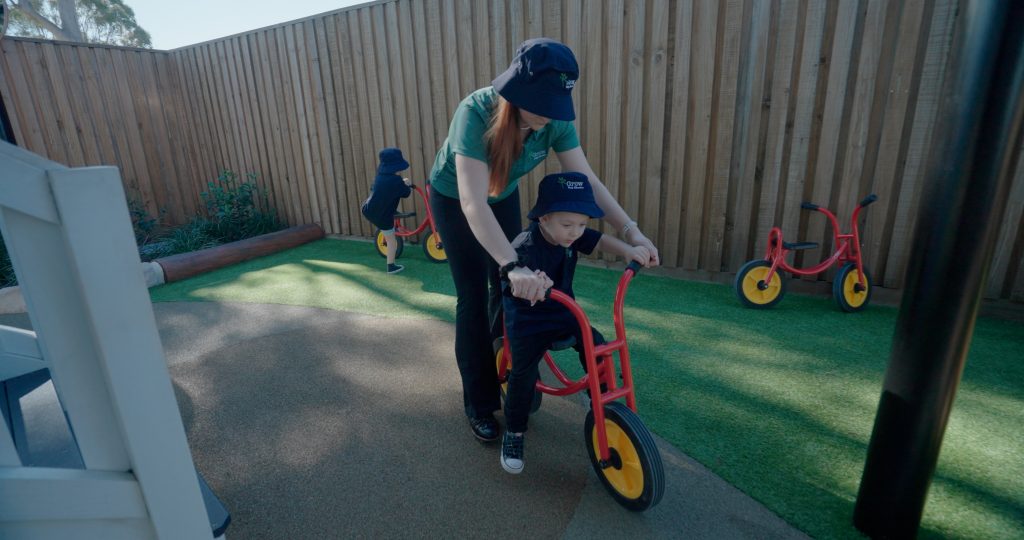
Outdoor play is a vital part of our day at Grow Early Education. Our large, spacious yards are the ideal environment for children to collaborate and explore open-ended play. Whether they are building in the sandpits, exploring the vegetable patch, playing games with peers or practising risk-play, children are constantly learning through movement and discovery.
We also embrace nature-based learning as part of our core philosophy where children engage in their natural surroundings through activities such as gardening, water play, or scavenger hunts. Some of our centres also include Bush Kindy as an extra-curricular whereby the children explore nature outside of the centre. These moments foster a deep sense of wonder and appreciation for their surroundings.
Sleep and Rest
At our centres, we recognise the importance of rest in a child’s development. While our Younger children transition into a restful nap in calm, cozy sleep spaces, the older children who don’t sleep are offered quiet activities such as puzzles, books, or mindfulness moments to relax. These experiences help children to reset, process their learning, and develop emotional regulation.
By respecting each child’s individual needs, we are ensuring that each and every child is feeling refreshed, supported, and ready for the afternoon ahead.
For our youngest children in the nursery, we follow their home sleeping routines as closely as possible. This helps create consistency between home and care, supporting both the child’s wellbeing and family routines.
Once the day begins to slow down with indoor play, quiet reading, and reflective conversations. Educators support conversations on the children’s days by encouraging reflection on what they learned or accomplished, helping to build a sense of pride and self-awareness.
At Grow Early Education, every moment is filled with purpose, whether it’s guided by our educational program or led by the child’s natural curiosity. Each moment at our centre is a chance to learn, connect, and develop.
Each of our Grow Early Education centres routines vary across age groups, locations, and days. Give our Enrolments Team a call today on 1300 934 769 to book a tour of your local Grow Early Education centre to learn more about their individual daily routines.
Find a Grow Early Education centre near you!
- Grow Early Education Bushland Beach
- Grow Early Education Bundaberg North
- Grow Early Education Darling Heights
- Grow Early Education Bridgeman Downs
- Grow Early Education Park Ridge
- Grow Early Education Toowoomba
- Grow Early Education Hervey Bay
- Grow Early Education Maroochydore
- Grow Early Education Dalby
- Grow Early Education Riverton
- Grow Early Education Gunnedah
- Grow Early Education Kelso
- Grow Early Education Nowra Central
- Grow Early Education Narre Warren North
- Grow Early Education Heathmont
- Grow Early Education Frankston
In recent years, the educational landscape has witnessed a significant shift towards play-based learning curricula, particularly in early childhood education. This approach recognises the inherent value of play as a fundamental aspect of how children learn and develop. In this blog, we will explore play-based learning, its key principles, and its numerous benefits to young learners.
What is Play-Based Learning?
Play-based learning is an educational philosophy that emphasises the importance of play as a primary mode of learning for children. Unlike traditional, teacher-directed instruction, play-based learning encourages children to engage in hands-on, experiential activities that stimulate curiosity, creativity, and critical thinking. This curriculum is designed to be flexible, allowing children to explore their interests and learn at their own pace.

Key Principles of Play-Based Learning
- Child-Centred Approach: At the heart of play-based learning is the belief that children are active participants in their own learning. Educators serve as facilitators, providing guidance and support while allowing children to take the lead in their exploration.
- Integration of Learning Areas: Play-based curriculum often integrates various learning domains, such as social-emotional, cognitive, physical, and language development. Through play, children can engage in activities that promote multiple skills simultaneously.
- Real-Life Experiences: Play-based learning often involves real-life scenarios and experiences, allowing children to make connections between their play and the world around them. This relevance enhances their understanding and retention of information.
- Collaboration and Social Interaction: Play encourages collaboration and social interaction among children. Through group activities, children learn to communicate, negotiate, and work together, fostering essential social skills.
- Encouragement of Creativity: Play-based learning nurtures creativity by providing children with the opportunities to express themselves through imaginative play, art, music, and storytelling. This creative exploration is vital for cognitive and emotional development.
Benefits of Play-Based Learning
- Enhanced Cognitive Development: Play-based activities stimulate critical thinking and problem-solving skills. Children learn to ask questions, experiment, and find solutions, which are essential cognitive skills for lifelong learning.
- Improved Social Skills: By engaging in cooperative play, children develop social skills such as sharing, empathy, and conflict resolution. These interactions help them build friendships and navigate social dynamics effectively.
- Emotional Growth: Play allows children to express their emotions and experiences in a safe environment. Through role-playing and imaginative scenarios, they can explore feelings, learn self-regulation, and develop emotional resilience.
- Physical Development: Many play-based learning activities involve physical movement, which supports the development of gross and fine motor skills. Activities such as climbing, jumping, and manipulating objects enhance coordination and overall physical health.
- Increased Motivation and Engagement: Play-based learning fosters intrinsic motivation. Children are more likely to engage deeply with activities that they find enjoyable and interesting, leading to a positive attitude towards learning.
- Preparation for Future Learning: The skills acquired through play-based learning set a solid foundation for future academic success. Children develop a love for learning, curiosity, and the ability to think critically, which are essential for their educational journey.

How do we Implement Play-Based Learning in Early Childhood Education?
To effectively implement a play-based learning curriculum, Educators can:
- Create a stimulating environment that encourages exploration and creativity.
- Provide a variety of materials and resources that support different types of play, including sensory play, dramatic play, and construction play.
- Observe and assess children's interests and learning styles to tailor activities that resonate with them.
- Foster a positive and supportive atmosphere where children feel safe to express themselves and take risks in their learning.
- Have fun, engage and play with children. Choose your moments to sit back and observe, actively engage or wait to be invited into the play. Make play-based learning a fun and engaging time for children to have your full attention.
Play-based learning is more than just fun; it is a powerful educational approach that supports holistic development in children. By embracing play as a fundamental part of the learning process, educators can create enriching experiences that foster cognitive, social, emotional, and physical growth. As we continue to recognize the significance of play in education, we pave the way for a generation of curious, confident, and capable learners ready to thrive in an ever-changing world.
Stay up to date with our Grow Early Education centres on Facebook to see what amazing play-based activities Educators incorporate into their daily curricula.
- Grow Early Education Bushland Beach
- Grow Early Education Bundaberg North
- Grow Early Education Darling Heights
- Grow Early Education Bridgeman Downs
- Grow Early Education Park Ridge
- Grow Early Education Toowoomba
- Grow Early Education Hervey Bay
- Grow Early Education Maroochydore
- Grow Early Education Dalby
- Grow Early Education Riverton
- Grow Early Education Gunnedah
- Grow Early Education Kelso
- Grow Early Education Nowra Central
- Grow Early Education Narre Warren North
- Grow Early Education Heathmont
- Grow Early Education Frankston
