Whether it be muddy, gloopy, or messy, we LOVE sensory play at our long daycare centres.
Sensory play is a fundamental part of early childhood development and at our childcare centres, we embrace the mess and magic of sensory trays to create hands-on, engaging experiences for children of all ages.
From the squish of jelly to the crunch of leaves, sensory trays offer children the opportunity to explore textures, sounds, smells, and even tastes in a safe and fun environment.
In this week's blog, we are showcasing how these engaging provocations can support brain development, fine motor skills, and creativity in young children while encouraging holistic development.
The Benefits of Sensory Trays:
- Brain Development: Sensory input helps build nerve connections in the brain’s pathways, enhancing memory, reasoning, and problem-solving skills.
- Fine Motor Skills: Scooping, pouring, pinching, and grasping all help children strengthen the muscles in their hands and fingers.
- Language Growth: Descriptive words fly around the room as children talk about what they feel, see, and smell.
- Emotional Regulation: Sensory play can be calming and therapeutic, helping children self-regulate and manage big emotions.
- Imaginative Play: With each new tray setup, children create stories, pretend scenarios, and explore their creativity.
At our Grow Early Education centres, our Educators use sensory trays to reflect seasonal themes, cultural learning, and educational topics. Here are just a few we’ve loved recently:
Grow Early Education Dalby:
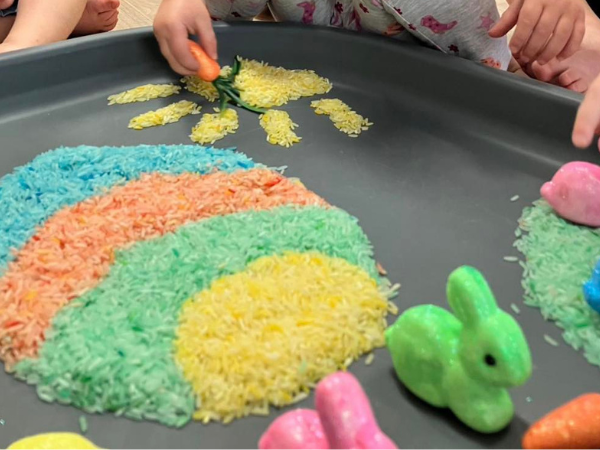
The children at Grow Early Education Dalby recently enjoyed a bright and colourful Easter-themed “scoop and pour” tray. This tray was part of the centre’s Easter celebrations and provided a fantastic opportunity for children to practice pouring, sorting, and scooping.
Grow Early Education Darling Heights:
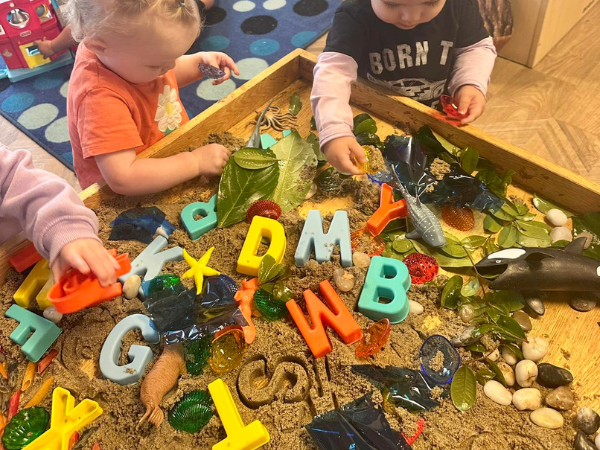
The Toddler Classroom were further introduced to literacy concepts as Educators set up an ocean-themed alphabet sensory tray. Children were able to create sandcastle letters as they explored a number of colours and textures, and ocean animals.
Grow Early Education Narre Warren North:
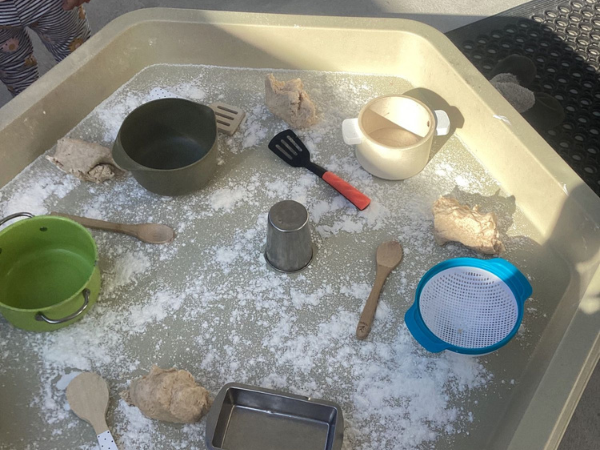
Educators were observing children's play habits within their child-initiated classroom time and discovered that the children were spending a lot of time in the home corner. To further extend on their interests, Educators set up a baking-themed sensory tray that allowed the children to experience utensils and ingredients through their senses.
Grow Early Education Bushland Beach:
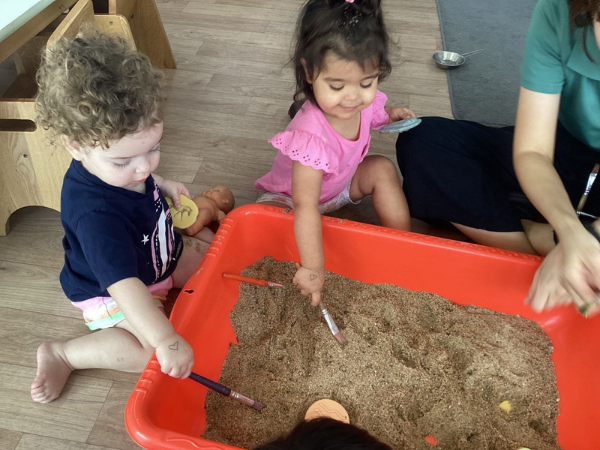
As part of the Grow Early Education curriculum exploring dinosaurs, our Educators created an exciting, age-appropriate sensory experience for the Tiny Tots Classroom. The children used paintbrushes to gently dust away sand and uncover hidden dinosaur fossils, just like real palaeontologists! This hands-on activity sparked curiosity, encouraged fine motor skills, and brought the prehistoric world to life.
Grow Early Education Gunnedah:
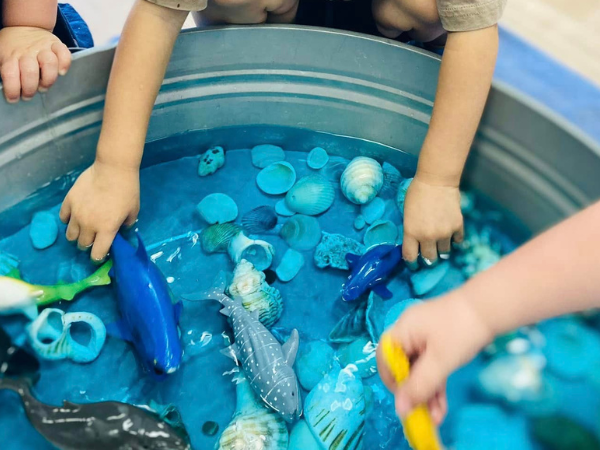
At Grow Early Education Gunnedah, our Educators thoughtfully build sensory-themed trays based on the children’s interests. Recently, they created a vibrant, ocean-themed sensory tray filled with a variety of textures and shades of blue. This immersive experience allowed the children to explore and learn about the fascinating underwater world through sensory play that stimulates curiosity and imagination.
Sensory play isn’t just fun, it’s foundational. Our Educators love designing trays that are not only exciting for children, but meaningful too. Whether it's a celebration of culture, a holiday event, or an everyday exploration of science and nature, there’s always something new to discover with a sensory tray.
Interested in trying your own tray setup at home? Here are some simple sensory tray ideas to try:
- Ocean Adventure: Blue jelly, shells, toy sea creatures, and seaweed (green spaghetti).
- Construction Site: Crushed Weet-Bix or Coco Pops as “dirt,” trucks, pebbles, and cones.
- Rainbow Rice Art: Layered colourful rice with scoops, funnels, and paintbrushes for mixing and creating.
- Fruit Exploration Tray: Citrus slices, spoons, and bowls of water for squishing and squeezing.
Stay up to date with our centres on Facebook to see what sensory play trays they create next!
- Grow Early Education Bushland Beach
- Grow Early Education Bundaberg North
- Grow Early Education Darling Heights
- Grow Early Education Bridgeman Downs
- Grow Early Education Park Ridge
- Grow Early Education Toowoomba
- Grow Early Education Hervey Bay
- Grow Early Education Maroochydore
- Grow Early Education Dalby
- Grow Early Education Riverton
- Grow Early Education Gunnedah
- Grow Early Education Kelso
- Grow Early Education Nowra Central
- Grow Early Education Narre Warren North
- Grow Early Education Heathmont
- Grow Early Education Frankston
Play dough has been a staple in an early childhood setting for decades and there is a good reason why! Play dough is a great tactile resource, holding a number of benefits including encouraging creativity in Kindergarten, boosting fine motor skills in Junior Kindy, and discovering new senses with Toddlers.
As an incredibly loved resource for both children and Educators, play dough is often used for free play time and scheduled learning activities. During this blog, we will be sharing the many ways we find joy in using play dough across our Grow Early Education centres and share some insight on how you can replicate our play dough recipe and learnings in a home setting.
How to make your own home-made playdough!
What is needed:
Measuring cup
Mixing spoon
Tbsp
Mixing bowl
1/2 cup table salt
1 tbsp of oil
Food colouring
1 cup of flour
2 Tbsp cream of tartar
1 cup of water
Instructions:
- Combine flour, salt, and cream of tartar together in a bowl.
- Mix well with mixing spoon.
- Add in the oil and mix together.
- Add food colouring and water together in a separate bowl.
- Once the colour has spread in the water then add the now coloured water into the other bowl combining all ingredients together.
- Mix all ingredients together with a mixing spoon.
- Once the mixture becomes firm use hands to mix and finish blending together - this will enable it to become more of a dough texture.
- Place on the table for the children to use.
Using this recipe as your play dough base, you can get creative and add your own variations to build on the sensory elements. Try adding a few drops of essential oils to discover new smells or add herbs to further develop the sensory aspect of texture and touch.
Across our Grow Early Education centres, there are a number of ways that our Educators incorporate play dough into our educational programs.
- Pattern Reognition
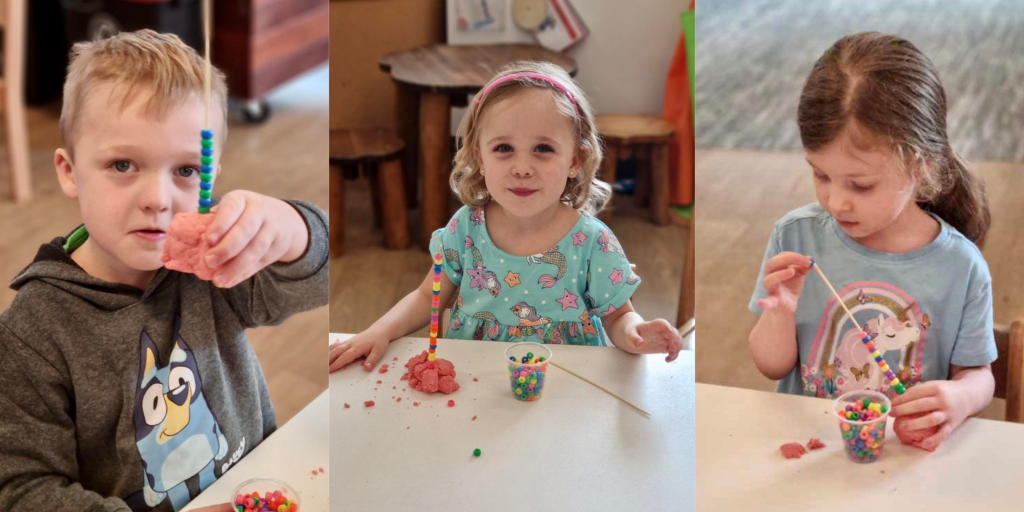
The Kindergarten children at our Grow Early Education Darling Heights centre used play dough as the base to their pattern making as a part of their introduction to pattern recognition. Pattern recognition in early childhood education refers to the ability young children have in identifying, understanding, and predicting sequences in their environment. It is a fundamental skill that lays the ground work for more complex problem-solving and mathematical solutions.
By adding the element of play dough and beads to this task, they are working on their fine motor skills, pincer grip skills, and hand-eye coordination.
2. Indigenous Culture
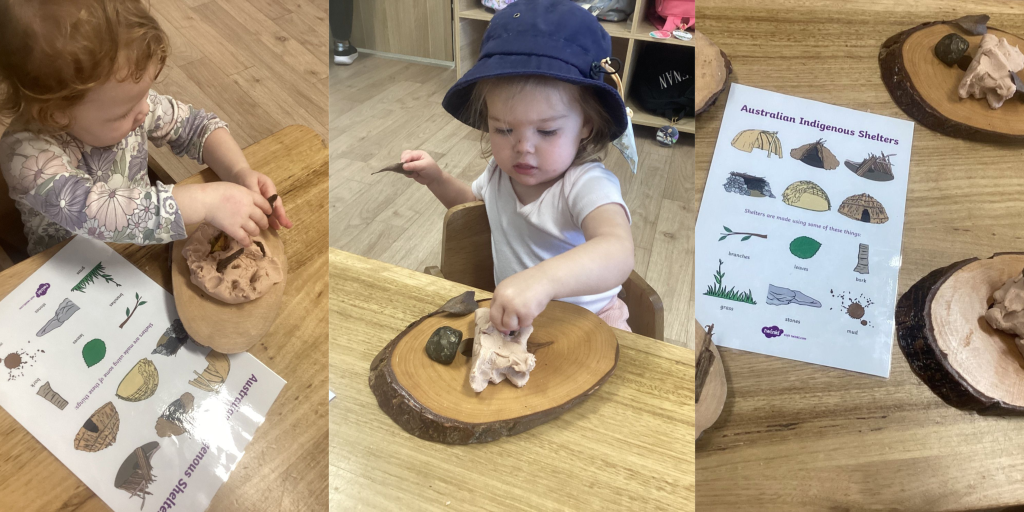
The Toddler children at our Grow Early Education Riverton centre learnt about the temporary shelters traditionally used by Australian Indigenous Peoples as a part of the Toddlers introduction to Aboriginal and Torres Strait Islander cultures.
This by utilising play dough in this activity, it allowed the children to learn in a more hands-on way, while also encouraging further development of their comprehension, hand-eye coordination, and fine motor skills
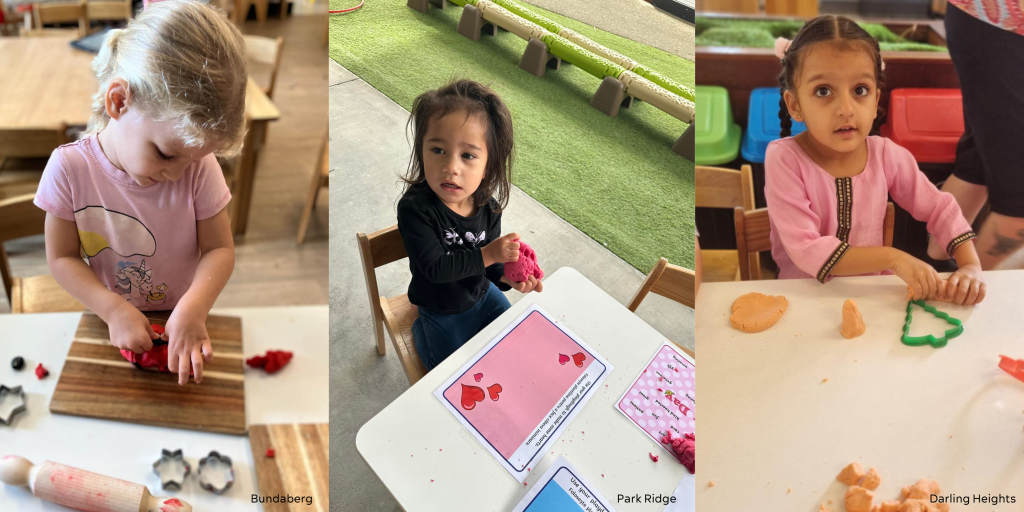
Our Educators often use play dough as a learning resource on significant and special days happening across the country.
Grow Early Education Bundaberg created their own versions of poppies as a part of the ANZAC Day learning, this is a great way to encourage inquisitive thinking as the children ask questions about the significance of the flower.
Grow Early Education Park Ridge used their own play dough recipe to create heart-shaped decorations as a part of their Valentines Day celebrations.
Grow Early Education Darling Heights used orange play dough to create different shapes as they celebrated Harmony Day across their centre.
4. Educational Programming
Grow Early Education Bundaberg used play dough to create blue birds nests as a part of their discussions on the Bowerbird Blues book that was this year's pick for National Simultaneous Storytime.
This activity allowed the children to discuss certain parts of the book they enjoyed with their peers, while also talking about what they know about birds and their nests.

By making your own play dough, you provide a wonderful sensory experience for children and also create lasting memories through shared activities. We hope this guide inspires you to experiment with different textures and colours, and most importantly, to have fun. Stay tuned for more exciting tips and ideas to enhance your playtime adventures.
Find your own printable version of our home-made play dough here!
We would love to see your at home play dough creations, tag us in your creativity on Instagram @grow_early_education or on Facebook @growearlyeducation
