At Grow Early Education, Reconciliation Week is a time to come together to listen, learn, and reflect. In 2025, we embraced the powerful theme, Bridging Now to Next, with meaningful learning experiences that honoured Aboriginal and Torres Strait Islander history and culture. Across our centres, Educators thoughtfully created opportunities for children to explore, connect, and celebrate through art, music, storytelling, and sensory play.
Here’s a look at how our Grow Early Education centres brought Reconciliation Week to life:
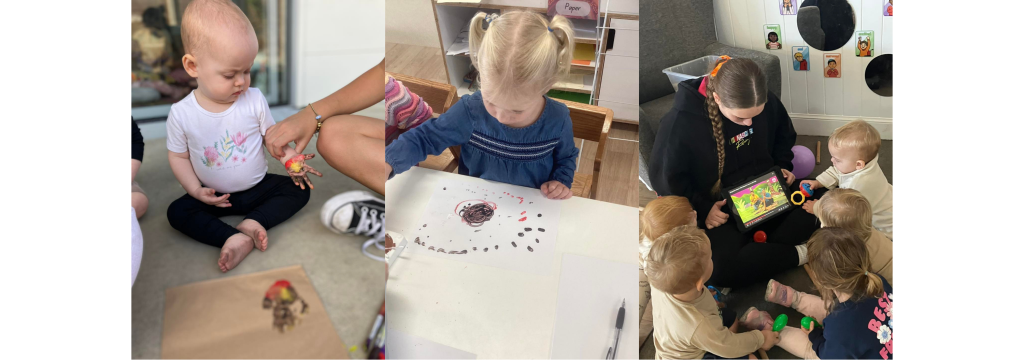
Celebrating Culture and Community at Grow Early Education Hervey Bay
At Hervey Bay, children celebrated Reconciliation Week through a vibrant mix of storytelling, art, and music. They painted the Aboriginal and Torres Strait Islander flags on their hands, created dot paintings, and watched videos of the didgeridoo to deepen their cultural understanding. These engaging experiences fostered a sense of community and connection to Country.
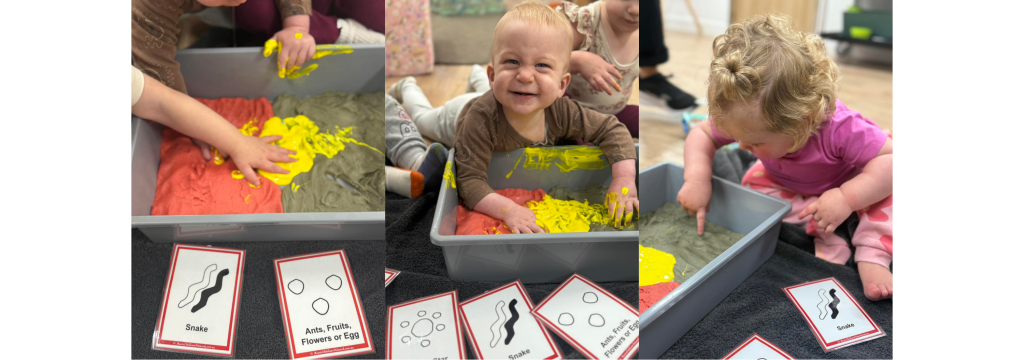
Sensory Play with Purpose at Grow Early Education Dalby
Children at Grow Early Education Dalby explored a unique sensory tray inspired by the Aboriginal flag. With colours and textures designed to spark curiosity, children squished and poked their way through the tray while being introduced to traditional Indigenous markings. Flashcards helped guide the children as they replicated the symbols, promoting conversation and cultural exploration through play.
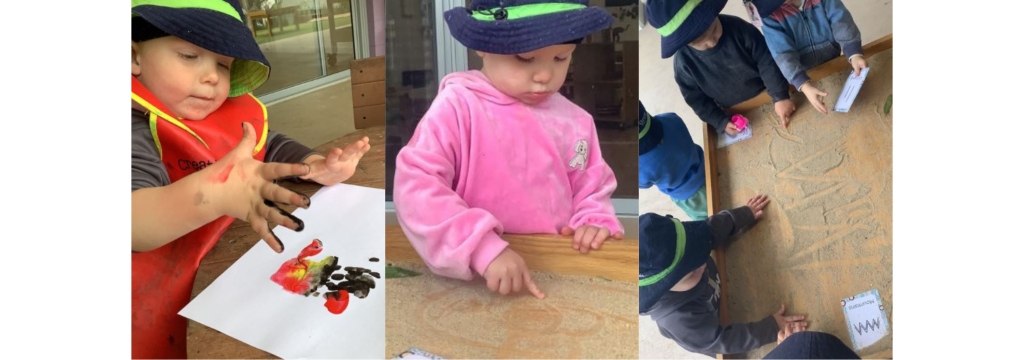
Natural Connections with the Toddlers at Grow Early Education Toowoomba
In the Toddler Classroom at Grow Early Education Toowoomba, children engaged in hands-on learning experiences that celebrated Indigenous culture. They practised stamping the Aboriginal flag using their hands and explored colour, patterns, and meaning, while drawing traditional cultural symbols in the sand. These experiences sparked rich, age-appropriate conversations about Reconciliation Week, helping children begin to understand the importance of connection to land, culture, and people.
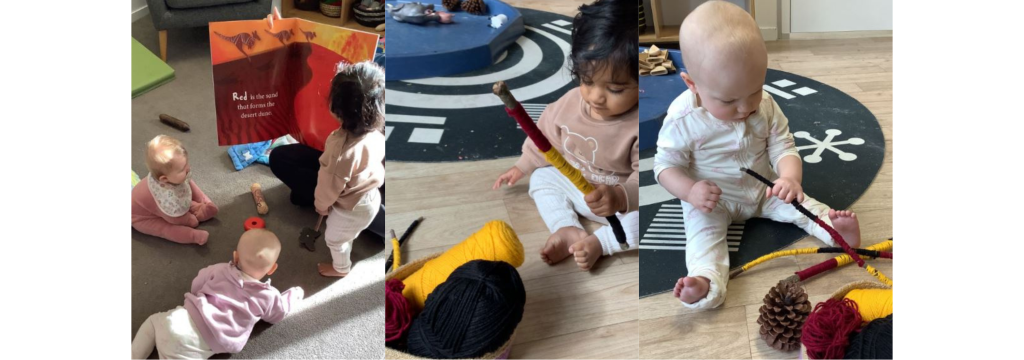
First Steps in Learning at Grow Early Education Toowoomba's Nursery Classroom
Even our littlest learners in the Nursery were invited to participate in age-appropriate ways. Educators introduced thoughtful books and resources to gently guide conversations around family, land, and connection to Country, laying the foundations for empathy and cultural awareness from the earliest years.
Reconciliation Week at Grow Early Education was a reminder that cultural understanding starts with open hearts and curious minds. Through age-appropriate and meaningful experiences, our Educators continue to embed First Nations perspectives into daily learning, ensuring every child grows up in an environment that values diversity, respect, and unity.
Together—now more than ever—we walk hand in hand toward a future built on truth, connection, and care for all cultures.
Follow us on Facebook to see how our Grow Early Education centres incorporate National Reconciliation Week into their curriculums.
- Grow Early Education Bushland Beach
- Grow Early Education Bundaberg North
- Grow Early Education Darling Heights
- Grow Early Education Bridgeman Downs
- Grow Early Education Park Ridge
- Grow Early Education Toowoomba
- Grow Early Education Hervey Bay
- Grow Early Education Maroochydore
- Grow Early Education Dalby
- Grow Early Education Riverton
- Grow Early Education Gunnedah
- Grow Early Education Kelso
- Grow Early Education Nowra Central
- Grow Early Education Narre Warren North
- Grow Early Education Heathmont
- Grow Early Education Frankston
Whether it be muddy, gloopy, or messy, we LOVE sensory play at our long daycare centres.
Sensory play is a fundamental part of early childhood development and at our childcare centres, we embrace the mess and magic of sensory trays to create hands-on, engaging experiences for children of all ages.
From the squish of jelly to the crunch of leaves, sensory trays offer children the opportunity to explore textures, sounds, smells, and even tastes in a safe and fun environment.
In this week's blog, we are showcasing how these engaging provocations can support brain development, fine motor skills, and creativity in young children while encouraging holistic development.
The Benefits of Sensory Trays:
- Brain Development: Sensory input helps build nerve connections in the brain’s pathways, enhancing memory, reasoning, and problem-solving skills.
- Fine Motor Skills: Scooping, pouring, pinching, and grasping all help children strengthen the muscles in their hands and fingers.
- Language Growth: Descriptive words fly around the room as children talk about what they feel, see, and smell.
- Emotional Regulation: Sensory play can be calming and therapeutic, helping children self-regulate and manage big emotions.
- Imaginative Play: With each new tray setup, children create stories, pretend scenarios, and explore their creativity.
At our Grow Early Education centres, our Educators use sensory trays to reflect seasonal themes, cultural learning, and educational topics. Here are just a few we’ve loved recently:
Grow Early Education Dalby:
The children at Grow Early Education Dalby recently enjoyed a bright and colourful Easter-themed “scoop and pour” tray. This tray was part of the centre’s Easter celebrations and provided a fantastic opportunity for children to practice pouring, sorting, and scooping.
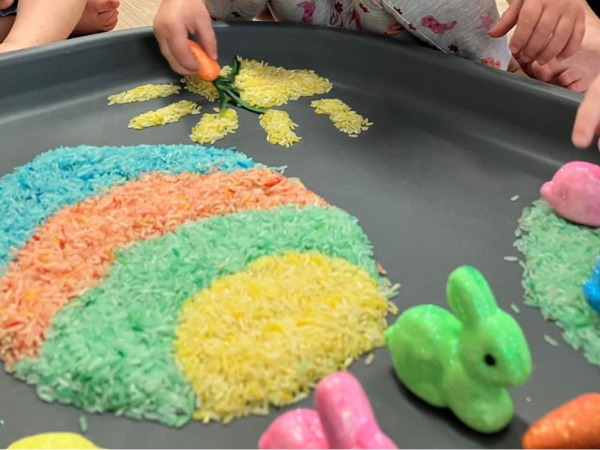
Grow Early Education Darling Heights:
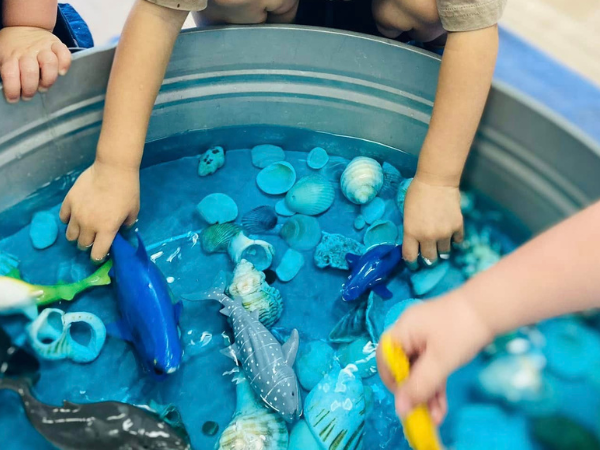
The Toddler Classroom were further introduced to literacy concepts as Educators set up an ocean-themed alphabet sensory tray. Children were able to create sandcastle letters as they explored a number of colours and textures, and ocean animals.
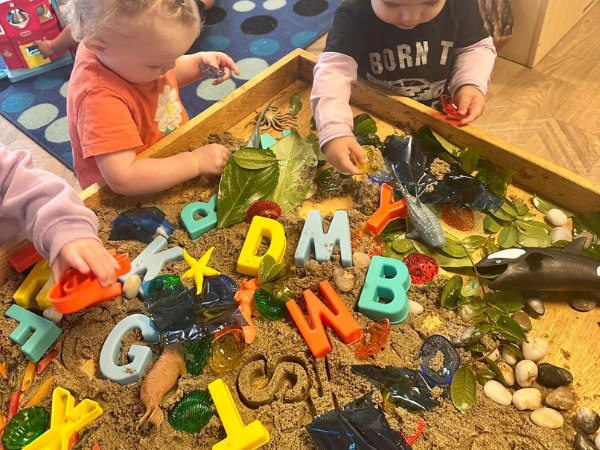
Grow Early Education Narre Warren North:
Educators were observing children's play habits within their child-initiated classroom time and discovered that the children were spending a lot of time in the home corner. To further extend on their interests, Educators set up a baking-themed sensory tray that allowed the children to experience utensils and ingredients through their senses.
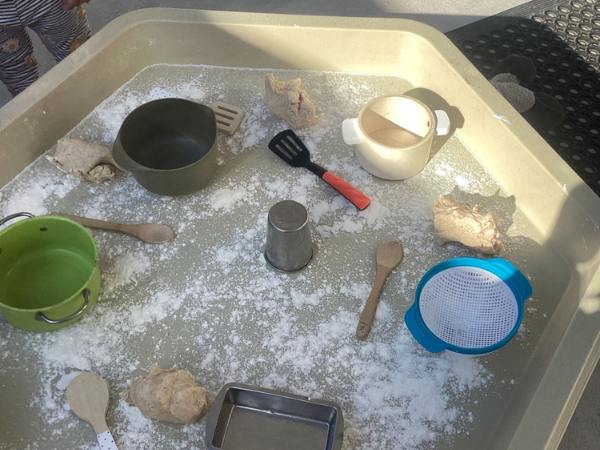
Grow Early Education Bushland Beach:
As part of the Grow Early Education curriculum exploring dinosaurs, our Educators created an exciting, age-appropriate sensory experience for the Tiny Tots Classroom. The children used paintbrushes to gently dust away sand and uncover hidden dinosaur fossils, just like real palaeontologists! This hands-on activity sparked curiosity, encouraged fine motor skills, and brought the prehistoric world to life.
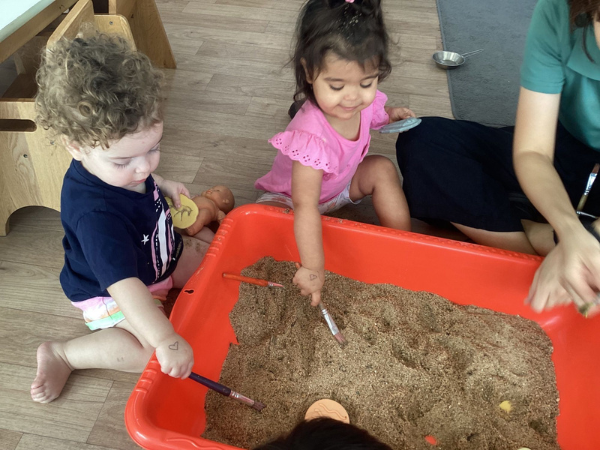
Grow Early Education Gunnedah:
At Grow Early Education Gunnedah, our Educators thoughtfully build sensory-themed trays based on the children’s interests. Recently, they created a vibrant, ocean-themed sensory tray filled with a variety of textures and shades of blue. This immersive experience allowed the children to explore and learn about the fascinating underwater world through sensory play that stimulates curiosity and imagination.
Sensory play isn’t just fun, it’s foundational. Our Educators love designing trays that are not only exciting for children, but meaningful too. Whether it's a celebration of culture, a holiday event, or an everyday exploration of science and nature, there’s always something new to discover with a sensory tray.
Interested in trying your own tray setup at home? Here are some simple sensory tray ideas to try:
- Ocean Adventure: Blue jelly, shells, toy sea creatures, and seaweed (green spaghetti).
- Construction Site: Crushed Weet-Bix or Coco Pops as “dirt,” trucks, pebbles, and cones.
- Rainbow Rice Art: Layered colourful rice with scoops, funnels, and paintbrushes for mixing and creating.
- Fruit Exploration Tray: Citrus slices, spoons, and bowls of water for squishing and squeezing.
Stay up to date with our centres on Facebook to see what sensory play trays they create next!
- Grow Early Education Bushland Beach
- Grow Early Education Bundaberg North
- Grow Early Education Darling Heights
- Grow Early Education Bridgeman Downs
- Grow Early Education Park Ridge
- Grow Early Education Toowoomba
- Grow Early Education Hervey Bay
- Grow Early Education Maroochydore
- Grow Early Education Dalby
- Grow Early Education Riverton
- Grow Early Education Gunnedah
- Grow Early Education Kelso
- Grow Early Education Nowra Central
- Grow Early Education Narre Warren North
- Grow Early Education Heathmont
- Grow Early Education Frankston
At Grow Early Education, each day is a journey of discovery, growth, and fun. Our centres are thoughtfully designed to provide a nurturing environment where children feel safe, valued, and inspired to learn.
In today's blog, we are unpacking the routines at Grow Early Education, including child-initiated play, curriculum-led activities, and mealtimes.
Mealtime
At Grow Early Education, we offer fresh, healthy meals and snacks as part of our all-inclusive fee structure. Mealtimes are a valuable part of our educational program, and all meals are prepared fresh daily by our in-house chefs, with seasonal menus designed to provide over 50% of each child’s recommended daily intake of essential nutrients.
As children grow, they are encouraged to practice self-help skills, including serving themselves and cleaning up afterwards, building confidence, fine motor skills, and independence in a supportive environment.
For our youngest children in the nursery, we follow their home feeding routines as closely as possible. This helps create consistency between home and care, supporting both the child’s wellbeing and family routines.
Mealtimes at Grow Early Education are calm, social experiences where children learn about food, practice manners, and connect with others—all while enjoying healthy, delicious meals made with love.
Child-Initiated Play & Exploration
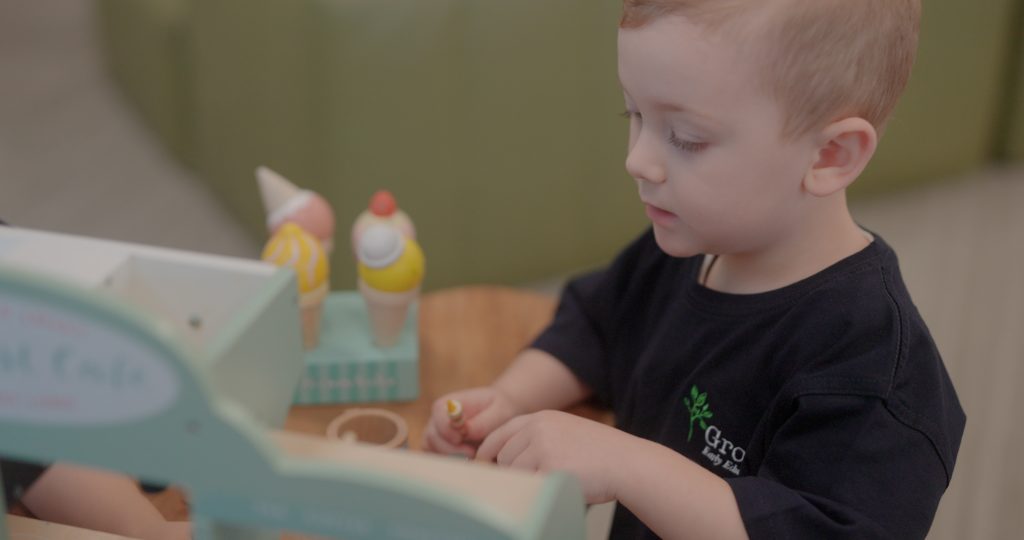
Children choose from a variety of inviting learning experiences, both indoors and outdoors. This time supports independence, creativity, and social interaction. Our environments are thoughtfully curated with open-ended materials that encourage exploration.
Group Time and Curriculum-Led Learning
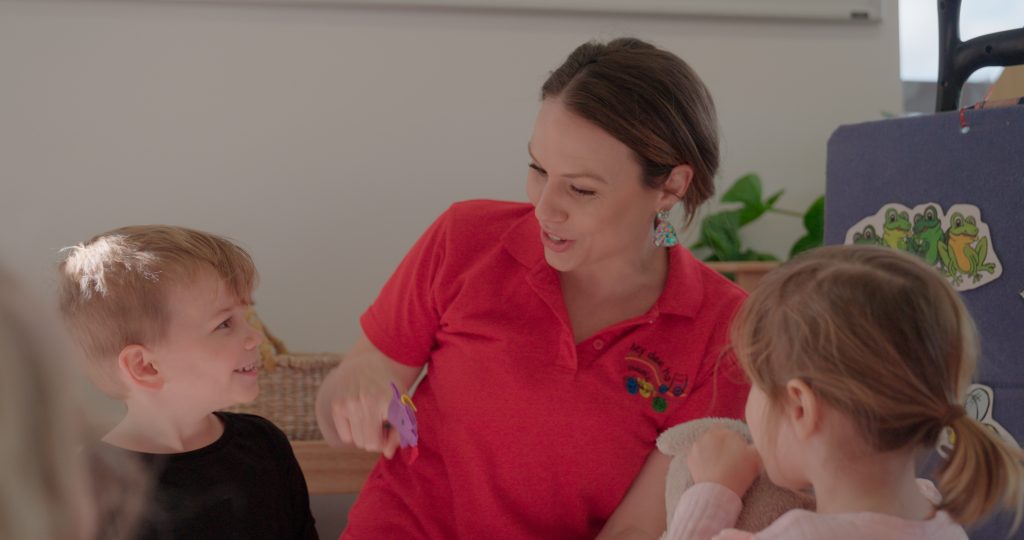
Educators introduce intentional, curriculum-led experiences based on children’s interests and developmental needs. This might include:
- Language and literacy activities
- Numeracy games
- Science and nature exploration
- Group discussions or stories
Children collaborate with their peers and continue working on their learning experiences based on the Early Years Learning Framework and curriculum. Educators use a play-based approach and exploration through art and creativity, STEM provocations, and social-emotional group discussions.
Extra-curricular Programs
We offer extra-curricular activities included in our daily fee. This could include specialist sessions such as music and movement, children’s yoga, physical activity and sports, language lessons, cooking classes, or gardening lessons. Each of these lessons sparks the children’s curiosities in a new and exciting way and allows them to further explore new experiences and work to complement our curriculum and support the development of young learners, whether it be intellectually, emotionally, physically, or socially.
Outdoor Discovery & Free Play
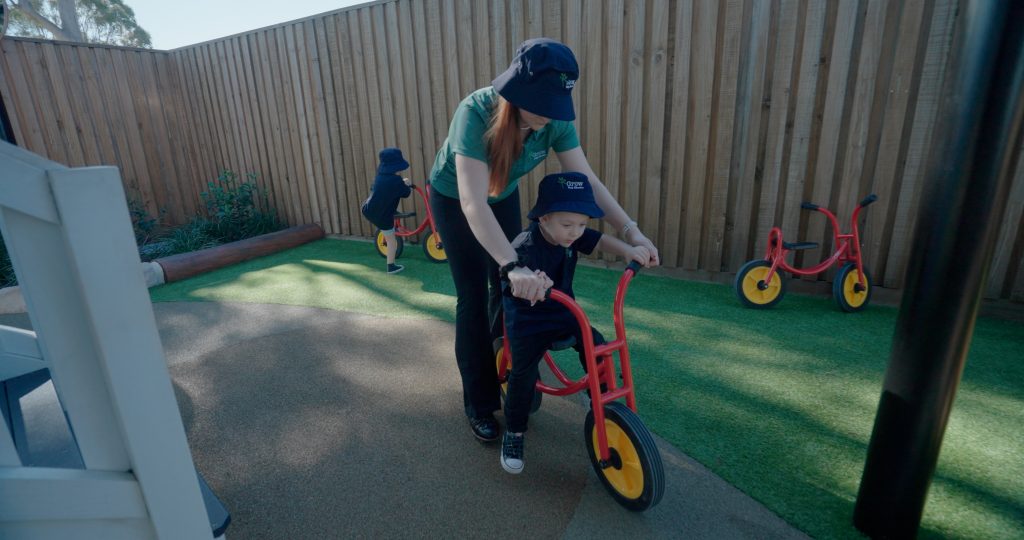
Outdoor play is a vital part of our day at Grow Early Education. Our large, spacious yards are the ideal environment for children to collaborate and explore open-ended play. Whether they are building in the sandpits, exploring the vegetable patch, playing games with peers or practising risk-play, children are constantly learning through movement and discovery.
We also embrace nature-based learning as part of our core philosophy where children engage in their natural surroundings through activities such as gardening, water play, or scavenger hunts. Some of our centres also include Bush Kindy as an extra-curricular whereby the children explore nature outside of the centre. These moments foster a deep sense of wonder and appreciation for their surroundings.
Sleep and Rest
At our centres, we recognise the importance of rest in a child’s development. While our Younger children transition into a restful nap in calm, cozy sleep spaces, the older children who don’t sleep are offered quiet activities such as puzzles, books, or mindfulness moments to relax. These experiences help children to reset, process their learning, and develop emotional regulation.
By respecting each child’s individual needs, we are ensuring that each and every child is feeling refreshed, supported, and ready for the afternoon ahead.
For our youngest children in the nursery, we follow their home sleeping routines as closely as possible. This helps create consistency between home and care, supporting both the child’s wellbeing and family routines.
Once the day begins to slow down with indoor play, quiet reading, and reflective conversations. Educators support conversations on the children’s days by encouraging reflection on what they learned or accomplished, helping to build a sense of pride and self-awareness.
At Grow Early Education, every moment is filled with purpose, whether it’s guided by our educational program or led by the child’s natural curiosity. Each moment at our centre is a chance to learn, connect, and develop.
Each of our Grow Early Education centres routines vary across age groups, locations, and days. Give our Enrolments Team a call today on 1300 934 769 to book a tour of your local Grow Early Education centre to learn more about their individual daily routines.
Find a Grow Early Education centre near you!
- Grow Early Education Bushland Beach
- Grow Early Education Bundaberg North
- Grow Early Education Darling Heights
- Grow Early Education Bridgeman Downs
- Grow Early Education Park Ridge
- Grow Early Education Toowoomba
- Grow Early Education Hervey Bay
- Grow Early Education Maroochydore
- Grow Early Education Dalby
- Grow Early Education Riverton
- Grow Early Education Gunnedah
- Grow Early Education Kelso
- Grow Early Education Nowra Central
- Grow Early Education Narre Warren North
- Grow Early Education Heathmont
- Grow Early Education Frankston
In recent years, the educational landscape has witnessed a significant shift towards play-based learning curricula, particularly in early childhood education. This approach recognises the inherent value of play as a fundamental aspect of how children learn and develop. In this blog, we will explore play-based learning, its key principles, and its numerous benefits to young learners.
What is Play-Based Learning?
Play-based learning is an educational philosophy that emphasises the importance of play as a primary mode of learning for children. Unlike traditional, teacher-directed instruction, play-based learning encourages children to engage in hands-on, experiential activities that stimulate curiosity, creativity, and critical thinking. This curriculum is designed to be flexible, allowing children to explore their interests and learn at their own pace.

Key Principles of Play-Based Learning
- Child-Centred Approach: At the heart of play-based learning is the belief that children are active participants in their own learning. Educators serve as facilitators, providing guidance and support while allowing children to take the lead in their exploration.
- Integration of Learning Areas: Play-based curriculum often integrates various learning domains, such as social-emotional, cognitive, physical, and language development. Through play, children can engage in activities that promote multiple skills simultaneously.
- Real-Life Experiences: Play-based learning often involves real-life scenarios and experiences, allowing children to make connections between their play and the world around them. This relevance enhances their understanding and retention of information.
- Collaboration and Social Interaction: Play encourages collaboration and social interaction among children. Through group activities, children learn to communicate, negotiate, and work together, fostering essential social skills.
- Encouragement of Creativity: Play-based learning nurtures creativity by providing children with the opportunities to express themselves through imaginative play, art, music, and storytelling. This creative exploration is vital for cognitive and emotional development.
Benefits of Play-Based Learning
- Enhanced Cognitive Development: Play-based activities stimulate critical thinking and problem-solving skills. Children learn to ask questions, experiment, and find solutions, which are essential cognitive skills for lifelong learning.
- Improved Social Skills: By engaging in cooperative play, children develop social skills such as sharing, empathy, and conflict resolution. These interactions help them build friendships and navigate social dynamics effectively.
- Emotional Growth: Play allows children to express their emotions and experiences in a safe environment. Through role-playing and imaginative scenarios, they can explore feelings, learn self-regulation, and develop emotional resilience.
- Physical Development: Many play-based learning activities involve physical movement, which supports the development of gross and fine motor skills. Activities such as climbing, jumping, and manipulating objects enhance coordination and overall physical health.
- Increased Motivation and Engagement: Play-based learning fosters intrinsic motivation. Children are more likely to engage deeply with activities that they find enjoyable and interesting, leading to a positive attitude towards learning.
- Preparation for Future Learning: The skills acquired through play-based learning set a solid foundation for future academic success. Children develop a love for learning, curiosity, and the ability to think critically, which are essential for their educational journey.

How do we Implement Play-Based Learning in Early Childhood Education?
To effectively implement a play-based learning curriculum, Educators can:
- Create a stimulating environment that encourages exploration and creativity.
- Provide a variety of materials and resources that support different types of play, including sensory play, dramatic play, and construction play.
- Observe and assess children's interests and learning styles to tailor activities that resonate with them.
- Foster a positive and supportive atmosphere where children feel safe to express themselves and take risks in their learning.
- Have fun, engage and play with children. Choose your moments to sit back and observe, actively engage or wait to be invited into the play. Make play-based learning a fun and engaging time for children to have your full attention.
Play-based learning is more than just fun; it is a powerful educational approach that supports holistic development in children. By embracing play as a fundamental part of the learning process, educators can create enriching experiences that foster cognitive, social, emotional, and physical growth. As we continue to recognize the significance of play in education, we pave the way for a generation of curious, confident, and capable learners ready to thrive in an ever-changing world.
Stay up to date with our Grow Early Education centres on Facebook to see what amazing play-based activities Educators incorporate into their daily curricula.
- Grow Early Education Bushland Beach
- Grow Early Education Bundaberg North
- Grow Early Education Darling Heights
- Grow Early Education Bridgeman Downs
- Grow Early Education Park Ridge
- Grow Early Education Toowoomba
- Grow Early Education Hervey Bay
- Grow Early Education Maroochydore
- Grow Early Education Dalby
- Grow Early Education Riverton
- Grow Early Education Gunnedah
- Grow Early Education Kelso
- Grow Early Education Nowra Central
- Grow Early Education Narre Warren North
- Grow Early Education Heathmont
- Grow Early Education Frankston
