Early Childhood Education plays a vital role in a child’s development, yet many myths and misconceptions still surround it. From doubts about play-based learning to misunderstandings about structured programs, these myths can make it difficult for families to feel confident about choosing the right childcare or early learning environment. In this weeks blog, we are exploring some of the most common childcare and early childhood education misconceptions and the unpacking the truth behind them.
Myth 1: “Play isn’t real learning”
Many people think that when children play, they’re just having fun. In reality, play is a powerful learning tool. Through play, children develop critical social, emotional, and cognitive skills. Activities such as building with blocks, exploring sensory materials, or engaging in imaginative play help children learn problem-solving, communication, and cooperation, all while having fun.
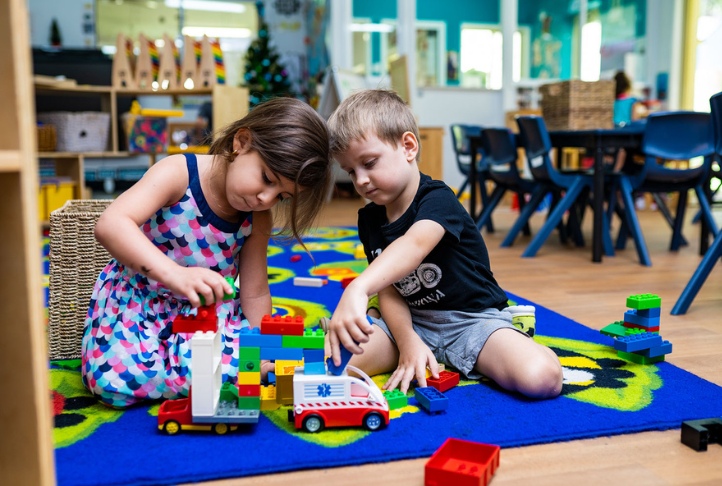
Myth 2: “Children are too young to benefit from structured programs”
Some parents worry that structured learning isn’t appropriate for young children. Modern early childhood programs, however, balance gentle structure with flexibility. Teaching and learning strategies such as the Abecedarian Approach Australia (3a) introduce learning through meaningful interactions and responsive routines, giving children the building blocks for literacy, numeracy, and social-emotional skills, all in ways that feel natural and engaging for their age.

Myth 3: “‘Child-led learning’ means children do whatever they want”
Child-led learning is often misunderstood. It doesn’t mean children have no guidance. Instead, it’s about following the child’s interests while providing supportive frameworks and rich learning opportunities. Educators observe, scaffold, and introduce new ideas, helping children explore and develop skills at their own pace while maintaining clear learning goals.

Myth 4: “Early Childhood Education is just babysitting”
High-quality childcare is so much more than supervision. It’s about creating an environment where children feel safe, nurtured, and stimulated. Through intentional teaching strategies, rich play experiences, and strong relationships, Early Childhood Educators actively foster a child’s curiosity, independence, and lifelong love of learning.
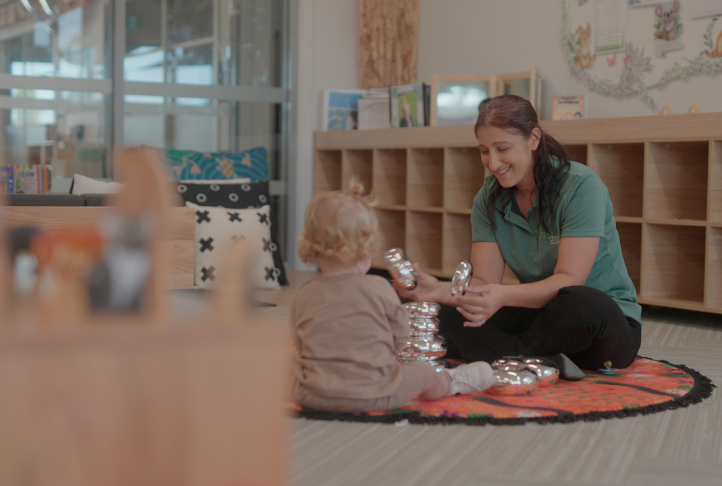
Myth 5: “Children don’t need social skills yet”
Social development starts early. Interacting with peers and adults in a supportive environment helps children learn empathy, turn-taking, conflict resolution, and self-regulation. Early Education settings provide guided social experiences that children can’t easily get on their own at home.
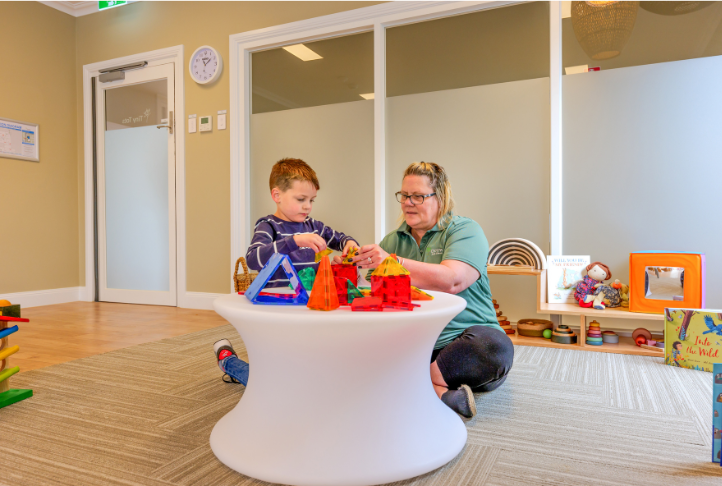
Modern Early Childhood Education is research-backed, intentional, and designed to support every child’s growth. Approaches such as the Abecedarian Approach and play-based learning ensure children are developing academically, socially, and emotionally, all in ways that feel natural, enjoyable, and meaningful.
Across our Grow Early Education centres, we see these principles in action every day. Children serve their own snacks and lunches, help tidy up educational resources, and even prepare their beds for rest time, fostering independence, confidence, and responsibility all while learning through play.
If you’ve ever wondered about the value of Early Education, we invite you to explore our classrooms and see firsthand how children learn, grow, and thrive in a nurturing environment.
Discover how Early Childhood Education could be a great fit for your family by booking a tour of your nearest Grow Early Education centre:
- Grow Early Education Darling Heights
- Grow Early Education Bridgeman Downs
- Grow Early Education Park Ridge
- Grow Early Education Toowoomba
- Grow Early Education Hervey Bay
- Grow Early Education Dalby
- Grow Early Education Riverton
- Grow Early Education Gunnedah
- Grow Early Education Kelso
- Grow Early Education Nowra Central
- Grow Early Education Narre Warren North
- Grow Early Education Heathmont
- Grow Early Education Frankston
- Grow Early Education Tarneit
It is never too early to introduce and encourage independence. When children are given small responsibilities, they not only learn essential life skills but also build confidence, a sense of accomplishment, and a feeling of being capable. Age-appropriate chores are a fantastic way to introduce responsibility and independence in a fun and supportive way.
Chores aren’t just about keeping your home tidy, they’re opportunities for learning. By participating in everyday tasks, children:
- Develop fine and gross motor skills
- Learn to follow instructions
- Build confidence and pride in their abilities
- Practice problem-solving and teamwork
- Gain a sense of responsibility
Even simple tasks can make a big difference. When children are trusted with responsibilities, they feel valued and empowered.
Here are some ways you can match chores to your child’s developmental stage:
Toddlers (2–3 years)
- Put toys back in their place
- Help water plants
- Wipe up small spills
- Place napkins on the table

Preschoolers (4–5 years)
- Set the table for meals
- Help pack away groceries
- Feed pets
- Help with dishes and laundry

Early school age (6–7 years)
- Make their bed
- Help prepare simple meals or snacks
- Take out recycling
- Sweep small areas or dust

- Keep it simple; choose tasks your child can realistically do while making it fun by turning chores into games or challenges. Children thrive within routine, by making sure you remain consistent in the chores helps children to understand the expectations and feel secure.
- Handling Resistance; It’s normal for children to resist chores at first. Offer choices (“Do you want to put the toys away before or after you snack?”) and keep a calm, encouraging tone. Avoid turning chores into power struggles, consistency and gentle guidance work better than pressure.
- Making Chores Enjoyable; Make it a family routine, children often engage more when they see adults participating alongside them. Use songs, timers, or small challenges to turn chores into fun activities.
- Celebrating Progress; Encourage intrinsic motivation by focussing on how proud they feel rather than just rewards. Consider a “chore chart” for older children to visualise their achievements.
- Teaching Problem-Solving; If a child struggles with a task, guide them to figure it out rather than doing it for them. Ask questions such as, “what’s the first thing we need to do to clean up this space?”
- Balancing Expectations; Remember: independence grows gradually, some tasks will be messy or incomplete at first, but that’s part of the learning.
Even small accomplishments deserve recognition! A high-five, sticker, or verbal praise reinforces positive behaviour and encourages children to keep trying. Over time, these small responsibilities grow into lifelong skills and a strong sense of independence.
At our Grow Early Education centres, we see this in action every day when children serve their own lunch and snacks, tidy up after meal times, help prepare their beds for naps, and pack away the educational resources they use throughout the day. These daily routines not only support independence but also foster confidence, responsibility, and pride in their abilities.
Follow us on Facebook to stay up to date with each of our Grow Early Education centres:
- Grow Early Education Darling Heights
- Grow Early Education Bridgeman Downs
- Grow Early Education Park Ridge
- Grow Early Education Toowoomba
- Grow Early Education Hervey Bay
- Grow Early Education Dalby
- Grow Early Education Riverton
- Grow Early Education Gunnedah
- Grow Early Education Kelso
- Grow Early Education Nowra Central
- Grow Early Education Narre Warren North
- Grow Early Education Heathmont
- Grow Early Education Frankston
This week across our Grow Early Education centres, children have been reaching for the stars as we celebrate Space Week 2025. Our Educators have been sparking curiosity about the wonders of the universe through play, creativity, and exploration.
From glowing stars and swirling planets to astronauts floating in zero gravity, space is a topic that instantly excites children, there’s something truly magical about exploring what lies beyond our planet and for young children, learning about space isn’t just about facts and science, it’s about nurturing wonder, discovery, and a love for learning.
While Space Week is a wonderful opportunity to focus on the cosmos, our Educators and Curriculum Teams work together to find ways to nurture curiosity about science and discovery all year round.
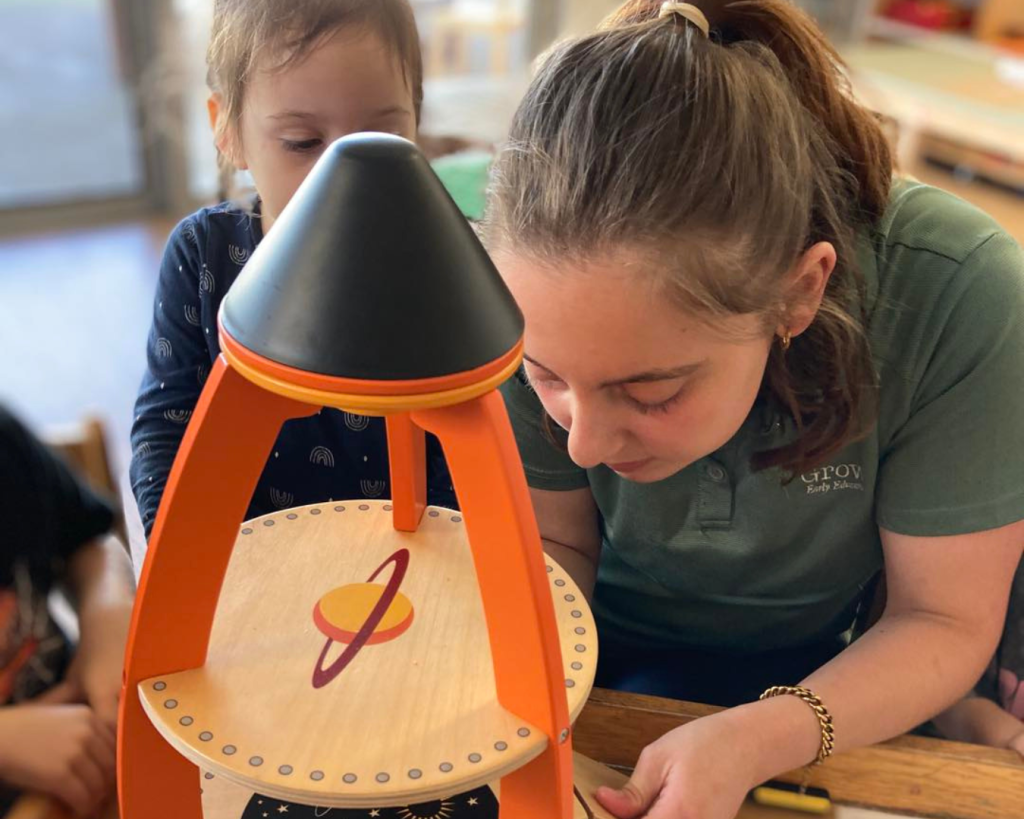
Introducing early concepts of space in early education helps children:
Develop curiosity and questioning skills, “What’s out there?” “Why do stars twinkle?”
Explore STEM (Science, Tech, Engineering, and Math) concepts in playful ways such as counting planets, building rockets, or comparing sizes and shapes.
Engage their creative thinking through imaginative play by pretending to be astronauts, aliens, or scientists.
Strengthen language and literacy learning new words such as “orbit,” “gravity,” or “galaxy.”
When space is introduced through hands-on, age-appropriate experiences, it becomes a gateway for big thinking and helps children connect what they know about their world to what exists beyond it.
Across our Grow Early Education centres, Educators bring the theme of space to life through creative, sensory, and play-based learning experiences.
Here are just a few of the ways children explore the cosmos at Grow Early Education:

One of the children’s favourite experiences is creating paper mâché planets. Using balloons, newspaper, and paint, children can design their own colourful versions of the solar system. This activity offers so much more than just art, it becomes a rich opportunity for learning and skill development.
As children shape and paint their planets, they also develop fine motor skills through tearing, gluing, and brushing, express their creativity by choosing colours and textures, and strengthen their scientific thinking as Educators guide conversations around the planets’ sizes, orbits, and characteristics.

Another engaging experience is exploring space-themed sensory trays, filled with foil, natural materials such as wood, cotton, and rocks, and cut-outs of moons, rockets, and friendly aliens. This inviting setup encourages children to explore different textures, materials, and imaginative ideas as they play.
As children scoop, sort, and create stories within the tray, they develop their sensory awareness, fine motor coordination, and language skills, while also building an understanding of how materials and environments can represent the world — and universe — around them.

Painting planets is another classic Space themed activity where children add colour and texture to paper cut-outs representing the planets of our solar system. Using brushes, cotton buds, or fingers, children experiment with mixing and applying paint, creating unique patterns and designs.
This creative experience supports the development of fine motor skills as children hold and control tools, express their creativity through colour and pattern choices, and build early scientific understanding as educators talk about the planets, their colours, and positions in the solar system. It’s a hands-on way to make the universe feel close, exciting, and full of possibilities.
Each of these experiences encourages children to think like little explorers, asking questions, making predictions, and sharing their discoveries with peers.
Exploring space connects seamlessly to many areas of the Early Years Learning Framework (EYLF), including:
Outcome 4: Children are confident and involved learners — as they experiment, investigate, and problem-solve through play.
Outcome 5: Children are effective communicators — as they express ideas, share knowledge, and engage in rich conversations about what they discover.
Outcome 2: Children are connected with and contribute to their world — as they begin to understand their place in the wider universe.
Through these experiences, children not only learn about space, they learn about possibility. They dream, imagine, and explore the idea that there’s so much more to discover.
By turning space into a hands-on, sensory-rich experience, our Educators are building a foundation for lifelong curiosity and learning.
Follow us on Facebook to stay up to date with each of our Grow Early Education centres and explore how they celebrate Space:
- Grow Early Education Darling Heights
- Grow Early Education Bridgeman Downs
- Grow Early Education Park Ridge
- Grow Early Education Toowoomba
- Grow Early Education Hervey Bay
- Grow Early Education Dalby
- Grow Early Education Riverton
- Grow Early Education Gunnedah
- Grow Early Education Kelso
- Grow Early Education Nowra Central
- Grow Early Education Narre Warren North
- Grow Early Education Heathmont
- Grow Early Education Frankston
At Grow Early Education, we believe that reading with children is one of the richest learning experiences you can have. It’s because of this that the Children’s Book Council of Australia’s National Book Week is one of our favourite weeks on the calendar.
This year, Book Week is celebrating 80 years with the theme “Book an Adventure.” To honour the occasion, we’re discussing the importance of reading for children aged 0-5 and sharing some of the ways you can turn your bedtime routine into a rich learning and story-led adventure.
From birth to five years, reading with children is an important part of their developmental journey, helping to foster language skills and cognitive abilities while building a life-long love of reading and learning. Reading with children also encourages language development, problem-solving and critical thinking skills, and boosts children’s imaginations.
Research has found that the disparity between children’s vocabularies could be upwards of 1.4 million words, depending on how frequently they are read to. It is estimated that children who:
- Are never read to will learn 4,662 words
- Are read to once or twice a week will learn 63,570 words
- Are read to three to five times a week will learn 169,520 words
- Are read to every day will learn 296,660 words
- Or, if read five different books a day, will learn 1,483,330 words by the time they turn five.
For children under five, every rhyme, story, or picture book adds up, helping your little one build a richer, stronger vocabulary that they can carry through school and life.

One of the easiest ways you can introduce regular reading to your child’s day is through bedtime routines, but a bedtime story doesn’t have to be all about “winding down”. Reading to children creates magical moments where imagination and language thrive. Here are some ways you can turn bedtime routine into story-led learning adventure.
- Create a reading ritual: Set aside 10-15 minutes each night for story time – dim the lights snuggle up, and start reading. Predictability can help children settle and knowing what to expect can make them feel excited.
- Let your child choose the adventure: Offer a small selection of books each night for your little one to choose from. Having ownership over what they read helps children feel more engaged.
- Embrace the theatrics: Using props such as toys or puppets, and adding voices and sound effects can make the story sound like it's coming alive, adding more excitement and depth for the child.
- Connect storytelling to reality: After the book, take the time to ask some questions, such as “what adventure would you go on if you were in this story?” or “which character would you like to be?” These additional prompts help extend your child’s imagination as well as their language and comprehension skills.
- End the story time with some calm reflection: Ask your child to close their eyes and imagine themselves in the story world as they drift off to sleep. This bridges reading with dreaming, setting children up for an even more magical bedtime.
Just as stories can spark adventure at bedtime, Book Week allows children to bring these adventures to life across our childcare centres.
One of the most exciting parts of Book Week at our centres is seeing the children bring their favourite characters to life! From pirates and princesses to astronauts and dragons, dressing up gives children a chance to step into the world of their story and make the adventure their own. It’s a joyful, imaginative way to connect with books and characters while building confidence, creativity, and a love of storytelling. At Grow Early Education, our Educators love to join in the fun too! Dressing up alongside the children allows us to celebrate stories together and model creativity and imagination. Whether it’s becoming a fairy, a brave knight, or a quirky storybook character, our Educators help turn Book Week into a shared adventure, showing that reading and play can be magical at any age.

Book Week is a special time for children and families to celebrate the magic of reading. At Grow Early Education, we love creating adventures through stories, dress-ups, and imaginative play, helping every child discover the joy of reading and the worlds that await in every book.
Follow us on Facebook to see how our Grow Early Education centres are embracing this year's Book Week theme, “Book an Adventure”!
- Grow Early Education Bundaberg North
- Grow Early Education Darling Heights
- Grow Early Education Bridgeman Downs
- Grow Early Education Park Ridge
- Grow Early Education Toowoomba
- Grow Early Education Hervey Bay
- Grow Early Education Dalby
- Grow Early Education Riverton
- Grow Early Education Gunnedah
- Grow Early Education Kelso
- Grow Early Education Nowra Central
- Grow Early Education Narre Warren North
- Grow Early Education Heathmont
- Grow Early Education Frankston

At Grow Early Education, we believe science is a way for children to explore, question, and discover the world around them every day.
This National Science Week, we’re sharing a collection of simple, age-appropriate science experiments you can try at home with your little one. These activities fun and engaging, plus they also help build important skills such as problem-solving, observation, and prediction. Skills we nurture in our own science-based learning experiences across our centres.
Babies (0–1 years)
Rainbow Ice
Create colourful ice cubes using water and a few drops of food colouring. Place them in a large container or sensory tray and let your baby explore the melting ice. You can add a small container of warm water for them to experiment with melting the ice faster.
This activity encourages sensory exploration through temperature, texture, and colour while helping babies develop early observation skills. They begin to understand cause and effect as they notice the ice melting more quickly in warm water, and their language skills grow as you introduce new words like “cold,” “melting,” “blue,” and “mixing.”

Sound Bottles
Fill a clear, empty plastic bottle with items such as beads, rice, or bells. Let your baby shake the bottle to explore the different sounds each filling makes.
Shaking the bottle helps babies discover cause and effect while developing their listening skills as they hear the different sounds. It also promotes fine motor development through grasping and shaking, as well as visual tracking, as they watch the items move inside the bottle.

Toddlers (1–3 years)
Fizzing Colours
Add baking soda to a tray. Mix vinegar and food colouring in small cups, then use droppers to release the coloured vinegar onto the baking soda. Watch the fizzy reaction unfold right in front of your eyes!
This experiment introduces Toddlers to basic chemistry as they watch the acid and base reaction create fizz. They strengthen colour recognition and begin exploring colour mixing, while using droppers supports fine motor skills. Asking them to guess what will happen next also encourages curiosity and early prediction skills.

Sink or Float
Fill a large tub with water. Collect natural materials from around the home. Before dropping each item in, ask your child to guess: “Will this sink or float?”
This hands-on activity helps Toddlers begin to think like scientists by making predictions and testing their ideas. They practise categorisation skills and start to understand buoyancy, while also expanding their vocabulary with words such as “heavy,” “light,” “float,” and “sink.”

Pre-Kindy (3–4 years)
Walking Rainbow
Arrange jars of water coloured with food dye and blank water in a circle, alternating blank water with coloured water. Place a strip of paper towel between each jar, making sure the ends dip into the water. Watch the colours travel and mix over time.
Children strengthen their observation skills as they watch the colours slowly move, mix, and blend over time. This experiment introduces them to absorption and capillary action in a visual way, supports their understanding of colour mixing, and encourages them to talk through the sequence of events they see.

Shadow Tracing
Lay paper or card next to an object’s shadow and have your child trace its outline. Return throughout the day to see how the shadow has changed.
Shadow tracing helps children understand how the position of the sun changes shadows throughout the day. It also develops early measurement and comparison skills, supports fine motor control through drawing, and sparks curiosity about nature and the passing of time.

Kindergarten & Preschool (4–5 years)
Colour Changing Flowers or Celery
Place white flowers or celery stalks in a jar of coloured water. Over time, the stems will draw up the coloured water and change colour.
This activity introduces children to plant biology by showing how plants absorb water through their stems. It encourages them to observe and record changes over time, developing patience, attention to detail, and early scientific thinking.

Blowing Up a Balloon With Gas
Use a funnel to insert baking soda into a deflated balloon. Fill a bottle with vinegar, then carefully attach the balloon to the bottle’s neck without spilling the baking soda. Lift the balloon so the baking soda falls in. This will create a fizzy reaction, causing gas to inflate the balloon.
This experiment demonstrates chemical reactions and gas formation in a way children can see and enjoy. It promotes problem-solving and sequencing as they follow the steps, encourages them to make predictions, and gives them a memorable “wow” moment that builds excitement for science.

At Grow Early Education, science is a part of our everyday learning. From sensory exploration with our youngest babies to hands-on STEM projects with our older children, we create opportunities for children to investigate, experiment, and discover.
By trying these activities at home, you’re extending your child’s learning and giving them the chance to see science as something fun, exciting, and part of the world around them. Together, we can help inspire the next generation of curious thinkers and problem-solvers.
To further enrich these activities, you can use the Abecedarian Approach Australia (3a) Language Priority by talking your child through each reaction and change they observe during the experiment. This ongoing conversation helps build their communication skills and introduces them to a wider range of new words.
Follow us on Facebook to keep up to date with our Grow Early Education centres and see how we have acknowledged and celebrated National Science Week this week:
- Grow Early Education Bundaberg North
- Grow Early Education Darling Heights
- Grow Early Education Bridgeman Downs
- Grow Early Education Park Ridge
- Grow Early Education Toowoomba
- Grow Early Education Hervey Bay
- Grow Early Education Dalby
- Grow Early Education Riverton
- Grow Early Education Gunnedah
- Grow Early Education Kelso
- Grow Early Education Nowra Central
- Grow Early Education Narre Warren North
- Grow Early Education Heathmont
- Grow Early Education Frankston
At Grow Early Education, teaching hygiene and self-care skills is an essential part of our early childhood education program. These everyday routines may seem simple, but they play a big role in supporting children’s health, independence, and confidence.
Children aged 0–6 are still developing their immune systems and are more vulnerable to germs and illnesses. Teaching hygiene for children in these early years not only helps prevent the spread of disease, but also lays the foundation for lifelong habits.
In group settings such as childcare centres, hygiene practices like handwashing for children become even more important. With shared toys, meals, and learning spaces, it’s vital that children understand when and how to clean their hands and care for their bodies.
Handwashing is one of the simplest and most effective ways to prevent the spread of germs. At Grow Early Education, we make handwashing fun and easy to understand for children through songs, stories, and visual cues.

We teach children to:
- Wet their hands
- Apply soap
- Scrub for at least 15 seconds (sing a song to help!)
- Rinse thoroughly
- Dry their hands completely
Children are encouraged to wash their hands before eating, after using the toilet, after outdoor play, and any time they sneeze or cough. By turning handwashing into a routine part of their day, children quickly build healthy hygiene habits.

Download our handwashing poster to help your children nail their handwashing technique
Beyond hygiene, general self-care skills are an important part of every child’s development. These include:
- Brushing teeth
- Blowing their nose
- Putting on shoes and hats
- Using the toilet independently
- Packing away their belongings
Another important part of our daily routine is teaching children to be SunSmart. At Grow Early Education, children are encouraged to apply their own sunscreen each morning and before going outside to play. We set up Sun Safety Stations across our childcare centres to make this easy, fun, and accessible. Educators supervise and guide the process, helping children learn how to protect their skin while developing a sense of responsibility.

We also introduce the children to self-care in the form of regular check-ups for healthy teeth and eyes. That’s why we’re proud to host regular Dental and Optics visits, offering families convenient access to professional dental and eye screenings at the centres.
By introducing children to dental and vision checks in a familiar environment, we reduce anxiety and normalise these important health habits from a young age. It’s just one more way we help support every aspect of your child’s wellbeing.

These everyday moments support independence, fine motor skills, and healthy habits that will last a lifetime. At Grow Early Education, Educators support children through gentle guidance, role-modelling, and age-appropriate encouragement. We provide opportunities throughout the day for children to practise and master these self-help skills at their own pace.
Teaching children to care for themselves helps them develop independence and confidence, build fine motor and cognitive skills, understand routines and responsibility, and feel a sense of pride in their achievements.
When children are empowered to take care of themselves, they begin to feel more in control of their world, a key part of emotional development in early childhood education.
At Grow Early Education, our goal is to create a safe, nurturing environment where children thrive. By embedding hygiene routines and self-care practices into our daily program, we support children in becoming capable, confident, and healthy individuals.
We partner with families to ensure these habits are reinforced at home, creating consistency and routine between the childcare centre and home life.
Follow us on Facebook to see how our Grow Early Education centres incorporate self-care and hygiene to their daily curriculums.
- Grow Early Education Bushland Beach
- Grow Early Education Bundaberg North
- Grow Early Education Darling Heights
- Grow Early Education Bridgeman Downs
- Grow Early Education Park Ridge
- Grow Early Education Toowoomba
- Grow Early Education Hervey Bay
- Grow Early Education Dalby
- Grow Early Education Riverton
- Grow Early Education Gunnedah
- Grow Early Education Kelso
- Grow Early Education Nowra Central
- Grow Early Education Narre Warren North
- Grow Early Education Heathmont
- Grow Early Education Frankston
NAIDOC Week is a time to celebrate the history, culture, and achievements of Aboriginal and Torres Strait Islander Peoples. It’s also an opportunity to educate future generations about the importance of cultural respect and reconciliation. At Grow Early Education, NAIDOC Week holds special significance as we strive to embed cultural understanding into our programs and daily practices.
This year’s theme, “The Next Generation: Strength, Vision & Legacy", inspired meaningful experiences across our centres that honoured traditions, promoted learning, and connected children to the stories and practices of First Nations People.
Connecting to Culture and Country
At Grow Early Education Toowoomba, children participated in a range of experiences that celebrated the rich history and traditions of First Nations Peoples. Activities included collaborative art inspired by Indigenous artists, Dreamtime storytelling sessions, and music and movement with traditional instruments and songs. Educators also supported discussions about the deep connection between people and Country, helping children understand the importance of caring for the land they live on.

Traditional Face Painting
Grow Early Education Bundaberg North explored culture with the children through face painting using markings created with traditional dots and colours. This activity sparked conversations about the meaning behind these markings and their cultural significance, providing children with a hands-on learning experience.

Natural Ochre Painting
At Grow Early Education Darling Heights, children and Educators engaged in a variety of NAIDOC-themed activities such as puzzles and hand flag painting. A highlight of the week was creating natural paint using ochre, a type of rock traditionally crushed into powder and mixed with water to form a vibrant natural pigment. This hands-on process gave children a tactile understanding of traditional art-making techniques and the cultural importance of natural resources.

Exploring Indigenous Symbols
Grow Early Education Heathmont focused on teaching children about Indigenous symbols and their meanings. Using flashcards for reference, children practised replicating these symbols through mark-making activities, supporting both fine motor skill development and cultural learning.

Community Showcase and Bush Tucker
To close out NAIDOC Week, Grow Early Education Hervey Bay hosted a showcase event for families. This celebration featured a display of NAIDOC-themed artwork created throughout the week and included an array of Aboriginal-inspired food incorporating traditional flavours such as native berries and lemon myrtle. It was a wonderful way to bring families together to reflect on culture, history, and the children’s learning.

Collaborative Aboriginal Flag
At Grow Early Education Kelso, children worked together to create a large-scale Aboriginal flag using cut pieces of red, black, and yellow paper. This collaborative project not only celebrated NAIDOC Week but also promoted teamwork and pride in cultural expression.

We are proud to create an environment that encourages and nurtures the next generation to be culturally aware, respectful, and inclusive. Celebrating NAIDOC Week is one of the many ways we strengthen these values in our programs and ensure children grow up with an appreciation for the rich history and ongoing contributions of First Nations peoples.
At Grow Early Education, cultural learning is embedded into everyday practice, not just during NAIDOC Week. We believe that education plays a powerful role in reconciliation and building a brighter, more inclusive future.
Find out more about our approach to early childhood education and book a tour at your nearest centre here.

Stay up to date with our centres to see how they celebrate and acknowledge Indigenous and Torres Strait Islander cultures throughout the year.
- Grow Early Education Bushland Beach
- Grow Early Education Bundaberg North
- Grow Early Education Darling Heights
- Grow Early Education Bridgeman Downs
- Grow Early Education Park Ridge
- Grow Early Education Toowoomba
- Grow Early Education Hervey Bay
- Grow Early Education Dalby
- Grow Early Education Riverton
- Grow Early Education Gunnedah
- Grow Early Education Kelso
- Grow Early Education Nowra Central
- Grow Early Education Narre Warren North
- Grow Early Education Heathmont
- Grow Early Education Frankston
As the school holidays roll around and the winter chill sets in, many families find themselves wondering how to keep their school-aged children happy, active, and engaged. That’s where Grow Early Education's Winter Vacation Care Program comes in!
Our Vacation Care Programs are available at select Grow Early Education centres across Australia, offering a warm and welcoming space where children can enjoy fun-filled experiences, socialise with peers, and take part in exciting, educational activities.
Whether you’re a working parent looking for full holiday care or just want your child to enjoy a few days of adventure, our long daycare centre's Vacation Care options are here to support you and your family.
Winter Vacation Care at Grow Early Education is a school holiday program designed for primary school children aged 5 to 12 years. Run by qualified and caring Educators, the program features a thoughtfully curated schedule of seasonal fun; think winter crafts, themed dress-up days, sports, science experiments, cooking, and more!
Our programs are held at our purpose-built, long daycare centres, giving families the flexibility of longer opening hours, nutritious meals provided, and a safe environment that feels like a home away from home.
Why Choose Grow Early Education's Vacation Care?
✅ Flexible hours: Our centres are open extended hours to suit working families (most centres are open 6:30am to 6:30pm)
✅ All meals included: Nutritious breakfast, lunch, and snacks prepared fresh daily by our in-house chef
✅ Engaging activities: From winter STEM experiments to games, cooking, and art
✅ Experienced Educators: Children are supported by trained and caring professionals
✅ Safe, inclusive spaces: Designed to make every child feel welcome and valued
✅ Casual bookings available: You don't need to be enrolled in our centre prior to enjoy our Vacation Care Program

Participating Centres and What’s On These Holidays
Here’s a sneak peek at some of the exciting programs on offer at our participating centres this winter:
Grow Early Education Toowoomba:
Grow Early Education Toowoomba are offering children a variety of age-appropriate adventures, including Teddy Bear Picnics, Superhero Dress-Up Days, and Scavenger Hunts. The Program is designed to spark imagination, encourage social play, and keep children active and engaged throughout the whole school holidays. Find the whole list of adventures planned here!
Grow Early Education Heathmont in Melbourne:
At Grow Early Education Heathmont, children are stepping into the world of science with a range of exciting STEM-based activities during these school holidays. From kitchen science to explosive experiments, little learners will explore messy, sensory-rich, and thought-provoking experiences that ignite curiosity and creativity. Find the full list of vacation care activities for Heathmont here!
Grow Early Education Tarneit in Melbourne:
Grow Early Education Tarneit are turning up the energy this winter with a special visit from Little Sports Heroes! The team are gearing up for fun sports and active play days designed to keep children staying warm and cozy through the chilly winter. Check out the full list of children's activities here!
Grow Early Education Narre Warren North in Melbourne:
Step into a magical Winter Wonderland at Narre Warren North as the centre celebrates Christmas in July! Children will be busy crafting festive decorations by building snowmen, creating snowflakes, and making their very own cheeky elf. It’s a joyful, creative experience that captures the magic of the season and keeps little hands busy with holiday cheer. See the full list of Winter cheer here!

Our Vacation Care Programs are built around fun, safety, and nurturing relationships between Educators and fellow peers. Whether your child loves getting messy with arts and crafts or playing together in team games, our upcoming winter vacation care program has something for every child!
Give our Enrolments Team a call today on 1300 934 769 to secure your child's place. Casual bookings and full-time bookings are now available.
Learn more about our Vacation Care Program here.
Choosing the right Kindergarten or Preschool Program for your child is an important decision, especially when balancing work; family life; and preparing your child for formalised schooling; all need to be considered. That’s why our Kindergarten and Preschool Programs are thoughtfully designed and led by Bachelor degree-qualified Teachers, to deliver educational excellence and a school readiness program - all with the convenience of long day care hours.
Led by university-qualified Early Childhood Teachers and guided by the approved Early Years Learning Framework (EYLF), our programs provide children with strong foundations for school and lifelong learning, all within a nurturing early education environment.
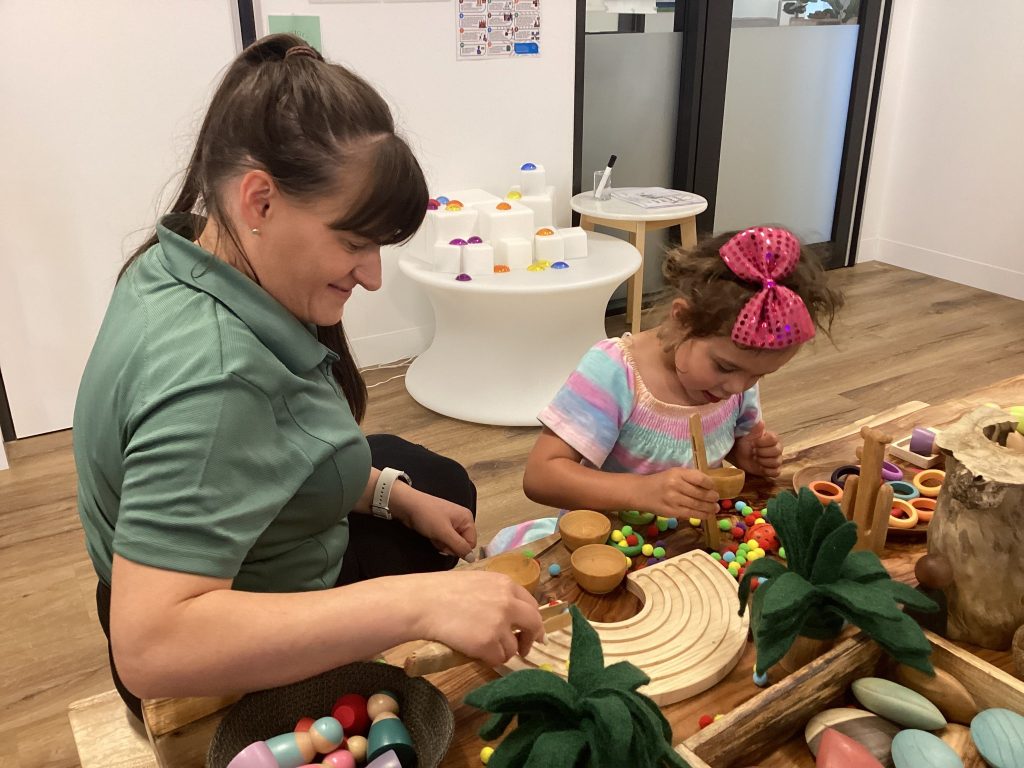
Why Choose Grow Early Education's Kindergarten or Preschool Program?
At Grow Early Education, our Kindergarten and Preschool Programs are designed to support busy families while still delivering a high-quality, government-approved early learning curriculum.
Here’s how Grow Early Education's Kindergarten or Preschool Program can be the perfect fit for your family:
- Long hours for working families: Enjoy extended care from early mornings to late afternoon, perfect for working parents or those with full schedules.
- 'Free' kindergarten or fee relief for Preschool for eligible children: Take advantage of Government funding, which means eligible children can attend 'Free' Kindergarten in Victoria and Queensland or receive fee relief for our Preschool Programs in New South Wales.

- Approved curriculum and added flexibility: Our program meets all of the educational requirements in a flexible, long day care environment. That means:
✅ flexibility for the number of hours and days you want your child to attend
✅ All-inclusive daily fees (meals, nappies, excursions, extra-curriculars, and access to our family communication app all in one fee)
✅ Year-round care, including school holidays
- A focus on key learning goals: We have been in consultation with local schools and they have guided us on the learning goals for children, that will assist them in their transition to formal school:
- Toileting – I can use the toilet and wash my hands by myself.
- Independence – I can open up my lunch box and fill up my own water bottle. I can dress and undress myself such as putting on my own shoes and hat.
- Emotional Skills – I can communicate my wants and needs.
- Name Writing & Recognition – I can recognise my name and attempt to write it.
- Cognitive Abilities – I can retell a story or event. I can solve problems on my own.
- Literacy & Numeracy Skills – I can recognise some letters and sounds. I can recognise some numbers. I can recognise some shapes.
- Social Skills Awareness – I can take turns with others. I can wait in line and follow instructions. I can ask and answer questions to take part in conversations.
- Fine Motor Skills – I can hold a pencil and crayon. I can cut and use scissors safely.
- Whole Body Listening – I can sit on the mat to participate in group time with my friends and teacher. I can actively take part in group learning.
- Formal discussions and transition statements: A formal discussion between parents and the teacher is held at the end of the year to support each child’s transition to school by collaboratively creating a transition statement. This strengths-based statement provides a snapshot of the child’s knowledge, skills, and dispositions across the five learning and development areas.
- School readiness initiatives to ease nerves: To help your child feel confident and excited about formalised school structures, we introduce regular school readiness initiatives. These could include fun and practical activities such as:
- Lunchbox days where children practice opening their own containers and eating from a packed lunch
- Uniform days where children wear their school uniforms, helping them prepare for daily routines and independence
- Visits to local schools across the year as part of your child’s transition to school process
- School-like routines such as sitting in group time, following simple instructions, and increasing independence with toileting and self-care
- Education-Focused: Children learn through play and structured learning activities in line with the Early Years Learning Framework (EYLF), led by qualified Early Childhood Teachers.
- Reduced transition stress: If your little one already attends one of our centres, our Kindergarten and Preschool Programs are delivered within the same nurturing environment your child already knows and loves. With consistent Educators, familiar routines, and strong peer relationships, children experience a smooth and secure learning journey. This continuity supports emotional well-being, builds confidence, and allows your child to fully engage in their day, without the added stress of adapting to multiple environments.
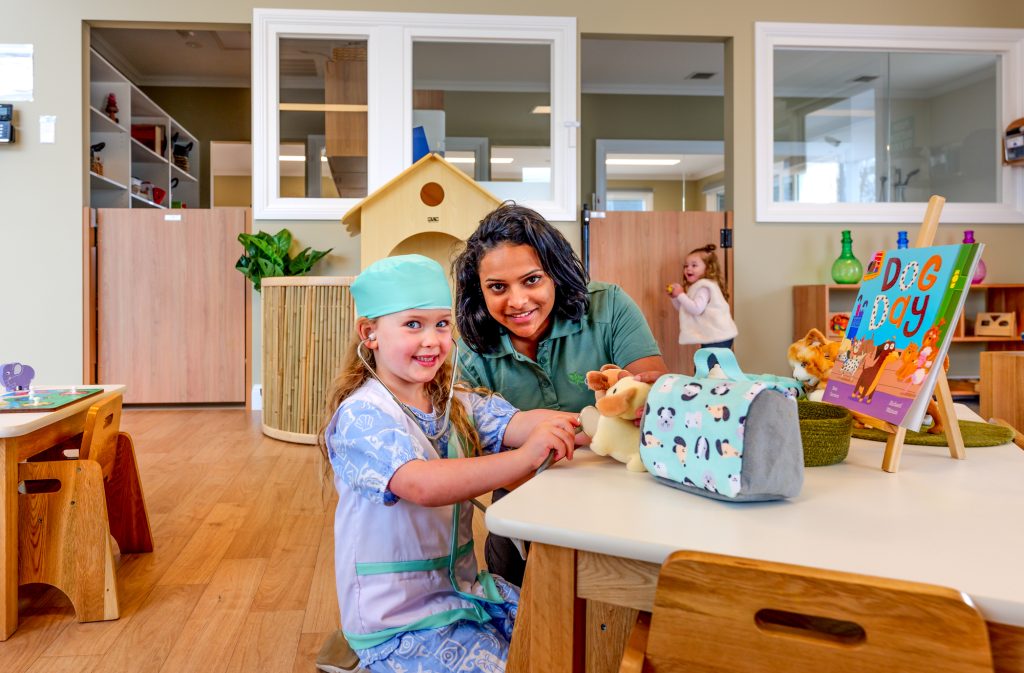
Planning ahead? We are now taking enquiries for our 2026 Kindergarten or Preschool Program. Register your interest today to secure your child’s place and give them a strong educational foundation.
Follow us on Facebook to stay up to date!
- Grow Early Education Bushland Beach
- Grow Early Education Bundaberg North
- Grow Early Education Darling Heights
- Grow Early Education Bridgeman Downs
- Grow Early Education Park Ridge
- Grow Early Education Toowoomba
- Grow Early Education Hervey Bay
- Grow Early Education Maroochydore
- Grow Early Education Dalby
- Grow Early Education Riverton
- Grow Early Education Gunnedah
- Grow Early Education Kelso
- Grow Early Education Nowra Central
- Grow Early Education Narre Warren North
- Grow Early Education Heathmont
- Grow Early Education Frankston
At Grow Early Education, Reconciliation Week is a time to come together to listen, learn, and reflect. In 2025, we embraced the powerful theme, Bridging Now to Next, with meaningful learning experiences that honoured Aboriginal and Torres Strait Islander history and culture. Across our centres, Educators thoughtfully created opportunities for children to explore, connect, and celebrate through art, music, storytelling, and sensory play.
Here’s a look at how our Grow Early Education centres brought Reconciliation Week to life:
Celebrating Culture and Community at Grow Early Education Hervey Bay
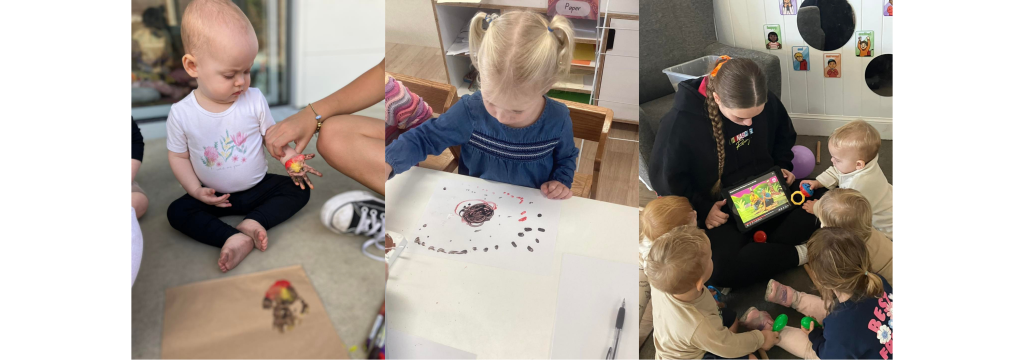
At Hervey Bay, children celebrated Reconciliation Week through a vibrant mix of storytelling, art, and music. They painted the Aboriginal and Torres Strait Islander flags on their hands, created dot paintings, and watched videos of the didgeridoo to deepen their cultural understanding. These engaging experiences fostered a sense of community and connection to Country.
Sensory Play with Purpose at Grow Early Education Dalby
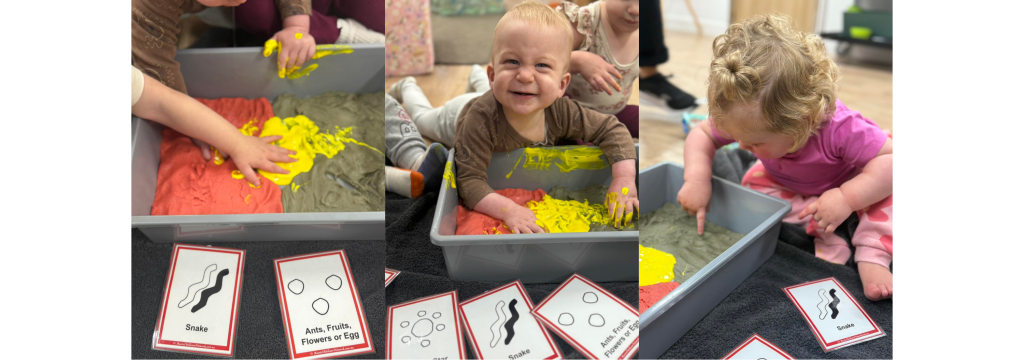
Children at Grow Early Education Dalby explored a unique sensory tray inspired by the Aboriginal flag. With colours and textures designed to spark curiosity, children squished and poked their way through the tray while being introduced to traditional Indigenous markings. Flashcards helped guide the children as they replicated the symbols, promoting conversation and cultural exploration through play.
Natural Connections with the Toddlers at Grow Early Education Toowoomba
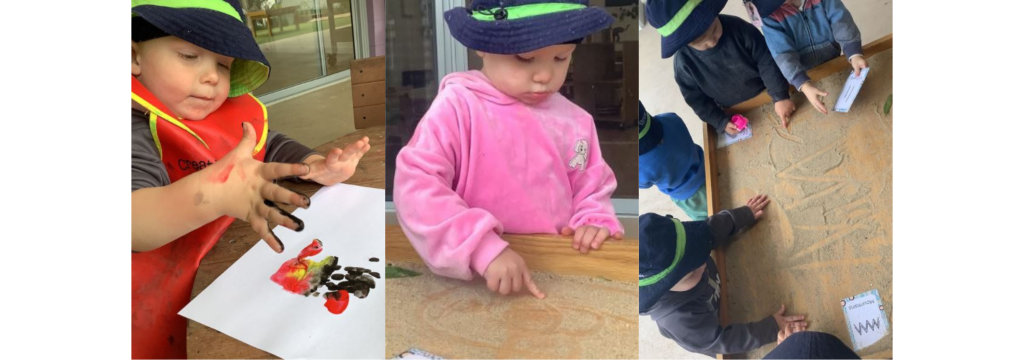
In the Toddler Classroom at Grow Early Education Toowoomba, children engaged in hands-on learning experiences that celebrated Indigenous culture. They practised stamping the Aboriginal flag using their hands and explored colour, patterns, and meaning, while drawing traditional cultural symbols in the sand. These experiences sparked rich, age-appropriate conversations about Reconciliation Week, helping children begin to understand the importance of connection to land, culture, and people.
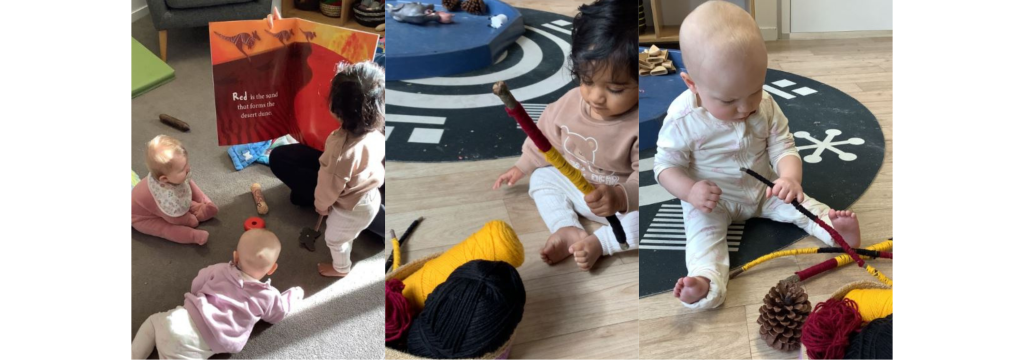
First Steps in Learning at Grow Early Education Toowoomba's Nursery Classroom
Even our littlest learners in the Nursery were invited to participate in age-appropriate ways. Educators introduced thoughtful books and resources to gently guide conversations around family, land, and connection to Country, laying the foundations for empathy and cultural awareness from the earliest years.
Reconciliation Week at Grow Early Education was a reminder that cultural understanding starts with open hearts and curious minds. Through age-appropriate and meaningful experiences, our Educators continue to embed First Nations perspectives into daily learning, ensuring every child grows up in an environment that values diversity, respect, and unity.
Together—now more than ever—we walk hand in hand toward a future built on truth, connection, and care for all cultures.
Follow us on Facebook to see how our Grow Early Education centres incorporate National Reconciliation Week into their curriculums.
- Grow Early Education Bushland Beach
- Grow Early Education Bundaberg North
- Grow Early Education Darling Heights
- Grow Early Education Bridgeman Downs
- Grow Early Education Park Ridge
- Grow Early Education Toowoomba
- Grow Early Education Hervey Bay
- Grow Early Education Maroochydore
- Grow Early Education Dalby
- Grow Early Education Riverton
- Grow Early Education Gunnedah
- Grow Early Education Kelso
- Grow Early Education Nowra Central
- Grow Early Education Narre Warren North
- Grow Early Education Heathmont
- Grow Early Education Frankston
