Early Childhood Education plays a vital role in a child’s development, yet many myths and misconceptions still surround it. From doubts about play-based learning to misunderstandings about structured programs, these myths can make it difficult for families to feel confident about choosing the right childcare or early learning environment. In this weeks blog, we are exploring some of the most common childcare and early childhood education misconceptions and the unpacking the truth behind them.
Myth 1: “Play isn’t real learning”
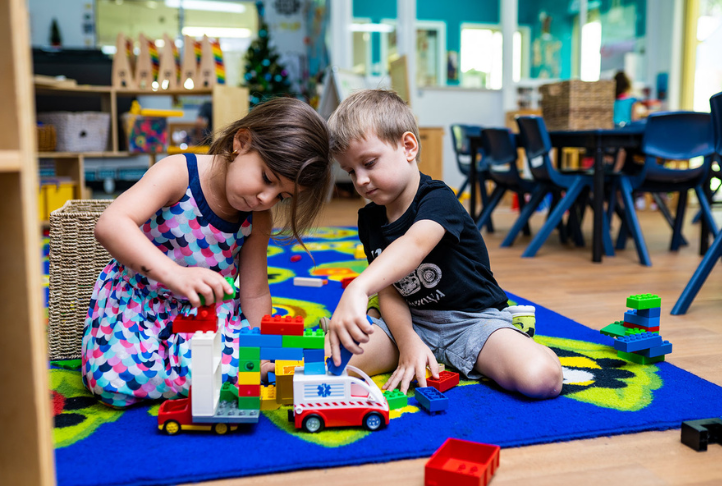
Many people think that when children play, they’re just having fun. In reality, play is a powerful learning tool. Through play, children develop critical social, emotional, and cognitive skills. Activities such as building with blocks, exploring sensory materials, or engaging in imaginative play help children learn problem-solving, communication, and cooperation, all while having fun.
Myth 2: “Children are too young to benefit from structured programs”
Some parents worry that structured learning isn’t appropriate for young children. Modern early childhood programs, however, balance gentle structure with flexibility. Teaching and learning strategies such as the Abecedarian Approach Australia (3a) introduce learning through meaningful interactions and responsive routines, giving children the building blocks for literacy, numeracy, and social-emotional skills, all in ways that feel natural and engaging for their age.

Myth 3: “‘Child-led learning’ means children do whatever they want”
Child-led learning is often misunderstood. It doesn’t mean children have no guidance. Instead, it’s about following the child’s interests while providing supportive frameworks and rich learning opportunities. Educators observe, scaffold, and introduce new ideas, helping children explore and develop skills at their own pace while maintaining clear learning goals.

Myth 4: “Early Childhood Education is just babysitting”
High-quality childcare is so much more than supervision. It’s about creating an environment where children feel safe, nurtured, and stimulated. Through intentional teaching strategies, rich play experiences, and strong relationships, Early Childhood Educators actively foster a child’s curiosity, independence, and lifelong love of learning.
Myth 5: “Children don’t need social skills yet”
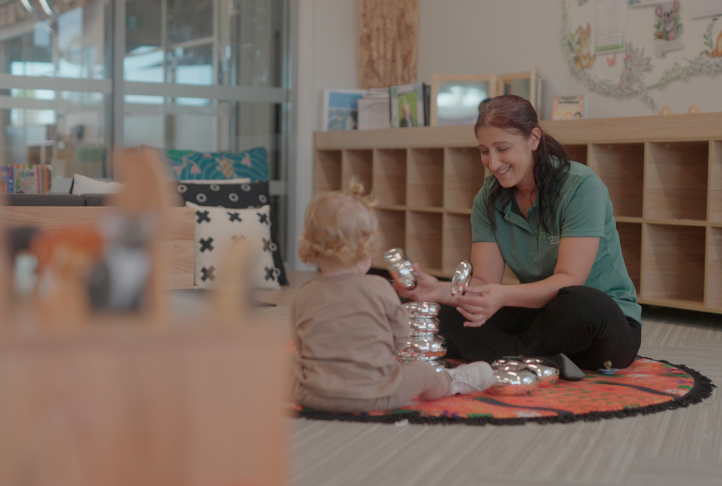
Social development starts early. Interacting with peers and adults in a supportive environment helps children learn empathy, turn-taking, conflict resolution, and self-regulation. Early Education settings provide guided social experiences that children can’t easily get on their own at home.
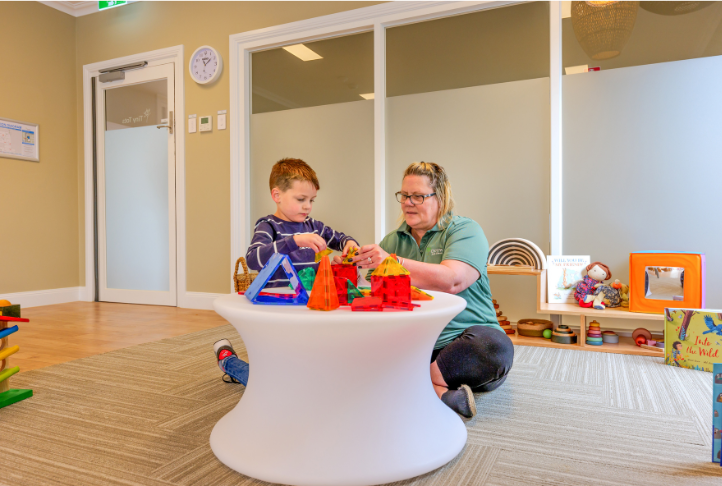
Modern Early Childhood Education is research-backed, intentional, and designed to support every child’s growth. Approaches such as the Abecedarian Approach and play-based learning ensure children are developing academically, socially, and emotionally, all in ways that feel natural, enjoyable, and meaningful.
Across our Grow Early Education centres, we see these principles in action every day. Children serve their own snacks and lunches, help tidy up educational resources, and even prepare their beds for rest time, fostering independence, confidence, and responsibility all while learning through play.
If you’ve ever wondered about the value of Early Education, we invite you to explore our classrooms and see firsthand how children learn, grow, and thrive in a nurturing environment.
Discover how Early Childhood Education could be a great fit for your family by booking a tour of your nearest Grow Early Education centre:
- Grow Early Education Darling Heights
- Grow Early Education Bridgeman Downs
- Grow Early Education Park Ridge
- Grow Early Education Toowoomba
- Grow Early Education Hervey Bay
- Grow Early Education Dalby
- Grow Early Education Riverton
- Grow Early Education Gunnedah
- Grow Early Education Kelso
- Grow Early Education Nowra Central
- Grow Early Education Narre Warren North
- Grow Early Education Heathmont
- Grow Early Education Frankston
- Grow Early Education Tarneit
It is never too early to introduce and encourage independence. When children are given small responsibilities, they not only learn essential life skills but also build confidence, a sense of accomplishment, and a feeling of being capable. Age-appropriate chores are a fantastic way to introduce responsibility and independence in a fun and supportive way.
Chores aren’t just about keeping your home tidy, they’re opportunities for learning. By participating in everyday tasks, children:
- Develop fine and gross motor skills
- Learn to follow instructions
- Build confidence and pride in their abilities
- Practice problem-solving and teamwork
- Gain a sense of responsibility
Even simple tasks can make a big difference. When children are trusted with responsibilities, they feel valued and empowered.
Here are some ways you can match chores to your child’s developmental stage:
Toddlers (2–3 years)
- Put toys back in their place
- Help water plants
- Wipe up small spills
- Place napkins on the table

Preschoolers (4–5 years)
- Set the table for meals
- Help pack away groceries
- Feed pets
- Help with dishes and laundry

Early school age (6–7 years)
- Make their bed
- Help prepare simple meals or snacks
- Take out recycling
- Sweep small areas or dust

- Keep it simple; choose tasks your child can realistically do while making it fun by turning chores into games or challenges. Children thrive within routine, by making sure you remain consistent in the chores helps children to understand the expectations and feel secure.
- Handling Resistance; It’s normal for children to resist chores at first. Offer choices (“Do you want to put the toys away before or after you snack?”) and keep a calm, encouraging tone. Avoid turning chores into power struggles, consistency and gentle guidance work better than pressure.
- Making Chores Enjoyable; Make it a family routine, children often engage more when they see adults participating alongside them. Use songs, timers, or small challenges to turn chores into fun activities.
- Celebrating Progress; Encourage intrinsic motivation by focussing on how proud they feel rather than just rewards. Consider a “chore chart” for older children to visualise their achievements.
- Teaching Problem-Solving; If a child struggles with a task, guide them to figure it out rather than doing it for them. Ask questions such as, “what’s the first thing we need to do to clean up this space?”
- Balancing Expectations; Remember: independence grows gradually, some tasks will be messy or incomplete at first, but that’s part of the learning.
Even small accomplishments deserve recognition! A high-five, sticker, or verbal praise reinforces positive behaviour and encourages children to keep trying. Over time, these small responsibilities grow into lifelong skills and a strong sense of independence.
At our Grow Early Education centres, we see this in action every day when children serve their own lunch and snacks, tidy up after meal times, help prepare their beds for naps, and pack away the educational resources they use throughout the day. These daily routines not only support independence but also foster confidence, responsibility, and pride in their abilities.
Follow us on Facebook to stay up to date with each of our Grow Early Education centres:
- Grow Early Education Darling Heights
- Grow Early Education Bridgeman Downs
- Grow Early Education Park Ridge
- Grow Early Education Toowoomba
- Grow Early Education Hervey Bay
- Grow Early Education Dalby
- Grow Early Education Riverton
- Grow Early Education Gunnedah
- Grow Early Education Kelso
- Grow Early Education Nowra Central
- Grow Early Education Narre Warren North
- Grow Early Education Heathmont
- Grow Early Education Frankston
This week across our Grow Early Education centres, children have been reaching for the stars as we celebrate Space Week 2025. Our Educators have been sparking curiosity about the wonders of the universe through play, creativity, and exploration.
From glowing stars and swirling planets to astronauts floating in zero gravity, space is a topic that instantly excites children, there’s something truly magical about exploring what lies beyond our planet and for young children, learning about space isn’t just about facts and science, it’s about nurturing wonder, discovery, and a love for learning.
While Space Week is a wonderful opportunity to focus on the cosmos, our Educators and Curriculum Teams work together to find ways to nurture curiosity about science and discovery all year round.
Introducing early concepts of space in early education helps children:
Develop curiosity and questioning skills, “What’s out there?” “Why do stars twinkle?”
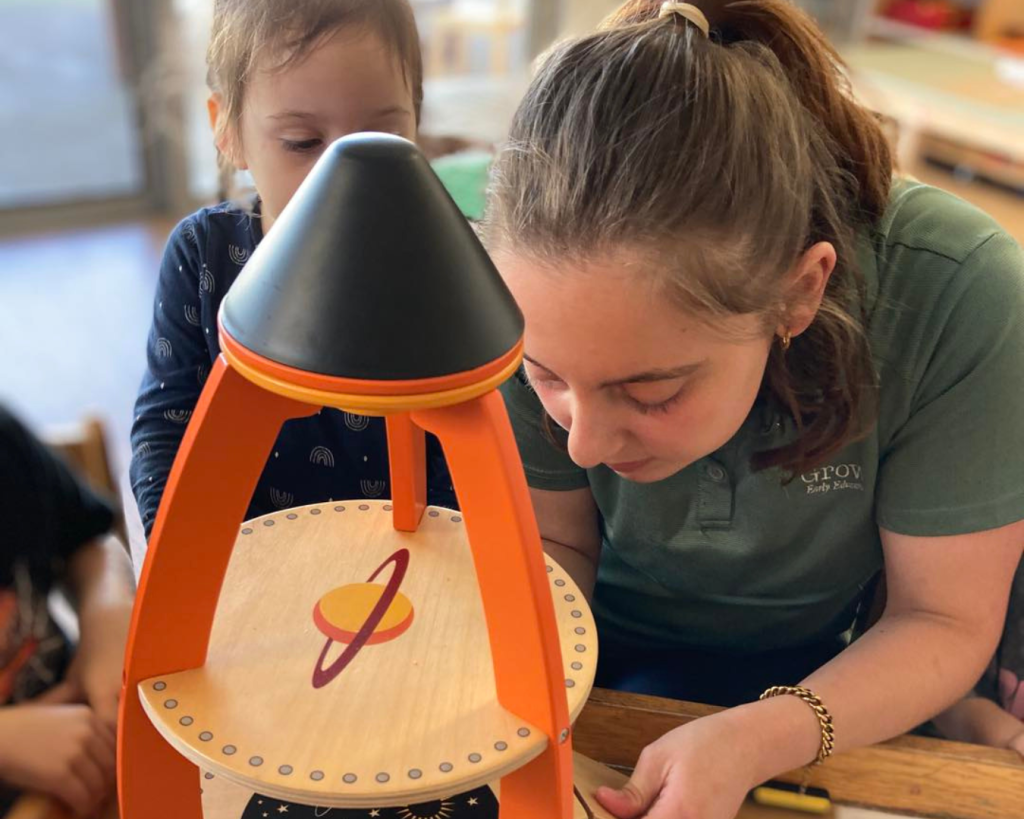
Explore STEM (Science, Tech, Engineering, and Math) concepts in playful ways such as counting planets, building rockets, or comparing sizes and shapes.
Engage their creative thinking through imaginative play by pretending to be astronauts, aliens, or scientists.
Strengthen language and literacy learning new words such as “orbit,” “gravity,” or “galaxy.”
When space is introduced through hands-on, age-appropriate experiences, it becomes a gateway for big thinking and helps children connect what they know about their world to what exists beyond it.
Across our Grow Early Education centres, Educators bring the theme of space to life through creative, sensory, and play-based learning experiences.
Here are just a few of the ways children explore the cosmos at Grow Early Education:

One of the children’s favourite experiences is creating paper mâché planets. Using balloons, newspaper, and paint, children can design their own colourful versions of the solar system. This activity offers so much more than just art, it becomes a rich opportunity for learning and skill development.
As children shape and paint their planets, they also develop fine motor skills through tearing, gluing, and brushing, express their creativity by choosing colours and textures, and strengthen their scientific thinking as Educators guide conversations around the planets’ sizes, orbits, and characteristics.

Another engaging experience is exploring space-themed sensory trays, filled with foil, natural materials such as wood, cotton, and rocks, and cut-outs of moons, rockets, and friendly aliens. This inviting setup encourages children to explore different textures, materials, and imaginative ideas as they play.
As children scoop, sort, and create stories within the tray, they develop their sensory awareness, fine motor coordination, and language skills, while also building an understanding of how materials and environments can represent the world — and universe — around them.

Painting planets is another classic Space themed activity where children add colour and texture to paper cut-outs representing the planets of our solar system. Using brushes, cotton buds, or fingers, children experiment with mixing and applying paint, creating unique patterns and designs.
This creative experience supports the development of fine motor skills as children hold and control tools, express their creativity through colour and pattern choices, and build early scientific understanding as educators talk about the planets, their colours, and positions in the solar system. It’s a hands-on way to make the universe feel close, exciting, and full of possibilities.
Each of these experiences encourages children to think like little explorers, asking questions, making predictions, and sharing their discoveries with peers.
Exploring space connects seamlessly to many areas of the Early Years Learning Framework (EYLF), including:
Outcome 4: Children are confident and involved learners — as they experiment, investigate, and problem-solve through play.
Outcome 5: Children are effective communicators — as they express ideas, share knowledge, and engage in rich conversations about what they discover.
Outcome 2: Children are connected with and contribute to their world — as they begin to understand their place in the wider universe.
Through these experiences, children not only learn about space, they learn about possibility. They dream, imagine, and explore the idea that there’s so much more to discover.
By turning space into a hands-on, sensory-rich experience, our Educators are building a foundation for lifelong curiosity and learning.
Follow us on Facebook to stay up to date with each of our Grow Early Education centres and explore how they celebrate Space:
- Grow Early Education Darling Heights
- Grow Early Education Bridgeman Downs
- Grow Early Education Park Ridge
- Grow Early Education Toowoomba
- Grow Early Education Hervey Bay
- Grow Early Education Dalby
- Grow Early Education Riverton
- Grow Early Education Gunnedah
- Grow Early Education Kelso
- Grow Early Education Nowra Central
- Grow Early Education Narre Warren North
- Grow Early Education Heathmont
- Grow Early Education Frankston
At Grow Early Education, we believe science is a way for children to explore, question, and discover the world around them every day.
This National Science Week, we’re sharing a collection of simple, age-appropriate science experiments you can try at home with your little one. These activities fun and engaging, plus they also help build important skills such as problem-solving, observation, and prediction. Skills we nurture in our own science-based learning experiences across our centres.
Babies (0–1 years)
Rainbow Ice
Create colourful ice cubes using water and a few drops of food colouring. Place them in a large container or sensory tray and let your baby explore the melting ice. You can add a small container of warm water for them to experiment with melting the ice faster.
This activity encourages sensory exploration through temperature, texture, and colour while helping babies develop early observation skills. They begin to understand cause and effect as they notice the ice melting more quickly in warm water, and their language skills grow as you introduce new words like “cold,” “melting,” “blue,” and “mixing.”

Sound Bottles
Fill a clear, empty plastic bottle with items such as beads, rice, or bells. Let your baby shake the bottle to explore the different sounds each filling makes.
Shaking the bottle helps babies discover cause and effect while developing their listening skills as they hear the different sounds. It also promotes fine motor development through grasping and shaking, as well as visual tracking, as they watch the items move inside the bottle.

Toddlers (1–3 years)
Fizzing Colours
Add baking soda to a tray. Mix vinegar and food colouring in small cups, then use droppers to release the coloured vinegar onto the baking soda. Watch the fizzy reaction unfold right in front of your eyes!
This experiment introduces Toddlers to basic chemistry as they watch the acid and base reaction create fizz. They strengthen colour recognition and begin exploring colour mixing, while using droppers supports fine motor skills. Asking them to guess what will happen next also encourages curiosity and early prediction skills.

Sink or Float
Fill a large tub with water. Collect natural materials from around the home. Before dropping each item in, ask your child to guess: “Will this sink or float?”
This hands-on activity helps Toddlers begin to think like scientists by making predictions and testing their ideas. They practise categorisation skills and start to understand buoyancy, while also expanding their vocabulary with words such as “heavy,” “light,” “float,” and “sink.”

Pre-Kindy (3–4 years)
Walking Rainbow
Arrange jars of water coloured with food dye and blank water in a circle, alternating blank water with coloured water. Place a strip of paper towel between each jar, making sure the ends dip into the water. Watch the colours travel and mix over time.
Children strengthen their observation skills as they watch the colours slowly move, mix, and blend over time. This experiment introduces them to absorption and capillary action in a visual way, supports their understanding of colour mixing, and encourages them to talk through the sequence of events they see.

Shadow Tracing
Lay paper or card next to an object’s shadow and have your child trace its outline. Return throughout the day to see how the shadow has changed.
Shadow tracing helps children understand how the position of the sun changes shadows throughout the day. It also develops early measurement and comparison skills, supports fine motor control through drawing, and sparks curiosity about nature and the passing of time.

Kindergarten & Preschool (4–5 years)
Colour Changing Flowers or Celery
Place white flowers or celery stalks in a jar of coloured water. Over time, the stems will draw up the coloured water and change colour.
This activity introduces children to plant biology by showing how plants absorb water through their stems. It encourages them to observe and record changes over time, developing patience, attention to detail, and early scientific thinking.

Blowing Up a Balloon With Gas
Use a funnel to insert baking soda into a deflated balloon. Fill a bottle with vinegar, then carefully attach the balloon to the bottle’s neck without spilling the baking soda. Lift the balloon so the baking soda falls in. This will create a fizzy reaction, causing gas to inflate the balloon.
This experiment demonstrates chemical reactions and gas formation in a way children can see and enjoy. It promotes problem-solving and sequencing as they follow the steps, encourages them to make predictions, and gives them a memorable “wow” moment that builds excitement for science.

At Grow Early Education, science is a part of our everyday learning. From sensory exploration with our youngest babies to hands-on STEM projects with our older children, we create opportunities for children to investigate, experiment, and discover.
By trying these activities at home, you’re extending your child’s learning and giving them the chance to see science as something fun, exciting, and part of the world around them. Together, we can help inspire the next generation of curious thinkers and problem-solvers.
To further enrich these activities, you can use the Abecedarian Approach Australia (3a) Language Priority by talking your child through each reaction and change they observe during the experiment. This ongoing conversation helps build their communication skills and introduces them to a wider range of new words.
Follow us on Facebook to keep up to date with our Grow Early Education centres and see how we have acknowledged and celebrated National Science Week this week:
- Grow Early Education Bundaberg North
- Grow Early Education Darling Heights
- Grow Early Education Bridgeman Downs
- Grow Early Education Park Ridge
- Grow Early Education Toowoomba
- Grow Early Education Hervey Bay
- Grow Early Education Dalby
- Grow Early Education Riverton
- Grow Early Education Gunnedah
- Grow Early Education Kelso
- Grow Early Education Nowra Central
- Grow Early Education Narre Warren North
- Grow Early Education Heathmont
- Grow Early Education Frankston
The first five years of life are often described as the most important for a child’s growth, and for a good reason. During this time, children’s brains develop faster than at any other stage, creating the building blocks for lifelong learning, health, and wellbeing. From their very first smile to their first day of school, every milestone is a sign of progress in areas such as communication, movement, problem-solving, social skills, and emotional understanding.
At Grow Early Education, we see these milestones as moments to celebrate and opportunities to nurture. Our Educators are trained to recognise and support each stage of development, tailoring experiences that inspire curiosity, build confidence, and encourage independence. Through play-based learning, sensory-rich environments, and warm, consistent relationships, we create a safe and stimulating space where children can thrive.
We also know that no two children develop at exactly the same pace. That’s why our approach is flexible, responsive, and centred around the needs of each individual child. Whether it’s building neck strength through tummy time in the Nursery, encouraging a Toddler’s first words through story time, or helping a Pre-Kindy child navigate friendships, we’re here to guide, support, and celebrate every step of the journey.
In this week’s blog, we are exploring the key milestones children typically reach from birth to age five, why they matter, and how families can support their child’s development every step of the way.
Birth to 6 Months: Building Bonds and Early Awareness
The first six months are all about bonding and sensory exploration. Babies are learning to trust the world around them through consistent care, cuddles, and communication.
Their brains are developing rapidly as they respond to your voice, facial expressions, and touch. During this time, babies begin to discover their bodies, their environment, and how to express their needs, usually through crying, cooing, and movement. These early months are foundational for emotional security and future learning.

Key Milestones:
- Smiling in response to others (around 6–8 weeks)
- Lifting head and beginning tummy time movements
- Making cooing and gurgling sounds
- Following moving objects with their eyes or moves head to sound of voices
- Makes eye contact when face-to-face with an adult about 20cm away or shuts eyes tight in bright light
How You Can Support Them:
- Provide skin-to-skin contact and responsive care
- Use eye contact, facial expressions, and calm voice when speaking
- Offer short, supervised tummy time daily
- Sing lullabies, talk during nappy changes, and read simple books
- Allow time for free movement on a soft mat or blanket
Seek Advice if:
- Child cries a lot
- Child arches their back
- Doesn’t respond to sound
- Isn’t showing interest when played with
- Doesn’t start making cooing or gurgling noises
6 to 12 Months: Exploring and Engaging
From six months onward, babies become more physically active and socially curious. They begin to move with more control, rolling, sitting, and eventually crawling, allowing them to explore their world in new ways. Language development picks up speed as they babble and experiment with sounds.
This is also a stage where separation anxiety may emerge, showing that your baby has formed strong attachments. Their growing independence is a sign of healthy development, even as they still rely on your guidance and reassurance.

Key Milestones:
- Sitting without support
- Rolling both ways and beginning to/ able to crawl
- Babbling (e.g., “ba-ba,” “da-da”) and responding to their name
- Showing preferences for certain people or toys
- Starting to pull self to standing position when hands are held
How You Can Support Them:
- Encourage exploration with safe, sensory-rich toys
- Play simple games like peekaboo to build social skills
- Support crawling and movement in open, safe spaces
- Read picture books with simple, repetitive language
Seek Advice if:
- Child isn’t making or learning new noises/sounds
- Not responding to familiar faces
- Isn’t learning to roll when playing on the floor
- Child doesn’t play with their feet or swaps objects between hands
- Doesn’t begin sitting, crawling, or pulling to stand
12 to 18 Months: First Steps Toward Independence
Between 12 and 18 months, Toddlers begin to express their independence in exciting (and sometimes messy!) ways. This is a stage of rapid physical development, many children take their first steps around their first birthday, and their curiosity about the world increases as their mobility improves.
At the same time, their communication skills are emerging, with first words, gestures, and emotional expressions becoming more intentional. It’s a time of big emotions, trial and error, and learning through play, exploration, and connection.

Key Milestones:
- Walking independently or with support
- Saying a few recognisable words like “mama” “dada” or “ball”
- Pointing to express interest or ask for things such as water, food, or toys
- Responding to simple instructions such as “can you pass me that”
- Showing interest in copying adult actions (such as brushing hair)
How You Can Support Them:
- Offer encouragement and praise for attempts, not just success
- Narrate daily routines and name objects to support language growth
- Provide safe spaces to explore and practice walking or climbing
- Engage in pretend play with simple props (e.g., cups, dolls)
Seek Advice if:
- Child isn’t using words or actions to communicate such as raising arms to be lifted or waving
- Child doesn’t want to move around
- Isn’t responding to others
- Not seeking attention of familiar people
18 to 24 Months: Communication and Curiosity
Between 18 and 24 months, Toddlers begin to show more personality, independence, and determination. They’re learning that they are separate from others and may start testing boundaries, an important part of social-emotional development.
Language begins to develop rapidly during this time, with Toddlers going from using a handful of words to combining two or more into short phrases. Their curiosity is constant, and they learn best through hands-on play, repetition, and exploration of the world around them.

Key Milestones:
- Using 10–50 words and beginning to form simple two-word phrases such as “more milk”
- Running, climbing, and kicking a ball
- Engaging in pretend play such as feeding a doll or pretending to talk on the phone
- Following simple two-step instructions
- Showing increasing independence such as wanting to feed themselves or choose clothes
How You Can Support Them:
- Read books with repetition and rhythm to boost vocabulary
- Offer choices to encourage independence “Do you want the red cup or the blue one?”
- Play simple pretend games and let them lead
- Use positive language and clear limits to guide behaviour
- Celebrate efforts in self-help skills like feeding or packing away toys
Seek Advice if:
- Child has trouble seeing or hearing things
- Child doesn’t say any single words
- Can’t put two words together such as “more drink”
- Doesn’t point, wave, or use other gestures
2 to 3 Years: Confidence, Curiosity, and Communication
Between the ages of 2 and 3, Toddlers become more confident in their physical abilities, language, and self-expression. This stage is often called the “Toddler Explosion” because of the rapid growth in vocabulary and social understanding.
Children begin to speak in short sentences, engage more in imaginative play, and show a desire to do things on their own. While emotions can still run high, Toddlers are starting to understand basic rules, routines, and how to express themselves in more complex ways. This is also when many children begin showing interest in toilet learning and self-help skills.

Key Milestones:
- Speaking in 2–4 word phrases and naming familiar people and objects
- Running, jumping, climbing, and kicking or throwing a ball
- Showing interest in playing alongside or with other children
- Engaging in pretend play for example, cooking, doctor, or animals
- Beginning toilet learning or showing signs of readiness
How You Can Support Them:
- Encourage conversations by asking open-ended questions and giving time to respond
- Offer opportunities for imaginative and messy play
- Support toilet learning with patience, consistency, and positive reinforcement
- Provide simple tasks to encourage independence such as tidying toys, putting on shoes
- Label and validate emotions to help them learn self-regulation
Seek Advice if:
- Child is not interested in playing
- Is falling a lot
- Finds it hard to use small objects
- Isn’t interested in food
- Not using many words or not understanding simple instructions
3 to 4 Years: Imagination, Social Skills, and Growing Confidence
The 3- and 4-year-olds are full of imagination, big ideas, and growing social awareness. Between ages 3 and 4, children begin to form stronger friendships, understand routines, and engage in more cooperative play. Their communication becomes clearer and more complex, allowing them to ask questions, tell stories, and express emotions in words.
At this stage, children often enjoy creative activities like drawing, painting, and role play, and they start to develop early numeracy and literacy skills through everyday experiences. This is also a key time for building emotional resilience, problem-solving, and a sense of self.

Key Milestones:
- Speaking in full sentences and asking lots of “why” and “how” questions
- Playing cooperatively with peers and taking turns
- Recognising basic colours, shapes, and counting to 5 or 10
- Drawing simple shapes or people with a few body parts
- Dressing themselves with minimal help
- Can tell the difference between being happy, sad, angry, or scared.
How You Can Support Them:
- Encourage creative play with art supplies, costumes, and open-ended materials
- Read books daily and talk about the characters and storylines
- Support social play and gently guide conflict resolution
- Introduce basic counting, sorting, and early literacy in playful ways
Seek Advice if:
- Child is not able to have a conversation
- Isn’t interested in playing with other children
- Child is not understood by others
4 to 5 Years: Confident Learners Preparing for School
Between the ages of 4 and 5, children step into a new level of confidence, curiosity, and capability. They’re developing stronger memory, problem-solving skills, and emotional awareness, and many begin showing an eagerness to learn about the world around them. Socially, they’re more cooperative, empathetic, and able to engage in group activities.
This stage often includes the transition into a more structured learning environment, such as a kindergarten program, where they build the foundational skills needed for a positive start to school. While they’re becoming more independent, they still rely on secure relationships and supportive routines to thrive.

Key Milestones:
- Speaking clearly and using more complex sentences
- Recognising letters, numbers, and their own name in writing
- Showing empathy and understanding of others’ feelings
- Drawing recognisable objects and writing some letters
- Following rules and routines with greater independence
How You Can Support Them:
- Talk positively about school and introduce daily routines that mirror a school day
- Read books with rich language and ask open-ended questions
- Encourage problem-solving during play and everyday tasks
- Support friendships and social learning through group games and role play
- Provide opportunities for fine motor practice such as drawing, cutting, threading beads
Seek Advice if:
- Child has speech fluency problems or is stammering with words
- Isn’t understood by others
- Unable to have a conversation
- Is not able to go to the toilet or wash themselves
While all children develop at their own pace, milestones offer a helpful guide for what to expect and when. Tracking these developmental stages can help identify areas where your child may need extra support and celebrate the amazing progress they’re making.
In Australia, your child’s health and development are monitored through regular child health checks. You can use your child’s Personal Health Record to keep track of milestones and speak with your child health nurse or GP if you ever have concerns.
At Grow Early Education, we know the first five years are critical in laying the foundation for future learning and success. Our Early Childhood Educators are trained to support each child’s unique journey, with play-based learning, nurturing routines, and strong relationships at the heart of everything we do.
We’re here to support you, too. If you have questions about your child’s development, our team is always happy to help.
Follow us on Facebook to keep up to date with our Grow Early Education centres and see how we support children's milestones in action:
- Grow Early Education Bundaberg North
- Grow Early Education Darling Heights
- Grow Early Education Bridgeman Downs
- Grow Early Education Park Ridge
- Grow Early Education Toowoomba
- Grow Early Education Hervey Bay
- Grow Early Education Dalby
- Grow Early Education Riverton
- Grow Early Education Gunnedah
- Grow Early Education Kelso
- Grow Early Education Nowra Central
- Grow Early Education Narre Warren North
- Grow Early Education Heathmont
- Grow Early Education Frankston
At Grow Early Education, teaching hygiene and self-care skills is an essential part of our early childhood education program. These everyday routines may seem simple, but they play a big role in supporting children’s health, independence, and confidence.
Children aged 0–6 are still developing their immune systems and are more vulnerable to germs and illnesses. Teaching hygiene for children in these early years not only helps prevent the spread of disease, but also lays the foundation for lifelong habits.
In group settings such as childcare centres, hygiene practices like handwashing for children become even more important. With shared toys, meals, and learning spaces, it’s vital that children understand when and how to clean their hands and care for their bodies.
Handwashing is one of the simplest and most effective ways to prevent the spread of germs. At Grow Early Education, we make handwashing fun and easy to understand for children through songs, stories, and visual cues.

We teach children to:
- Wet their hands
- Apply soap
- Scrub for at least 15 seconds (sing a song to help!)
- Rinse thoroughly
- Dry their hands completely
Children are encouraged to wash their hands before eating, after using the toilet, after outdoor play, and any time they sneeze or cough. By turning handwashing into a routine part of their day, children quickly build healthy hygiene habits.

Download our handwashing poster to help your children nail their handwashing technique
Beyond hygiene, general self-care skills are an important part of every child’s development. These include:
- Brushing teeth
- Blowing their nose
- Putting on shoes and hats
- Using the toilet independently
- Packing away their belongings
Another important part of our daily routine is teaching children to be SunSmart. At Grow Early Education, children are encouraged to apply their own sunscreen each morning and before going outside to play. We set up Sun Safety Stations across our childcare centres to make this easy, fun, and accessible. Educators supervise and guide the process, helping children learn how to protect their skin while developing a sense of responsibility.

We also introduce the children to self-care in the form of regular check-ups for healthy teeth and eyes. That’s why we’re proud to host regular Dental and Optics visits, offering families convenient access to professional dental and eye screenings at the centres.
By introducing children to dental and vision checks in a familiar environment, we reduce anxiety and normalise these important health habits from a young age. It’s just one more way we help support every aspect of your child’s wellbeing.

These everyday moments support independence, fine motor skills, and healthy habits that will last a lifetime. At Grow Early Education, Educators support children through gentle guidance, role-modelling, and age-appropriate encouragement. We provide opportunities throughout the day for children to practise and master these self-help skills at their own pace.
Teaching children to care for themselves helps them develop independence and confidence, build fine motor and cognitive skills, understand routines and responsibility, and feel a sense of pride in their achievements.
When children are empowered to take care of themselves, they begin to feel more in control of their world, a key part of emotional development in early childhood education.
At Grow Early Education, our goal is to create a safe, nurturing environment where children thrive. By embedding hygiene routines and self-care practices into our daily program, we support children in becoming capable, confident, and healthy individuals.
We partner with families to ensure these habits are reinforced at home, creating consistency and routine between the childcare centre and home life.
Follow us on Facebook to see how our Grow Early Education centres incorporate self-care and hygiene to their daily curriculums.
- Grow Early Education Bushland Beach
- Grow Early Education Bundaberg North
- Grow Early Education Darling Heights
- Grow Early Education Bridgeman Downs
- Grow Early Education Park Ridge
- Grow Early Education Toowoomba
- Grow Early Education Hervey Bay
- Grow Early Education Dalby
- Grow Early Education Riverton
- Grow Early Education Gunnedah
- Grow Early Education Kelso
- Grow Early Education Nowra Central
- Grow Early Education Narre Warren North
- Grow Early Education Heathmont
- Grow Early Education Frankston
NAIDOC Week is a time to celebrate the history, culture, and achievements of Aboriginal and Torres Strait Islander Peoples. It’s also an opportunity to educate future generations about the importance of cultural respect and reconciliation. At Grow Early Education, NAIDOC Week holds special significance as we strive to embed cultural understanding into our programs and daily practices.
This year’s theme, “The Next Generation: Strength, Vision & Legacy", inspired meaningful experiences across our centres that honoured traditions, promoted learning, and connected children to the stories and practices of First Nations People.
Connecting to Culture and Country
At Grow Early Education Toowoomba, children participated in a range of experiences that celebrated the rich history and traditions of First Nations Peoples. Activities included collaborative art inspired by Indigenous artists, Dreamtime storytelling sessions, and music and movement with traditional instruments and songs. Educators also supported discussions about the deep connection between people and Country, helping children understand the importance of caring for the land they live on.

Traditional Face Painting
Grow Early Education Bundaberg North explored culture with the children through face painting using markings created with traditional dots and colours. This activity sparked conversations about the meaning behind these markings and their cultural significance, providing children with a hands-on learning experience.

Natural Ochre Painting
At Grow Early Education Darling Heights, children and Educators engaged in a variety of NAIDOC-themed activities such as puzzles and hand flag painting. A highlight of the week was creating natural paint using ochre, a type of rock traditionally crushed into powder and mixed with water to form a vibrant natural pigment. This hands-on process gave children a tactile understanding of traditional art-making techniques and the cultural importance of natural resources.

Exploring Indigenous Symbols
Grow Early Education Heathmont focused on teaching children about Indigenous symbols and their meanings. Using flashcards for reference, children practised replicating these symbols through mark-making activities, supporting both fine motor skill development and cultural learning.

Community Showcase and Bush Tucker
To close out NAIDOC Week, Grow Early Education Hervey Bay hosted a showcase event for families. This celebration featured a display of NAIDOC-themed artwork created throughout the week and included an array of Aboriginal-inspired food incorporating traditional flavours such as native berries and lemon myrtle. It was a wonderful way to bring families together to reflect on culture, history, and the children’s learning.

Collaborative Aboriginal Flag
At Grow Early Education Kelso, children worked together to create a large-scale Aboriginal flag using cut pieces of red, black, and yellow paper. This collaborative project not only celebrated NAIDOC Week but also promoted teamwork and pride in cultural expression.

We are proud to create an environment that encourages and nurtures the next generation to be culturally aware, respectful, and inclusive. Celebrating NAIDOC Week is one of the many ways we strengthen these values in our programs and ensure children grow up with an appreciation for the rich history and ongoing contributions of First Nations peoples.
At Grow Early Education, cultural learning is embedded into everyday practice, not just during NAIDOC Week. We believe that education plays a powerful role in reconciliation and building a brighter, more inclusive future.
Find out more about our approach to early childhood education and book a tour at your nearest centre here.

Stay up to date with our centres to see how they celebrate and acknowledge Indigenous and Torres Strait Islander cultures throughout the year.
- Grow Early Education Bushland Beach
- Grow Early Education Bundaberg North
- Grow Early Education Darling Heights
- Grow Early Education Bridgeman Downs
- Grow Early Education Park Ridge
- Grow Early Education Toowoomba
- Grow Early Education Hervey Bay
- Grow Early Education Dalby
- Grow Early Education Riverton
- Grow Early Education Gunnedah
- Grow Early Education Kelso
- Grow Early Education Nowra Central
- Grow Early Education Narre Warren North
- Grow Early Education Heathmont
- Grow Early Education Frankston
As the school holidays roll around and the winter chill sets in, many families find themselves wondering how to keep their school-aged children happy, active, and engaged. That’s where Grow Early Education's Winter Vacation Care Program comes in!
Our Vacation Care Programs are available at select Grow Early Education centres across Australia, offering a warm and welcoming space where children can enjoy fun-filled experiences, socialise with peers, and take part in exciting, educational activities.
Whether you’re a working parent looking for full holiday care or just want your child to enjoy a few days of adventure, our long daycare centre's Vacation Care options are here to support you and your family.
Winter Vacation Care at Grow Early Education is a school holiday program designed for primary school children aged 5 to 12 years. Run by qualified and caring Educators, the program features a thoughtfully curated schedule of seasonal fun; think winter crafts, themed dress-up days, sports, science experiments, cooking, and more!
Our programs are held at our purpose-built, long daycare centres, giving families the flexibility of longer opening hours, nutritious meals provided, and a safe environment that feels like a home away from home.
Why Choose Grow Early Education's Vacation Care?
✅ Flexible hours: Our centres are open extended hours to suit working families (most centres are open 6:30am to 6:30pm)
✅ All meals included: Nutritious breakfast, lunch, and snacks prepared fresh daily by our in-house chef
✅ Engaging activities: From winter STEM experiments to games, cooking, and art
✅ Experienced Educators: Children are supported by trained and caring professionals
✅ Safe, inclusive spaces: Designed to make every child feel welcome and valued
✅ Casual bookings available: You don't need to be enrolled in our centre prior to enjoy our Vacation Care Program

Participating Centres and What’s On These Holidays
Here’s a sneak peek at some of the exciting programs on offer at our participating centres this winter:
Grow Early Education Toowoomba:
Grow Early Education Toowoomba are offering children a variety of age-appropriate adventures, including Teddy Bear Picnics, Superhero Dress-Up Days, and Scavenger Hunts. The Program is designed to spark imagination, encourage social play, and keep children active and engaged throughout the whole school holidays. Find the whole list of adventures planned here!
Grow Early Education Heathmont in Melbourne:
At Grow Early Education Heathmont, children are stepping into the world of science with a range of exciting STEM-based activities during these school holidays. From kitchen science to explosive experiments, little learners will explore messy, sensory-rich, and thought-provoking experiences that ignite curiosity and creativity. Find the full list of vacation care activities for Heathmont here!
Grow Early Education Tarneit in Melbourne:
Grow Early Education Tarneit are turning up the energy this winter with a special visit from Little Sports Heroes! The team are gearing up for fun sports and active play days designed to keep children staying warm and cozy through the chilly winter. Check out the full list of children's activities here!
Grow Early Education Narre Warren North in Melbourne:
Step into a magical Winter Wonderland at Narre Warren North as the centre celebrates Christmas in July! Children will be busy crafting festive decorations by building snowmen, creating snowflakes, and making their very own cheeky elf. It’s a joyful, creative experience that captures the magic of the season and keeps little hands busy with holiday cheer. See the full list of Winter cheer here!

Our Vacation Care Programs are built around fun, safety, and nurturing relationships between Educators and fellow peers. Whether your child loves getting messy with arts and crafts or playing together in team games, our upcoming winter vacation care program has something for every child!
Give our Enrolments Team a call today on 1300 934 769 to secure your child's place. Casual bookings and full-time bookings are now available.
Learn more about our Vacation Care Program here.
At Grow Early Education, Reconciliation Week is a time to come together to listen, learn, and reflect. In 2025, we embraced the powerful theme, Bridging Now to Next, with meaningful learning experiences that honoured Aboriginal and Torres Strait Islander history and culture. Across our centres, Educators thoughtfully created opportunities for children to explore, connect, and celebrate through art, music, storytelling, and sensory play.
Here’s a look at how our Grow Early Education centres brought Reconciliation Week to life:
Celebrating Culture and Community at Grow Early Education Hervey Bay
At Hervey Bay, children celebrated Reconciliation Week through a vibrant mix of storytelling, art, and music. They painted the Aboriginal and Torres Strait Islander flags on their hands, created dot paintings, and watched videos of the didgeridoo to deepen their cultural understanding. These engaging experiences fostered a sense of community and connection to Country.
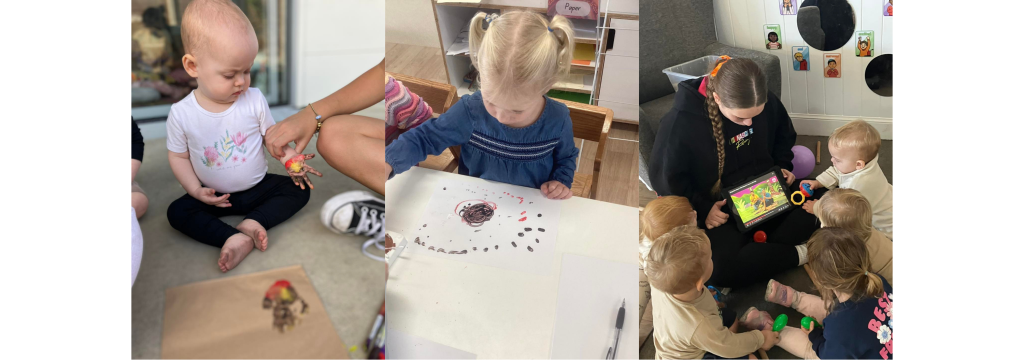
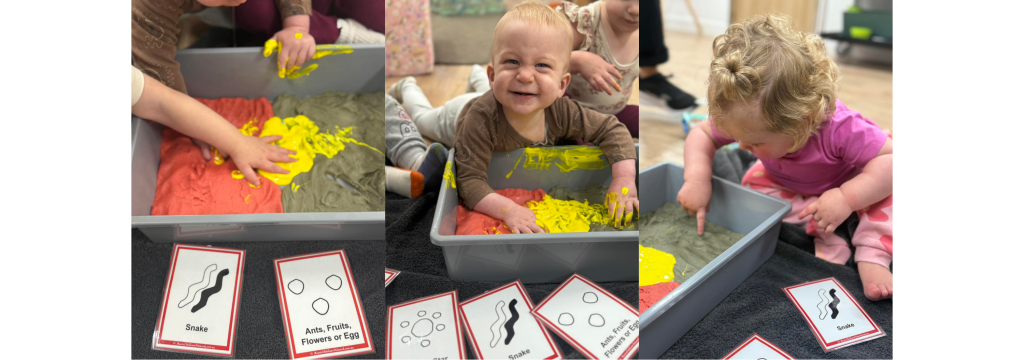
Sensory Play with Purpose at Grow Early Education Dalby
Children at Grow Early Education Dalby explored a unique sensory tray inspired by the Aboriginal flag. With colours and textures designed to spark curiosity, children squished and poked their way through the tray while being introduced to traditional Indigenous markings. Flashcards helped guide the children as they replicated the symbols, promoting conversation and cultural exploration through play.
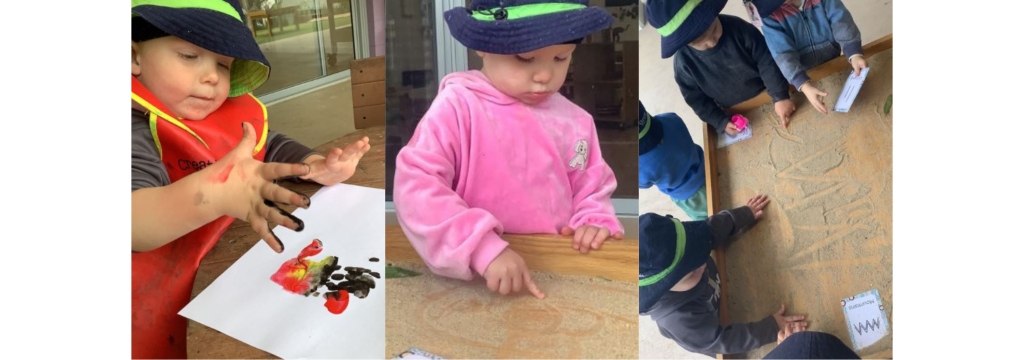
Natural Connections with the Toddlers at Grow Early Education Toowoomba
In the Toddler Classroom at Grow Early Education Toowoomba, children engaged in hands-on learning experiences that celebrated Indigenous culture. They practised stamping the Aboriginal flag using their hands and explored colour, patterns, and meaning, while drawing traditional cultural symbols in the sand. These experiences sparked rich, age-appropriate conversations about Reconciliation Week, helping children begin to understand the importance of connection to land, culture, and people.
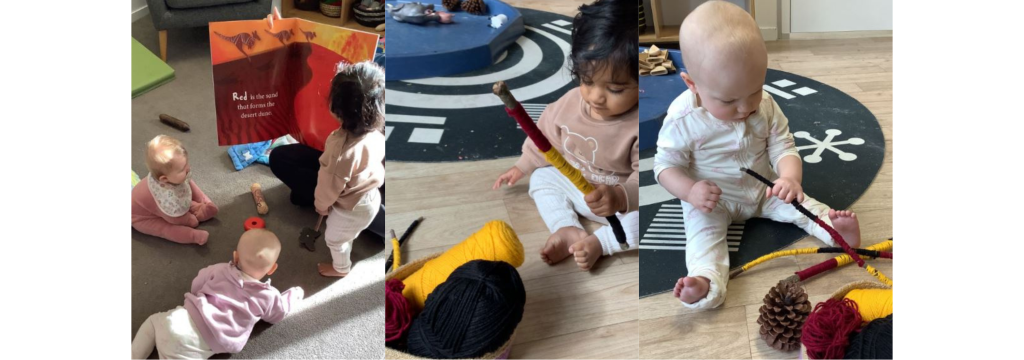
First Steps in Learning at Grow Early Education Toowoomba's Nursery Classroom
Even our littlest learners in the Nursery were invited to participate in age-appropriate ways. Educators introduced thoughtful books and resources to gently guide conversations around family, land, and connection to Country, laying the foundations for empathy and cultural awareness from the earliest years.
Reconciliation Week at Grow Early Education was a reminder that cultural understanding starts with open hearts and curious minds. Through age-appropriate and meaningful experiences, our Educators continue to embed First Nations perspectives into daily learning, ensuring every child grows up in an environment that values diversity, respect, and unity.
Together—now more than ever—we walk hand in hand toward a future built on truth, connection, and care for all cultures.
Follow us on Facebook to see how our Grow Early Education centres incorporate National Reconciliation Week into their curriculums.
- Grow Early Education Bushland Beach
- Grow Early Education Bundaberg North
- Grow Early Education Darling Heights
- Grow Early Education Bridgeman Downs
- Grow Early Education Park Ridge
- Grow Early Education Toowoomba
- Grow Early Education Hervey Bay
- Grow Early Education Maroochydore
- Grow Early Education Dalby
- Grow Early Education Riverton
- Grow Early Education Gunnedah
- Grow Early Education Kelso
- Grow Early Education Nowra Central
- Grow Early Education Narre Warren North
- Grow Early Education Heathmont
- Grow Early Education Frankston
Whether it be muddy, gloopy, or messy, we LOVE sensory play at our long daycare centres.
Sensory play is a fundamental part of early childhood development and at our childcare centres, we embrace the mess and magic of sensory trays to create hands-on, engaging experiences for children of all ages.
From the squish of jelly to the crunch of leaves, sensory trays offer children the opportunity to explore textures, sounds, smells, and even tastes in a safe and fun environment.
In this week's blog, we are showcasing how these engaging provocations can support brain development, fine motor skills, and creativity in young children while encouraging holistic development.
The Benefits of Sensory Trays:
- Brain Development: Sensory input helps build nerve connections in the brain’s pathways, enhancing memory, reasoning, and problem-solving skills.
- Fine Motor Skills: Scooping, pouring, pinching, and grasping all help children strengthen the muscles in their hands and fingers.
- Language Growth: Descriptive words fly around the room as children talk about what they feel, see, and smell.
- Emotional Regulation: Sensory play can be calming and therapeutic, helping children self-regulate and manage big emotions.
- Imaginative Play: With each new tray setup, children create stories, pretend scenarios, and explore their creativity.
At our Grow Early Education centres, our Educators use sensory trays to reflect seasonal themes, cultural learning, and educational topics. Here are just a few we’ve loved recently:
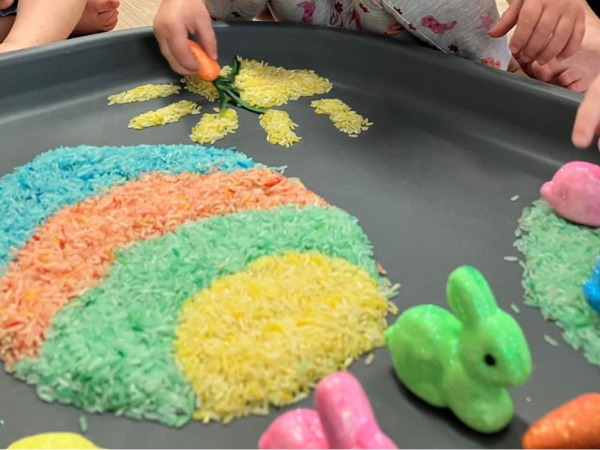
Grow Early Education Dalby:
The children at Grow Early Education Dalby recently enjoyed a bright and colourful Easter-themed “scoop and pour” tray. This tray was part of the centre’s Easter celebrations and provided a fantastic opportunity for children to practice pouring, sorting, and scooping.
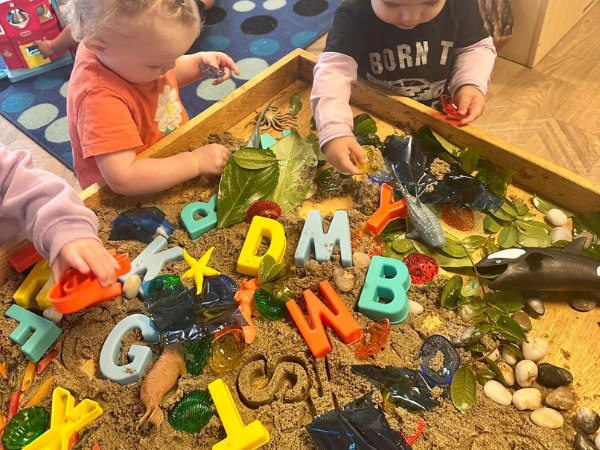
Grow Early Education Darling Heights:
The Toddler Classroom were further introduced to literacy concepts as Educators set up an ocean-themed alphabet sensory tray. Children were able to create sandcastle letters as they explored a number of colours and textures, and ocean animals.
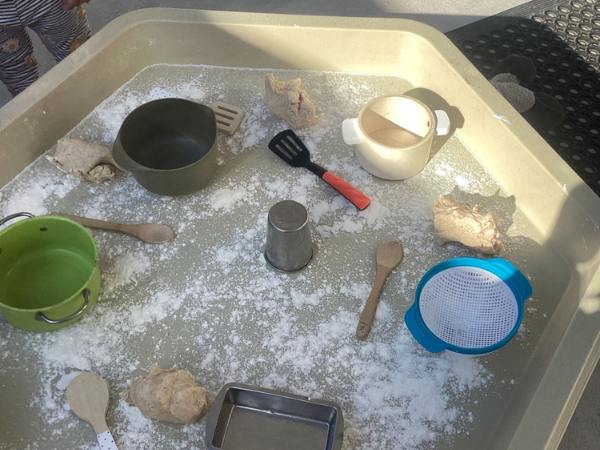
Grow Early Education Narre Warren North:
Educators were observing children's play habits within their child-initiated classroom time and discovered that the children were spending a lot of time in the home corner. To further extend on their interests, Educators set up a baking-themed sensory tray that allowed the children to experience utensils and ingredients through their senses.
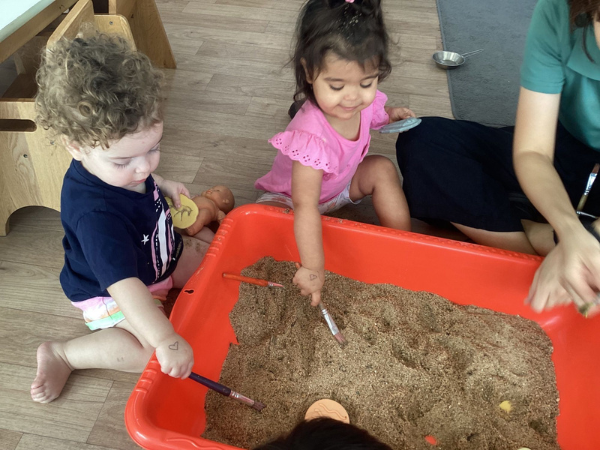
Grow Early Education Bushland Beach:
As part of the Grow Early Education curriculum exploring dinosaurs, our Educators created an exciting, age-appropriate sensory experience for the Tiny Tots Classroom. The children used paintbrushes to gently dust away sand and uncover hidden dinosaur fossils, just like real palaeontologists! This hands-on activity sparked curiosity, encouraged fine motor skills, and brought the prehistoric world to life.
Grow Early Education Gunnedah:
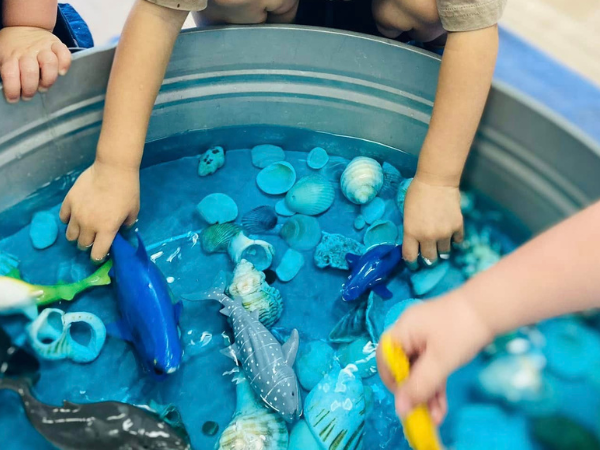
At Grow Early Education Gunnedah, our Educators thoughtfully build sensory-themed trays based on the children’s interests. Recently, they created a vibrant, ocean-themed sensory tray filled with a variety of textures and shades of blue. This immersive experience allowed the children to explore and learn about the fascinating underwater world through sensory play that stimulates curiosity and imagination.
Sensory play isn’t just fun, it’s foundational. Our Educators love designing trays that are not only exciting for children, but meaningful too. Whether it's a celebration of culture, a holiday event, or an everyday exploration of science and nature, there’s always something new to discover with a sensory tray.
Interested in trying your own tray setup at home? Here are some simple sensory tray ideas to try:
- Ocean Adventure: Blue jelly, shells, toy sea creatures, and seaweed (green spaghetti).
- Construction Site: Crushed Weet-Bix or Coco Pops as “dirt,” trucks, pebbles, and cones.
- Rainbow Rice Art: Layered colourful rice with scoops, funnels, and paintbrushes for mixing and creating.
- Fruit Exploration Tray: Citrus slices, spoons, and bowls of water for squishing and squeezing.
Stay up to date with our centres on Facebook to see what sensory play trays they create next!
- Grow Early Education Bushland Beach
- Grow Early Education Bundaberg North
- Grow Early Education Darling Heights
- Grow Early Education Bridgeman Downs
- Grow Early Education Park Ridge
- Grow Early Education Toowoomba
- Grow Early Education Hervey Bay
- Grow Early Education Maroochydore
- Grow Early Education Dalby
- Grow Early Education Riverton
- Grow Early Education Gunnedah
- Grow Early Education Kelso
- Grow Early Education Nowra Central
- Grow Early Education Narre Warren North
- Grow Early Education Heathmont
- Grow Early Education Frankston
