Now accepting enrolments for 2026 — including our Kindergarten and Preschool Programs!
At Grow Early Education, we believe every child deserves the best start in life. Our purpose-built centres have been thoughtfully designed to create nurturing, inspiring, and engaging environments where children can grow, explore, and thrive.
From our youngest Nursery learners to our Kindergarten and Preschool children preparing for school, every child benefits from a holistic early education program that blends play, discovery, and meaningful learning experiences.
Why Families Choose Grow Early Education
Child Safety & Security You Can Trust
At Grow Early Education, your child’s safety and wellbeing are our highest priority. Our centres feature comprehensive CCTV surveillance, with cameras operating throughout the centre to help ensure a secure and transparent environment. In addition to advanced security systems, our strict sign-in procedures, secure entry points, and vigilant supervision policies mean families can feel confident their children are safe, supported, and cared for at all times.

A Transformative Educational Approach Thanks to The Abecedarian Approach Australia (3a)
We are proud to deliver a transformative early childhood education experience through The Abecedarian Approach Australia (3a). This evidence-based teaching method focuses on rich, meaningful interactions between Educators and children, supporting language development, emotional wellbeing, and lifelong learning skills. Through daily practices such as conversational reading, learning games, and intentional one-on-one time, our Educators nurture every child’s curiosity and confidence — helping them thrive both now and into the future.
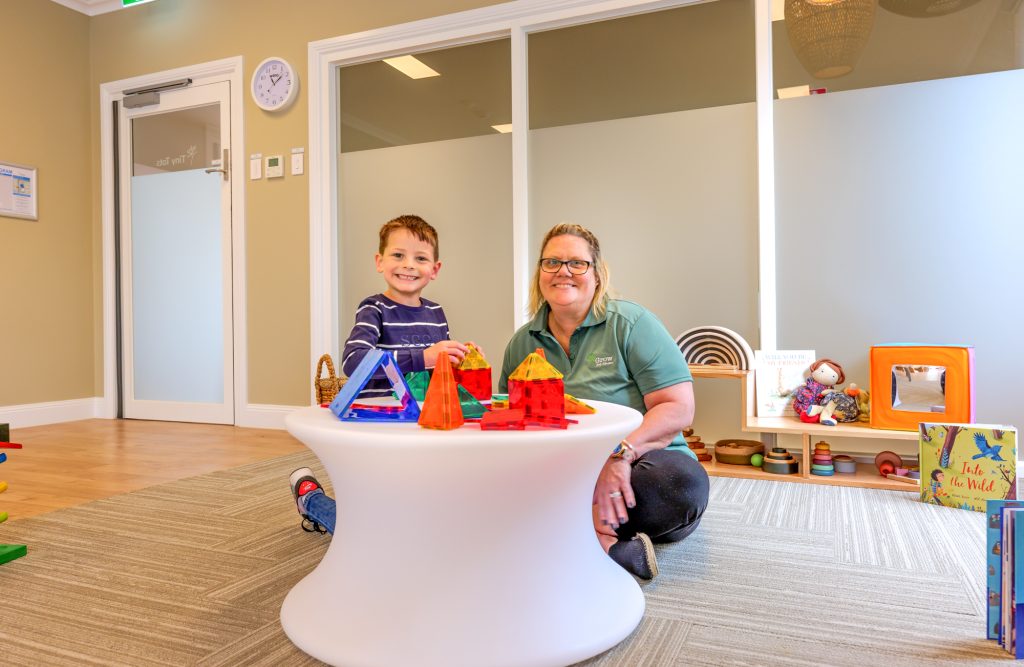
A Home-Like, Nurturing Environment
Each Grow Early Education centre is designed and purpose-built to feel like a warm and welcoming home-away-from-home, helping children feel comfortable and confident as they learn. Our Educators focus on building strong, trusting relationships that support every child’s individual journey.
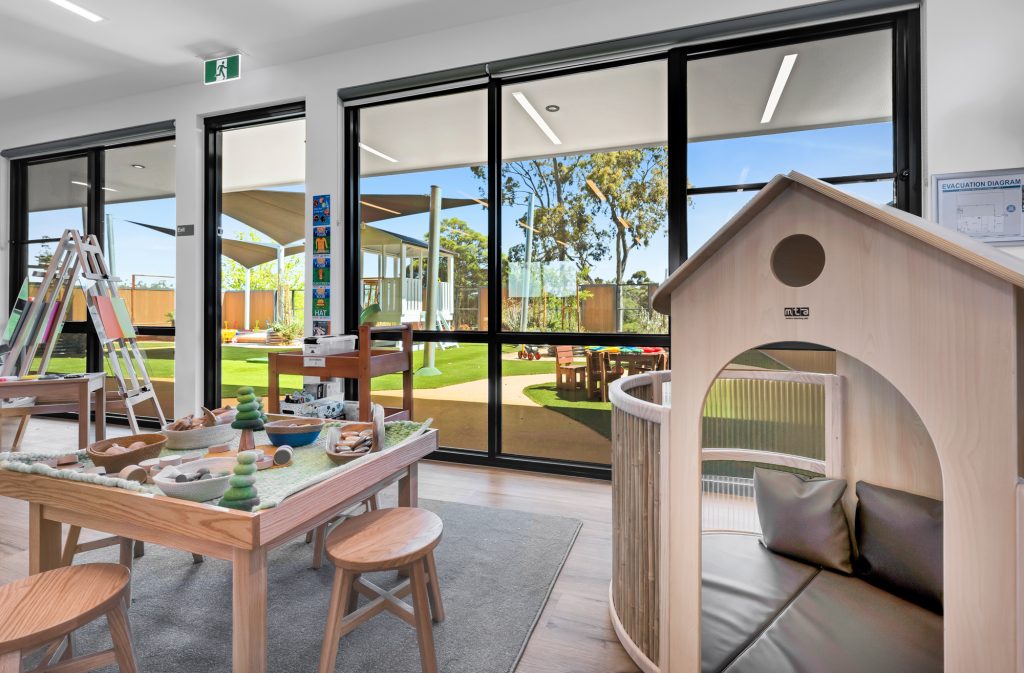
Educational Programs for Every Age
We offer enriching programs for children from 6 weeks to school age, including our Government-approved Kindergarten and Preschool Program, led by qualified Early Childhood Teachers. Through play-based learning, children build strong foundations in literacy, numeracy, and social-emotional development, preparing them for a confident transition to traditional schooling.
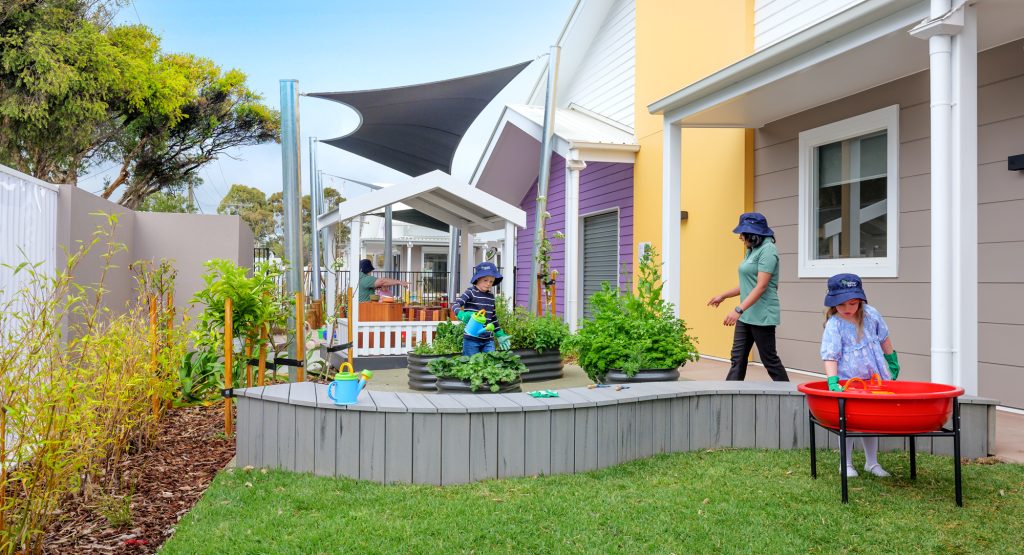
Purpose-Built Centres with Large, Modern Spaces
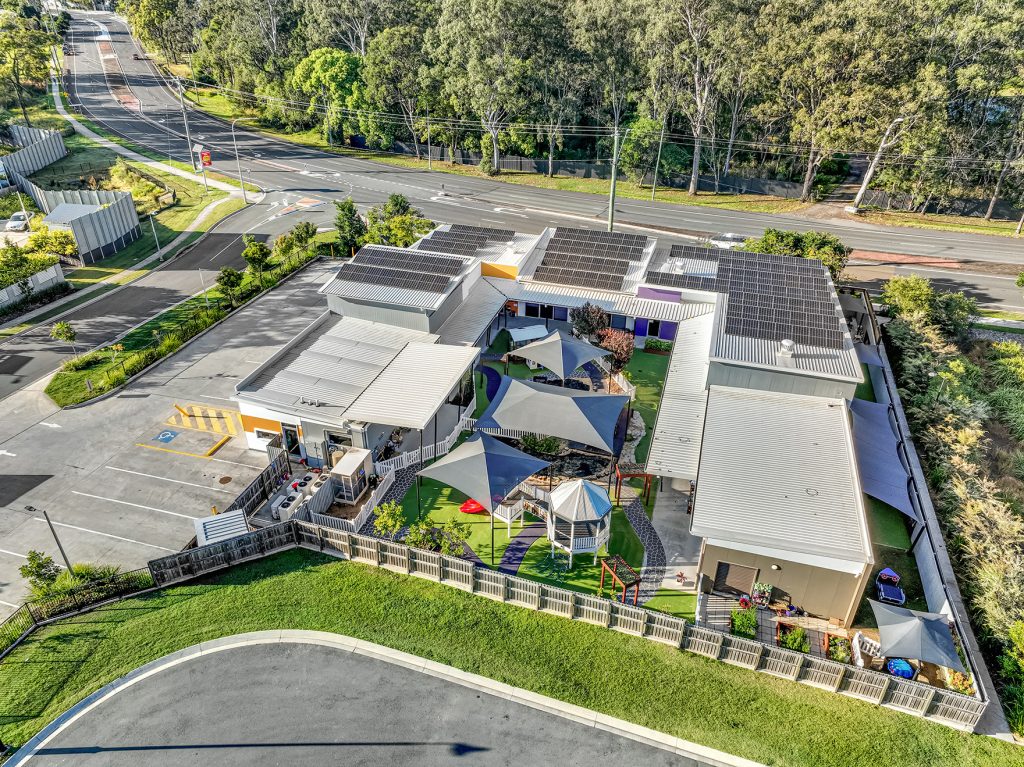
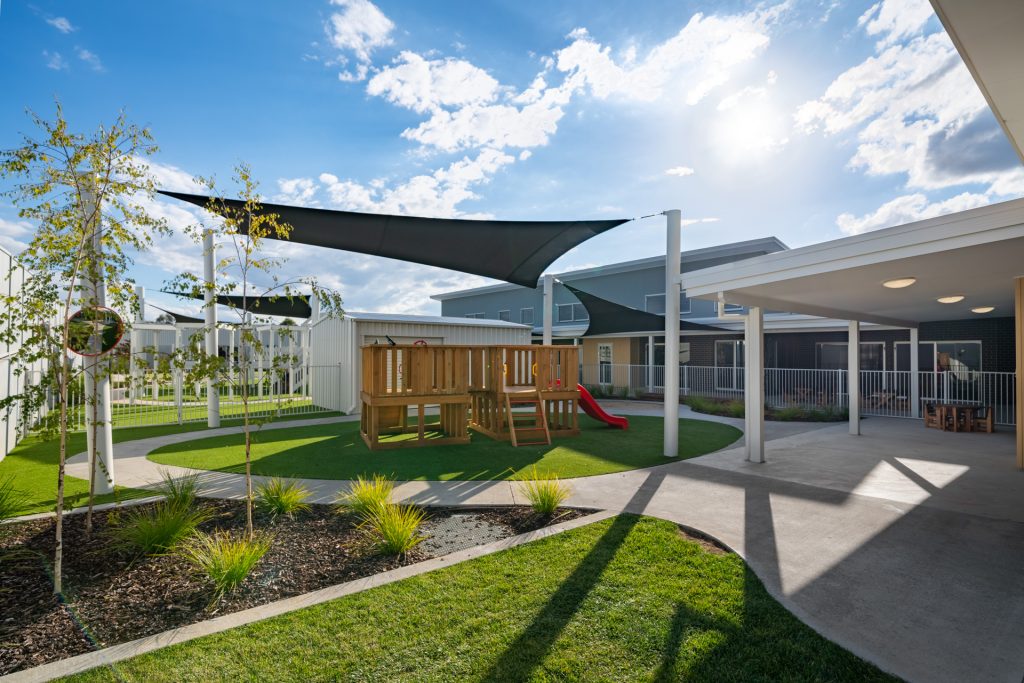
Designed with early learning in mind, our centres feature spacious indoor and outdoor play areas, dedicated learning zones, and natural resources that encourage creativity, curiosity, and active exploration.
All-Inclusive Childcare Fees
At Grow Early Education, families enjoy peace of mind knowing that everything their child needs throughout the day is included, from nutritious meals and nappies to extracurricular activities and educational incursion programs.
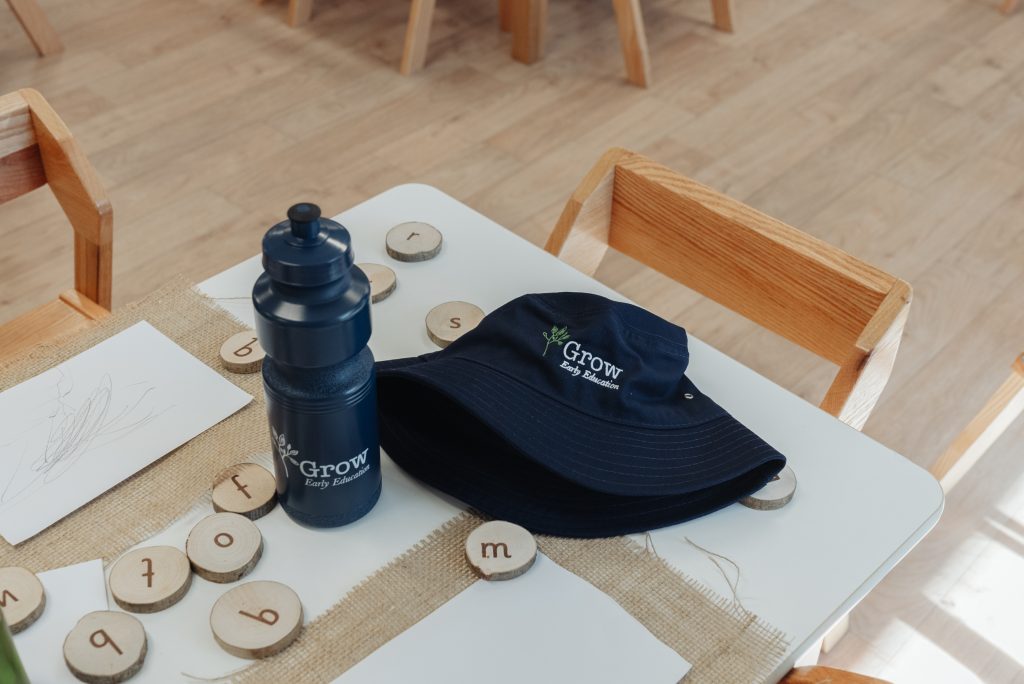
Plan ahead for 2026 and Take advantage of the Government’s 3-Day Guarantee
From 5 January 2026 the Australian Government will introduce a 3-Day Guarantee that changes how the Child Care Subsidy (CCS) is applied, guaranteeing eligible families at least three days a week (72 hours per fortnight) of subsidised early childhood education and care. This reform replaces the previous activity-test approach and is designed to make childcare more accessible and affordable for families.
4 Weeks Free Offer
We’re currently offering 4 Weeks Free* at a select number of our Grow Early Education centres across the country. This promotion is a great opportunity for families looking to join our Grow family. Ask our friendly team if your local centre is part of this special offer!
Contact your nearest Grow Early Education centre today to book a tour and begin your 2026 enrolment journey.
- Grow Early Education Darling Heights
- Grow Early Education Bridgeman Downs
- Grow Early Education Park Ridge
- Grow Early Education Toowoomba
- Grow Early Education Hervey Bay
- Grow Early Education Dalby
- Grow Early Education Riverton
- Grow Early Education Gunnedah
- Grow Early Education Kelso
- Grow Early Education Nowra Central
- Grow Early Education Narre Warren North
- Grow Early Education Heathmont
- Grow Early Education Frankston
- Grow Early Education Tarneit
Halloween is the perfect time for little hands to get creative! Beyond the costumes and treats, craft time can be a wonderful opportunity for children to learn, explore, and strengthen important developmental skills, especially their fine motor skills.
Fine motor skills involve the small muscles in the hands and fingers, which children use for everyday tasks such as holding pencils, using scissors, and gluing. By incorporating themed crafts into play, we can make skill-building fun and meaningful.
To celebrate the spooky season, we have compiled some of our favourite Halloween-inspired and age-appropriate crafts for you and your little ones to try at home.
For Babies (0–2 Years): Sensory Play and Early Exploration
1. Pumpkin Sensory Bags
Fill a zip-lock bag with orange hair gel, googly eyes, and small Halloween-themed confetti or pom-poms. Tape it to the floor or a highchair tray and let your baby squish, poke, and press.
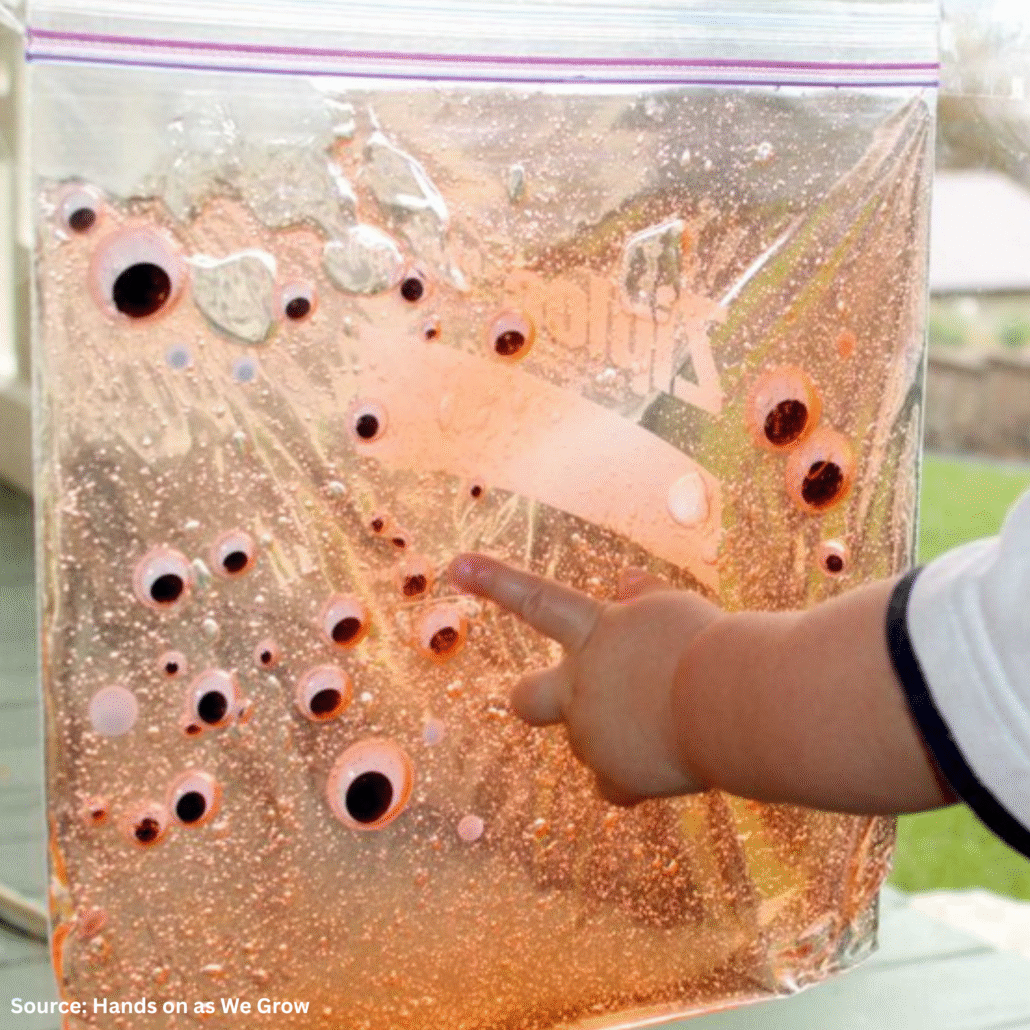
Learning focus: Hand-eye coordination, sensory exploration, and cause-and-effect thinking.
2. Ghost Footprint Art
Dip your baby’s foot in white paint and stamp it onto black paper. Add eyes and a mouth to create a ghostly footprint!

Learning focus: Early sensory awareness and recognition of body parts through play.
For Toddlers (2–3 Years): Tactile Play and Coordination
3. Cotton Ball Spiders
Give Toddlers black paper, glue, and cotton balls or pom poms. Help them pull apart and stretch the cotton to form a “spider body,” then stick on googly eyes and draw or paste pipe cleaner legs.
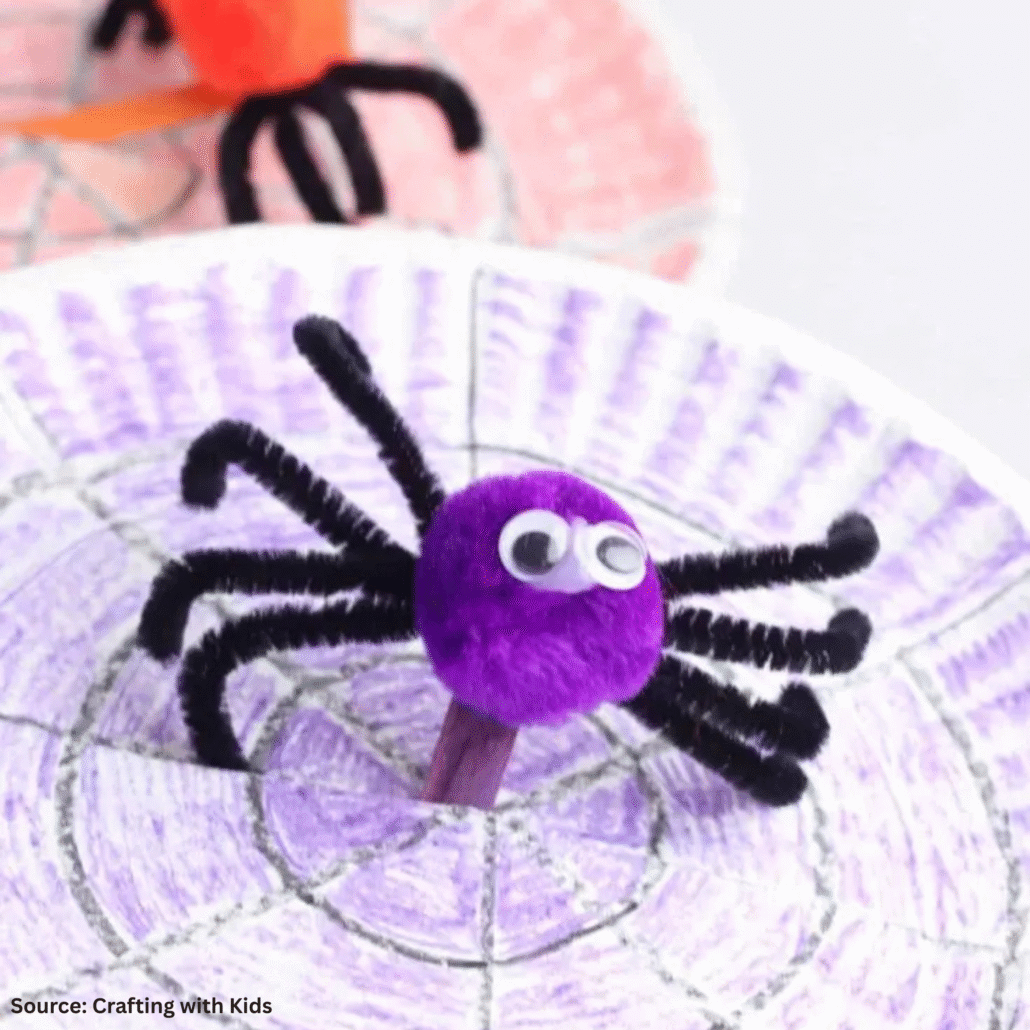
Learning focus: Strengthening finger muscles, hand–eye coordination, and creativity.
4. Sticker Pumpkins
Provide orange cut-out pumpkins or mini carving pumpkins and a sheet of Halloween stickers. Encourage your child to decorate however they like for a mess free and safe pumpkin decorating experience.
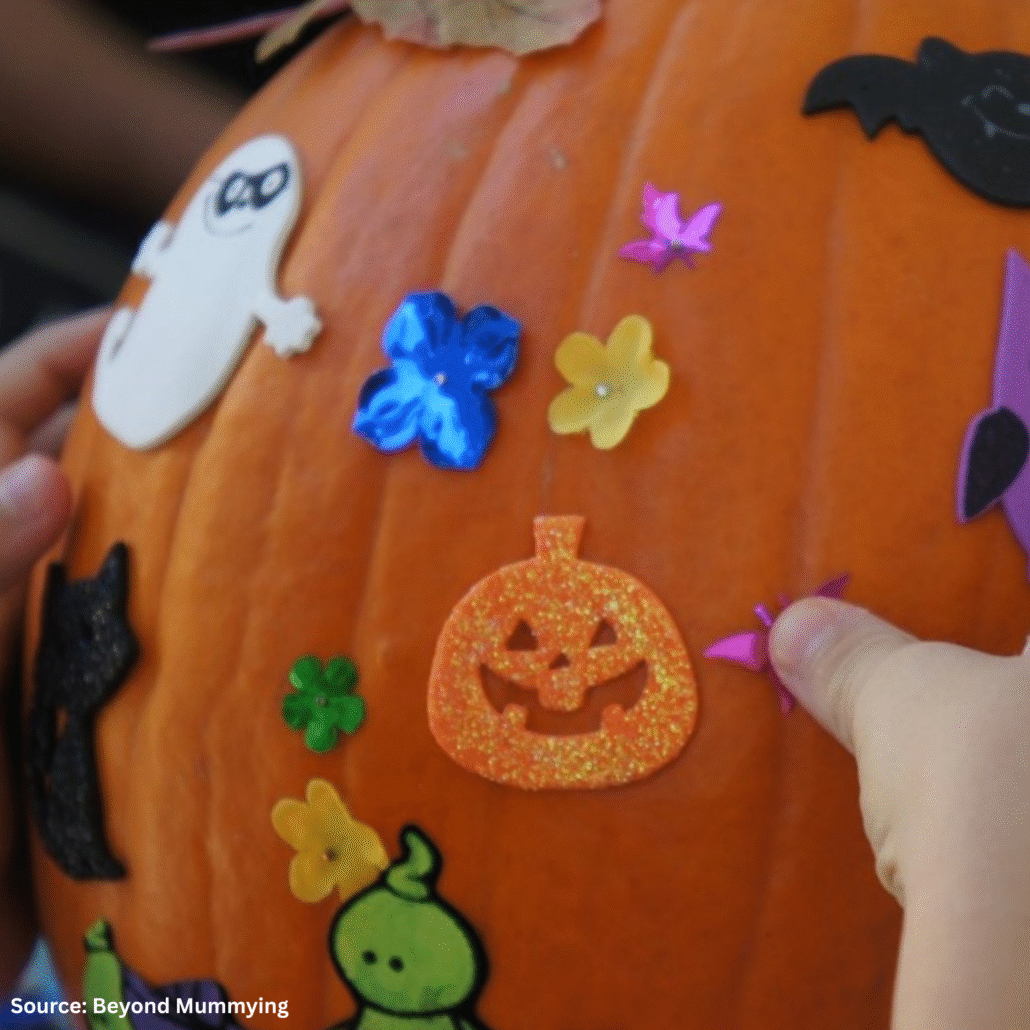
Learning focus: Fine motor control through peeling and sticking, as well as fostering independence and decision-making.
For Preschoolers and Kindergarteners (3–5 Years): Creativity and Control
5. Paper Plate Jack-O’-Lanterns
Using orange paint, black paper triangles, and glue, children can design their own jack-o’-lantern faces on paper plates. Let them cut out shapes (with safety scissors) for added practice.

Learning focus: Scissor control, bilateral coordination, and early geometry.
6. Yarn-Wrapped Mummies
Cut out simple mummy shapes from cardboard, draw on eyes, and give children white yarn or ribbon to wrap around their mummy.
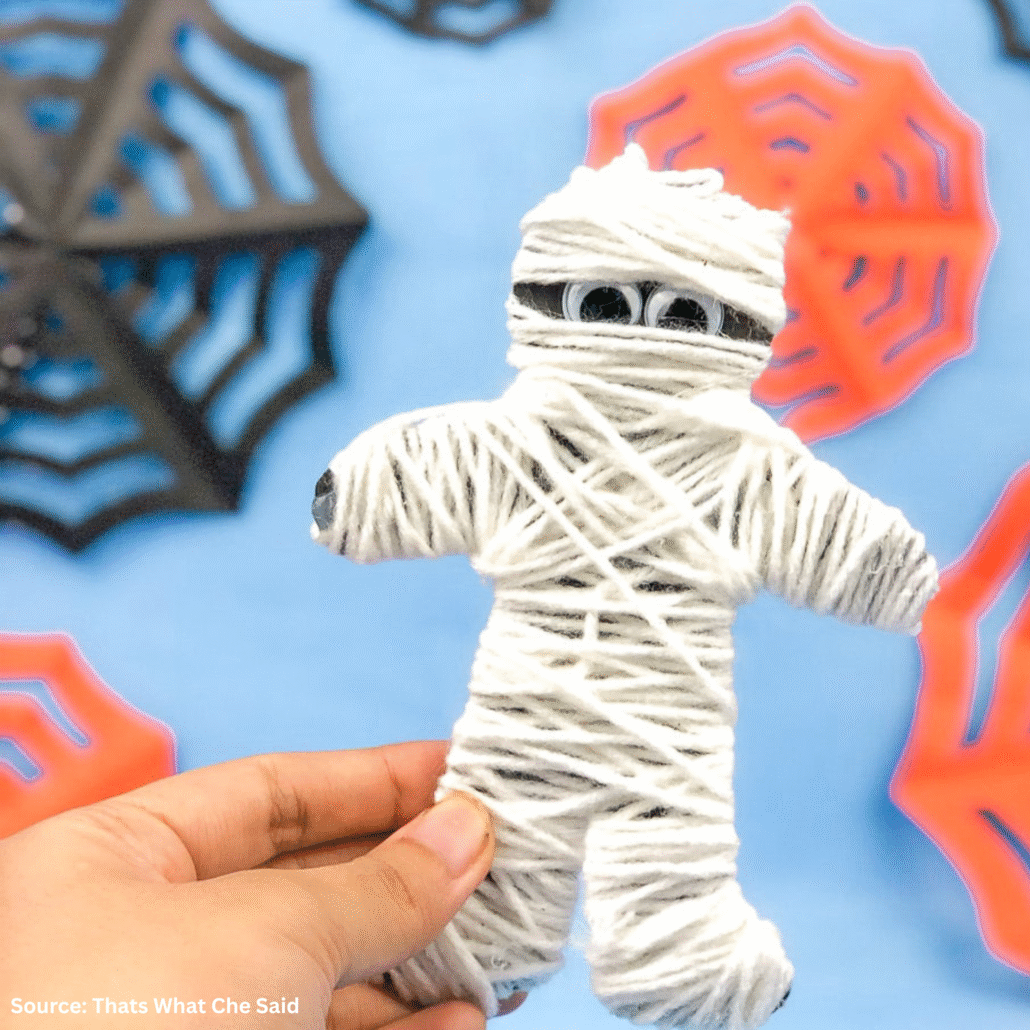
Learning focus: Strength and coordination as they wrap.
7. Magic Wand Craft
Provide sticks, ribbons, and paper stars for children to decorate. They can use paint, stickers, or glitter glue to make their wands magical!
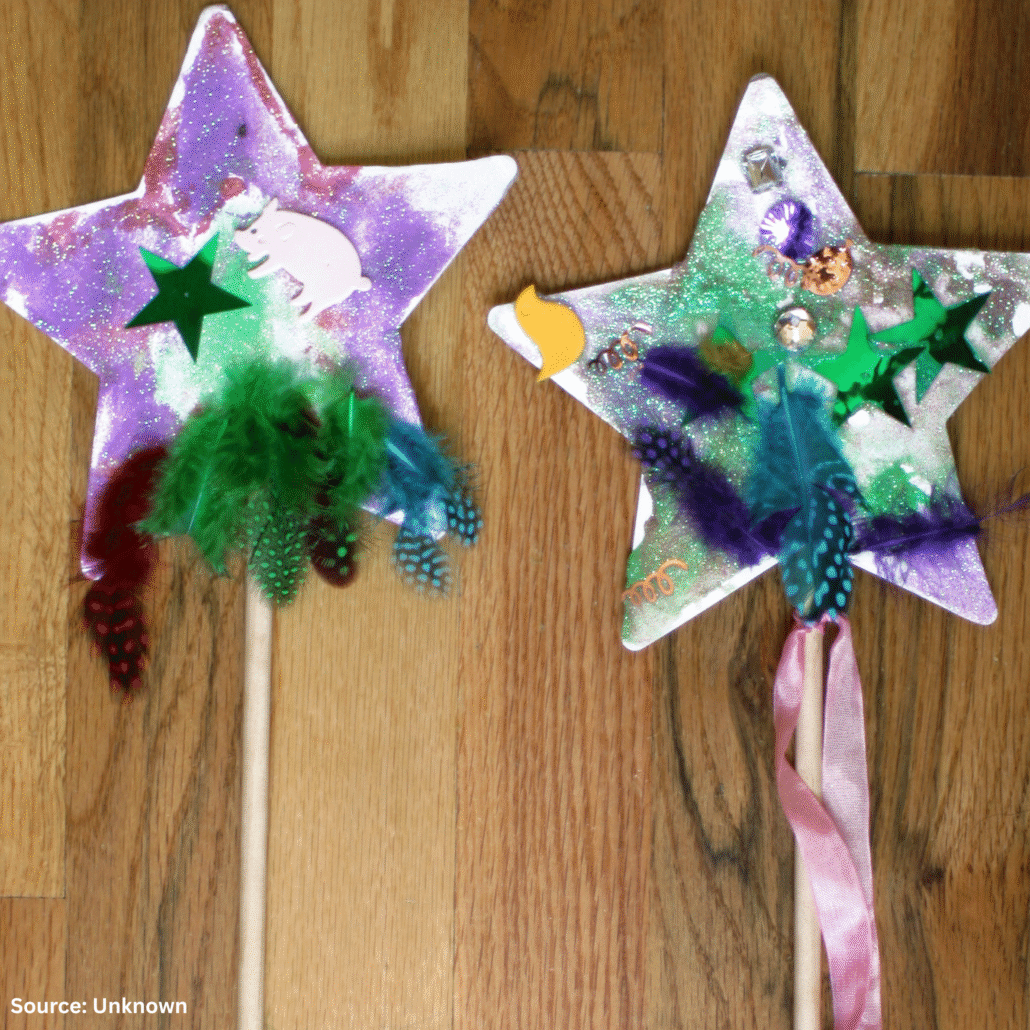
Learning focus: Strengthening fine motor precision, encouraging imaginative play, and boosting self-expression.
Why Craft Matters
Every time children paint, glue, or thread, they’re developing the skills needed for future learning success. These activities:
-
Strengthen hand and finger muscles for writing readiness
-
Encourage creativity and imagination
-
Build concentration and problem-solving skills
-
Support language development through discussion and storytelling
So this Halloween, grab the glue sticks and glitter — and let learning come to life through play!
Follow us on Facebook to see what spooky crafts children across our centres get up to:
- Grow Early Education Darling Heights
- Grow Early Education Bridgeman Downs
- Grow Early Education Park Ridge
- Grow Early Education Toowoomba
- Grow Early Education Hervey Bay
- Grow Early Education Dalby
- Grow Early Education Riverton
- Grow Early Education Gunnedah
- Grow Early Education Kelso
- Grow Early Education Nowra Central
- Grow Early Education Narre Warren North
- Grow Early Education Heathmont
- Grow Early Education Frankston
- Grow Early Education Tarneit
Early Childhood Education plays a vital role in a child’s development, yet many myths and misconceptions still surround it. From doubts about play-based learning to misunderstandings about structured programs, these myths can make it difficult for families to feel confident about choosing the right childcare or early learning environment. In this weeks blog, we are exploring some of the most common childcare and early childhood education misconceptions and the unpacking the truth behind them.
Myth 1: “Play isn’t real learning”
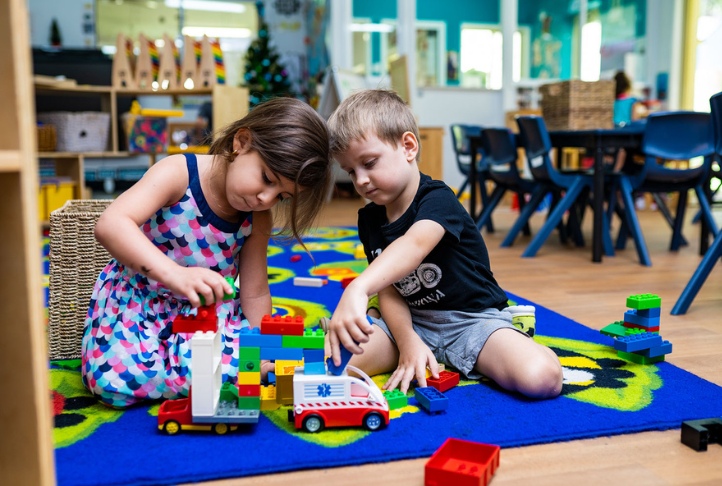
Many people think that when children play, they’re just having fun. In reality, play is a powerful learning tool. Through play, children develop critical social, emotional, and cognitive skills. Activities such as building with blocks, exploring sensory materials, or engaging in imaginative play help children learn problem-solving, communication, and cooperation, all while having fun.
Myth 2: “Children are too young to benefit from structured programs”
Some parents worry that structured learning isn’t appropriate for young children. Modern early childhood programs, however, balance gentle structure with flexibility. Teaching and learning strategies such as the Abecedarian Approach Australia (3a) introduce learning through meaningful interactions and responsive routines, giving children the building blocks for literacy, numeracy, and social-emotional skills, all in ways that feel natural and engaging for their age.

Myth 3: “‘Child-led learning’ means children do whatever they want”
Child-led learning is often misunderstood. It doesn’t mean children have no guidance. Instead, it’s about following the child’s interests while providing supportive frameworks and rich learning opportunities. Educators observe, scaffold, and introduce new ideas, helping children explore and develop skills at their own pace while maintaining clear learning goals.

Myth 4: “Early Childhood Education is just babysitting”
High-quality childcare is so much more than supervision. It’s about creating an environment where children feel safe, nurtured, and stimulated. Through intentional teaching strategies, rich play experiences, and strong relationships, Early Childhood Educators actively foster a child’s curiosity, independence, and lifelong love of learning.
Myth 5: “Children don’t need social skills yet”
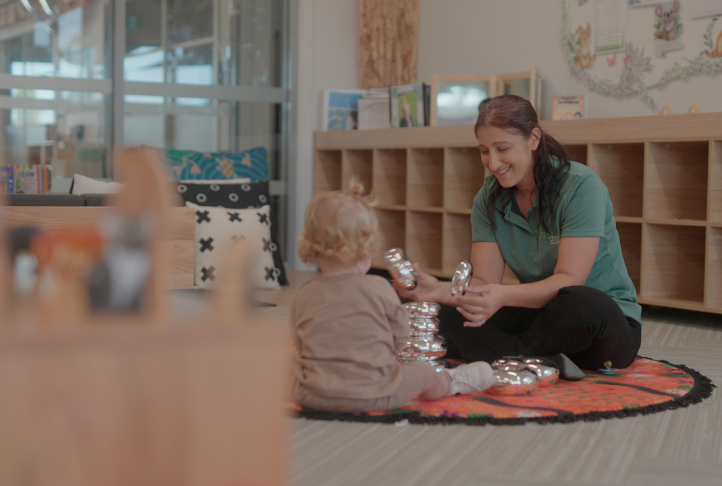
Social development starts early. Interacting with peers and adults in a supportive environment helps children learn empathy, turn-taking, conflict resolution, and self-regulation. Early Education settings provide guided social experiences that children can’t easily get on their own at home.
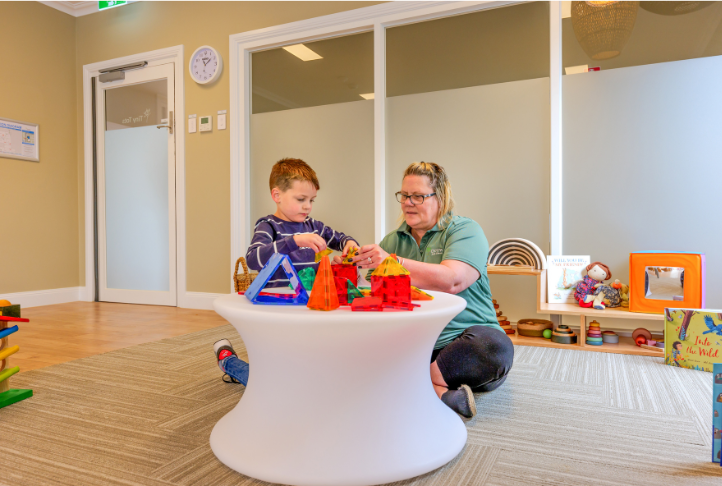
Modern Early Childhood Education is research-backed, intentional, and designed to support every child’s growth. Approaches such as the Abecedarian Approach and play-based learning ensure children are developing academically, socially, and emotionally, all in ways that feel natural, enjoyable, and meaningful.
Across our Grow Early Education centres, we see these principles in action every day. Children serve their own snacks and lunches, help tidy up educational resources, and even prepare their beds for rest time, fostering independence, confidence, and responsibility all while learning through play.
If you’ve ever wondered about the value of Early Education, we invite you to explore our classrooms and see firsthand how children learn, grow, and thrive in a nurturing environment.
Discover how Early Childhood Education could be a great fit for your family by booking a tour of your nearest Grow Early Education centre:
- Grow Early Education Darling Heights
- Grow Early Education Bridgeman Downs
- Grow Early Education Park Ridge
- Grow Early Education Toowoomba
- Grow Early Education Hervey Bay
- Grow Early Education Dalby
- Grow Early Education Riverton
- Grow Early Education Gunnedah
- Grow Early Education Kelso
- Grow Early Education Nowra Central
- Grow Early Education Narre Warren North
- Grow Early Education Heathmont
- Grow Early Education Frankston
- Grow Early Education Tarneit
It is never too early to introduce and encourage independence. When children are given small responsibilities, they not only learn essential life skills but also build confidence, a sense of accomplishment, and a feeling of being capable. Age-appropriate chores are a fantastic way to introduce responsibility and independence in a fun and supportive way.
Chores aren’t just about keeping your home tidy, they’re opportunities for learning. By participating in everyday tasks, children:
- Develop fine and gross motor skills
- Learn to follow instructions
- Build confidence and pride in their abilities
- Practice problem-solving and teamwork
- Gain a sense of responsibility
Even simple tasks can make a big difference. When children are trusted with responsibilities, they feel valued and empowered.
Here are some ways you can match chores to your child’s developmental stage:
Toddlers (2–3 years)
- Put toys back in their place
- Help water plants
- Wipe up small spills
- Place napkins on the table

Preschoolers (4–5 years)
- Set the table for meals
- Help pack away groceries
- Feed pets
- Help with dishes and laundry

Early school age (6–7 years)
- Make their bed
- Help prepare simple meals or snacks
- Take out recycling
- Sweep small areas or dust

- Keep it simple; choose tasks your child can realistically do while making it fun by turning chores into games or challenges. Children thrive within routine, by making sure you remain consistent in the chores helps children to understand the expectations and feel secure.
- Handling Resistance; It’s normal for children to resist chores at first. Offer choices (“Do you want to put the toys away before or after you snack?”) and keep a calm, encouraging tone. Avoid turning chores into power struggles, consistency and gentle guidance work better than pressure.
- Making Chores Enjoyable; Make it a family routine, children often engage more when they see adults participating alongside them. Use songs, timers, or small challenges to turn chores into fun activities.
- Celebrating Progress; Encourage intrinsic motivation by focussing on how proud they feel rather than just rewards. Consider a “chore chart” for older children to visualise their achievements.
- Teaching Problem-Solving; If a child struggles with a task, guide them to figure it out rather than doing it for them. Ask questions such as, “what’s the first thing we need to do to clean up this space?”
- Balancing Expectations; Remember: independence grows gradually, some tasks will be messy or incomplete at first, but that’s part of the learning.
Even small accomplishments deserve recognition! A high-five, sticker, or verbal praise reinforces positive behaviour and encourages children to keep trying. Over time, these small responsibilities grow into lifelong skills and a strong sense of independence.
At our Grow Early Education centres, we see this in action every day when children serve their own lunch and snacks, tidy up after meal times, help prepare their beds for naps, and pack away the educational resources they use throughout the day. These daily routines not only support independence but also foster confidence, responsibility, and pride in their abilities.
Follow us on Facebook to stay up to date with each of our Grow Early Education centres:
- Grow Early Education Darling Heights
- Grow Early Education Bridgeman Downs
- Grow Early Education Park Ridge
- Grow Early Education Toowoomba
- Grow Early Education Hervey Bay
- Grow Early Education Dalby
- Grow Early Education Riverton
- Grow Early Education Gunnedah
- Grow Early Education Kelso
- Grow Early Education Nowra Central
- Grow Early Education Narre Warren North
- Grow Early Education Heathmont
- Grow Early Education Frankston
This week across our Grow Early Education centres, children have been reaching for the stars as we celebrate Space Week 2025. Our Educators have been sparking curiosity about the wonders of the universe through play, creativity, and exploration.
From glowing stars and swirling planets to astronauts floating in zero gravity, space is a topic that instantly excites children, there’s something truly magical about exploring what lies beyond our planet and for young children, learning about space isn’t just about facts and science, it’s about nurturing wonder, discovery, and a love for learning.
While Space Week is a wonderful opportunity to focus on the cosmos, our Educators and Curriculum Teams work together to find ways to nurture curiosity about science and discovery all year round.
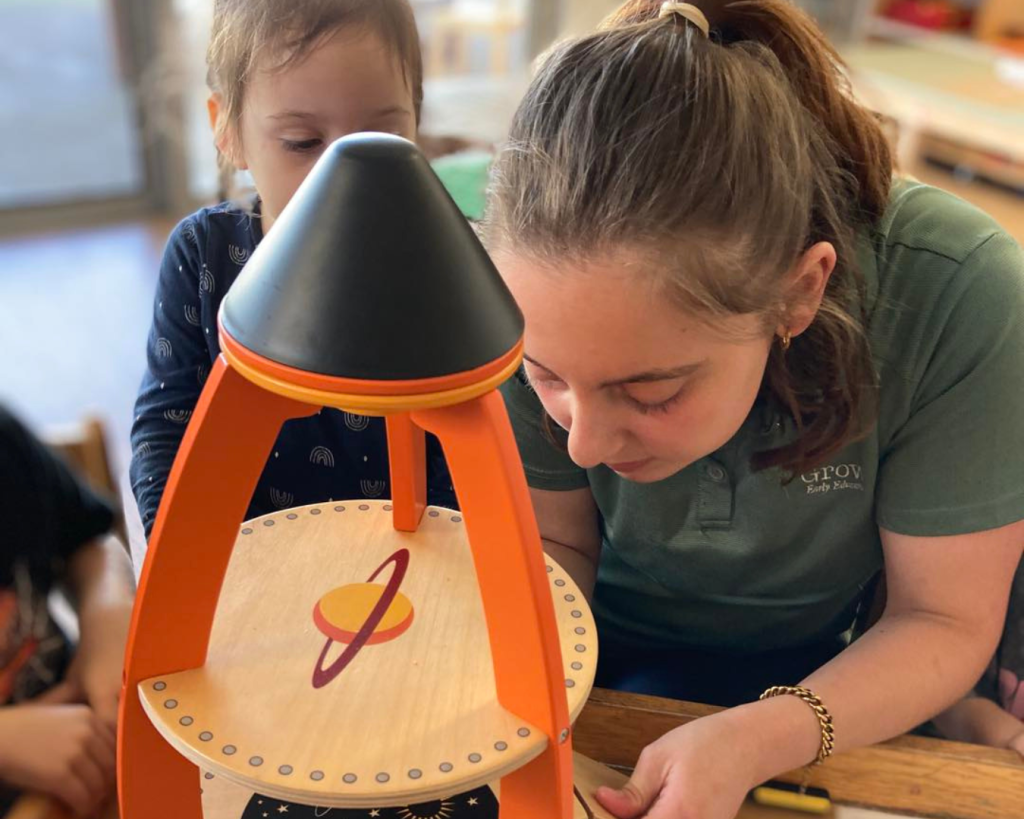
Introducing early concepts of space in early education helps children:
Develop curiosity and questioning skills, “What’s out there?” “Why do stars twinkle?”
Explore STEM (Science, Tech, Engineering, and Math) concepts in playful ways such as counting planets, building rockets, or comparing sizes and shapes.
Engage their creative thinking through imaginative play by pretending to be astronauts, aliens, or scientists.
Strengthen language and literacy learning new words such as “orbit,” “gravity,” or “galaxy.”
When space is introduced through hands-on, age-appropriate experiences, it becomes a gateway for big thinking and helps children connect what they know about their world to what exists beyond it.
Across our Grow Early Education centres, Educators bring the theme of space to life through creative, sensory, and play-based learning experiences.
Here are just a few of the ways children explore the cosmos at Grow Early Education:

One of the children’s favourite experiences is creating paper mâché planets. Using balloons, newspaper, and paint, children can design their own colourful versions of the solar system. This activity offers so much more than just art, it becomes a rich opportunity for learning and skill development.
As children shape and paint their planets, they also develop fine motor skills through tearing, gluing, and brushing, express their creativity by choosing colours and textures, and strengthen their scientific thinking as Educators guide conversations around the planets’ sizes, orbits, and characteristics.

Another engaging experience is exploring space-themed sensory trays, filled with foil, natural materials such as wood, cotton, and rocks, and cut-outs of moons, rockets, and friendly aliens. This inviting setup encourages children to explore different textures, materials, and imaginative ideas as they play.
As children scoop, sort, and create stories within the tray, they develop their sensory awareness, fine motor coordination, and language skills, while also building an understanding of how materials and environments can represent the world — and universe — around them.

Painting planets is another classic Space themed activity where children add colour and texture to paper cut-outs representing the planets of our solar system. Using brushes, cotton buds, or fingers, children experiment with mixing and applying paint, creating unique patterns and designs.
This creative experience supports the development of fine motor skills as children hold and control tools, express their creativity through colour and pattern choices, and build early scientific understanding as educators talk about the planets, their colours, and positions in the solar system. It’s a hands-on way to make the universe feel close, exciting, and full of possibilities.
Each of these experiences encourages children to think like little explorers, asking questions, making predictions, and sharing their discoveries with peers.
Exploring space connects seamlessly to many areas of the Early Years Learning Framework (EYLF), including:
Outcome 4: Children are confident and involved learners — as they experiment, investigate, and problem-solve through play.
Outcome 5: Children are effective communicators — as they express ideas, share knowledge, and engage in rich conversations about what they discover.
Outcome 2: Children are connected with and contribute to their world — as they begin to understand their place in the wider universe.
Through these experiences, children not only learn about space, they learn about possibility. They dream, imagine, and explore the idea that there’s so much more to discover.
By turning space into a hands-on, sensory-rich experience, our Educators are building a foundation for lifelong curiosity and learning.
Follow us on Facebook to stay up to date with each of our Grow Early Education centres and explore how they celebrate Space:
- Grow Early Education Darling Heights
- Grow Early Education Bridgeman Downs
- Grow Early Education Park Ridge
- Grow Early Education Toowoomba
- Grow Early Education Hervey Bay
- Grow Early Education Dalby
- Grow Early Education Riverton
- Grow Early Education Gunnedah
- Grow Early Education Kelso
- Grow Early Education Nowra Central
- Grow Early Education Narre Warren North
- Grow Early Education Heathmont
- Grow Early Education Frankston
We are beyond proud to share that Grow Early Education Kelso has been recognised in an extraordinary way at the 2025 Central West Early Childhood Awards. Our centre has received multiple nominations across a wide range of categories, a true reflection of the dedication, talent, and heart our Educators bring to Early Childhood Education every single day.
The Central West Early Childhood Awards celebrate excellence in our profession, recognising centres, leaders, and Educators who go above and beyond to create meaningful learning experiences, nurture young minds, and build strong connections with families and communities. To see so many of our own nominated is both humbling and inspiring.
Our Nominations
We are proud to congratulate the following team members for their outstanding achievements:
-
Outstanding Trainee – Laura Urban
- Outstanding Early Childhood Educator (Families Choice Award) - Whittney Cook, Laura Urban, Isabella Pittman, Laura Job, Paula Freeman, and Kylie Hartland
-
Molly Ticehurst Memorial Award for Outstanding Educator (Cert III) – Lillee Bullock
-
Outstanding Early Childhood Educator (Diploma) – Natalie Fowler and Laura Job
-
Charles Sturt University Outstanding Early Childhood Teacher (ECT) – Whittney Cook
-
Samara Golding-Piper Memorial Award for Excellence in Leadership – Paula Freeman
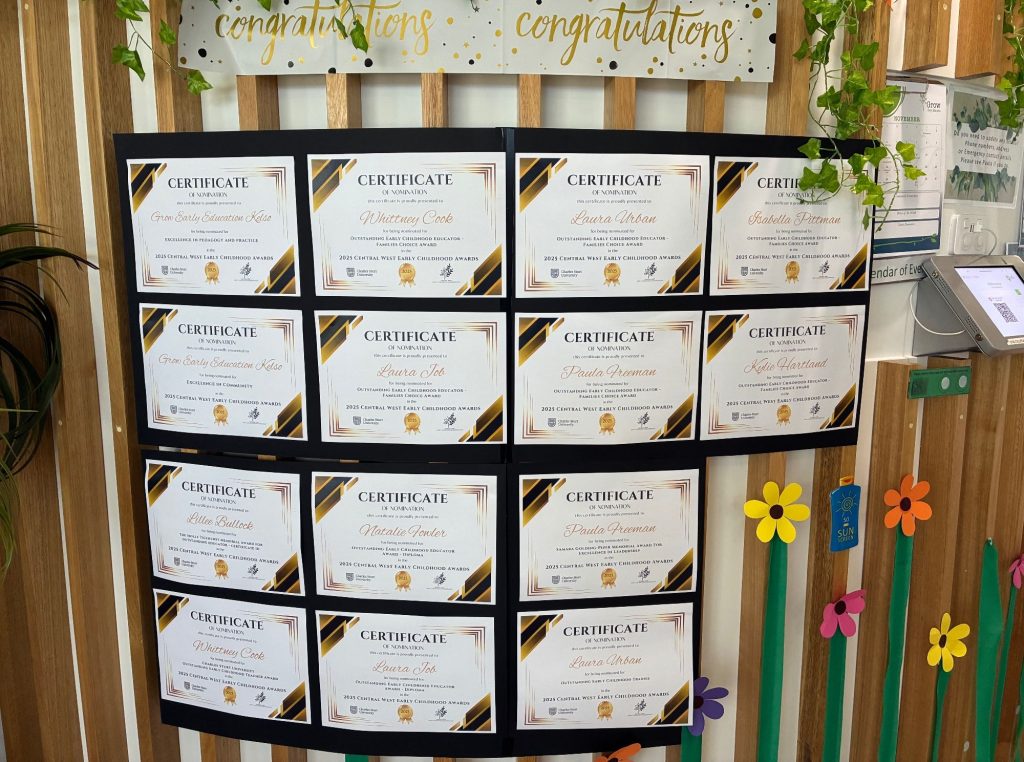
In addition to recognising the achievements of our individual Educators, we are thrilled that Grow Early Education Kelso has also been nominated for two centre-level awards: Excellence in Pedagogy and Practice and Excellence in Community. These nominations celebrate the collective efforts of our whole team in creating a high-quality learning environment, delivering innovative and engaging early learning experiences, and building strong connections with families and the wider Bathurst community. Being acknowledged in these categories is a testament to our commitment to excellence in every aspect of our centre’s work and the nurturing culture we cultivate every day.
Why This Recognition Matters
These nominations highlight the depth of expertise, passion, and commitment within our centre. They show families and our wider community that when you choose Grow Early Education Kelso, you’re choosing a team dedicated to providing the very best start for every child.
Being recognised across so many categories also reflects the diversity of strengths within our team — from leadership and teaching excellence to innovation, care, and mentorship.
The winners will be announced at the Central West Early Childhood Awards Night on Saturday, 1 November 2025 at Panthers Bathurst. No matter the outcome, we are incredibly proud of our Educators and the work they do every day to make a difference in children’s lives.
Congratulations to our entire Grow Early Education Kelso family. This recognition belongs to all of you.
Stay up to date with Grow Early Education and the result of the 2025 Early Childhood Education Awards of our Facebook page here.
From 5 January 2026, big changes are coming to the Child Care Subsidy (CCS). The government has confirmed the introduction of the long-discussed “3-Day Guarantee”, along with updates to how the CCS Activity Test works.
In this week’s blog, we are helping parents better understand the new changes with an easy-to-follow breakdown of what this change means for families, and how you can prepare.
Eligible families for the CCS will now have access to at least 72 hours of subsidised care per fortnight, that’s the equivalent of 3 days a week for most families.
This change gives families more certainty. Even if your recognised activity hours (such as work, study, or volunteering) are low, you’ll still receive a baseline level of subsidised care.
While the 3-Day Guarantee provides a strong foundation, many families will still be able to access up to 100 hours of subsidised care per fortnight. This applies if:
- Both parents (if partnered) complete more than 48 hours of recognised activity each fortnight; or
- Your family has a valid exemption from the activity test.
In addition, Aboriginal and Torres Strait Islander children will automatically be eligible for the full 100 hours of subsidised care, regardless of activity levels.
Recognised Activity – What Counts?
The activity test is still an important part of determining your CCS hours. Recognised activities include things like:
- Paid work or self-employment
- Looking for work
- Volunteering
- Studying or training
- Participation in programs that build skills or capacity
If you’re unsure whether your situation qualifies, you can check the full list on the Services Australia website here.
It’s important to remember that the CCS doesn’t always cover the full cost of childcare. Families will still be responsible for gap fees or out-of-pocket expenses charged by their provider.
The good news? With more subsidised hours guaranteed, many families are likely to see significant savings compared to previous arrangements.
What Does This Means for Families?
Parents with lower activity hours: You’ll still receive 72 hours of subsidised care each fortnight, giving you more flexibility for work, study, or family needs.
Families with higher activity levels: You can continue to access the full 100 hours.
Aboriginal and Torres Strait Islander families: Automatically receive the maximum 100 hours.
Families with exemptions: You’ll also be eligible for the full 100 hours.
How to Prepare for the Changes
With changes coming into effect from early 2026, now is a great time to prepare yourself for the changes to ensure your family doesn’t miss out. You can do this by:
- Talking to your Centre Director to understand how the changes may affect your gap fees
- Talking to your Centre Director about availability to book in for 3 days per week in 2026 (if you currently are only have 1-2 days booked per week)
- Checking your CCS eligibility to make sure you’re receiving the right level of support.
- Reviewing your activity hours – if you’re close to the 48-hour threshold, you may want to track your participation more carefully.
- Staying updated through Services Australia for further details and examples.
The introduction of the 3-Day Guarantee is a major win for families, helping to ensure that all children can access quality early education and care, regardless of their parents’ activity levels.
By locking in a minimum of 72 hours and keeping pathways to 100 hours of subsidised care, these changes aim to support families, strengthen workforce participation, and give every child the best possible start.
Looking for more information on the 2026 CCS changes? Read our blog deep-diving the changes here or head to the Services Australia website.
Follow us on Facebook to stay up to date with our Grow Early Education Childcare centres.
- Grow Early Education Bundaberg North
- Grow Early Education Darling Heights
- Grow Early Education Bridgeman Downs
- Grow Early Education Park Ridge
- Grow Early Education Toowoomba
- Grow Early Education Hervey Bay
- Grow Early Education Dalby
- Grow Early Education Riverton
- Grow Early Education Gunnedah
- Grow Early Education Kelso
- Grow Early Education Nowra Central
- Grow Early Education Narre Warren North
- Grow Early Education Heathmont
- Grow Early Education Frankston
Every child deserves to feel safe, supported, and cared for.
This week is National Child Protection Week—an important reminder that the safety and wellbeing of children is everyone’s responsibility.
At our Grow Early Education centres, protecting children isn’t just a priority—it’s at the heart of everything we do. From the way we design our learning environments to the trusting relationships we build with families, we are committed to creating safe, nurturing spaces where every child can thrive.
This Year’s Theme: Putting Children First
The 2025 theme for Child Protection Week is “Children Come First.” When children feel heard, valued, and respected, they have the best chance to grow up safe, strong, and supported. Listening to children’s voices and working together as a community ensures that their rights, needs, and wellbeing are always at the centre of decision-making.
How We Keep Children Safe at Our Centres
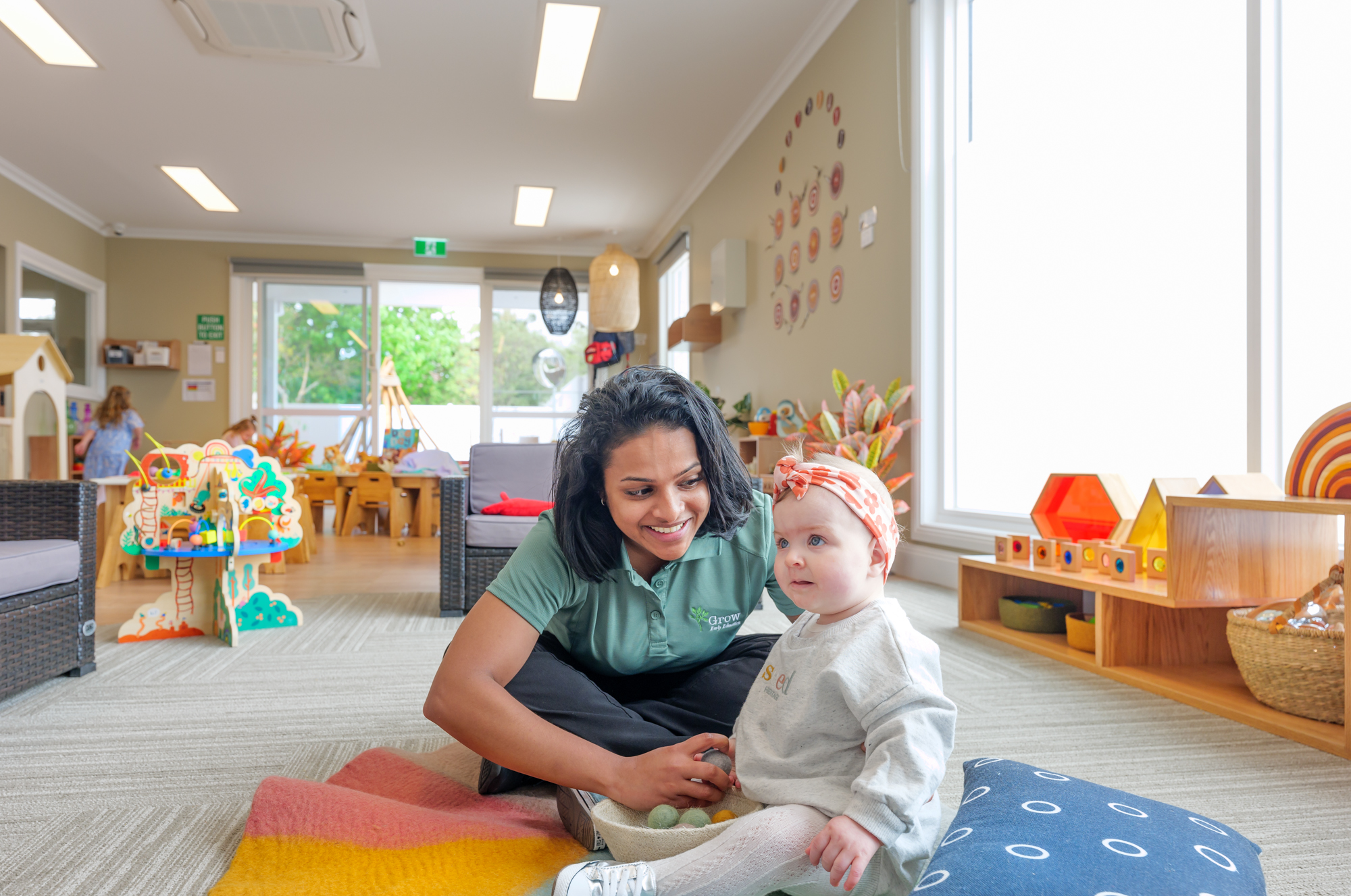
At the heart of everything we do is the safety, wellbeing, and dignity of every child in our care. We are proud of the strong systems and culture we have in place to support a safe, nurturing, and respectful environment for children, families, and Educators alike.
As part of our ongoing commitment to child safety, we have a range of robust measures in place, including:
- Comprehensive CCTV surveillance, with cameras operating throughout our centres (we are one of only a handful of companies with this system).
- Team-based supervision, where Educators work in pairs wherever possible.
- Thorough recruitment and screening processes, involving both our People & Culture Team and Centre Directors.
- Mandatory Child Protection and Child Safe Standards Training for all team members during induction and renewed annually.
- Ongoing verification and audits of Working with Children Checks.
- Large supervision windows for clear visibility across learning spaces.
-
Secure sign-in and sign-out kiosks, security-coded door-entry, and child safety locked gates.

We are also proactively strengthening our approach by:
- Increasing the frequency of internal CCTV footage audits.
- Undertaking a comprehensive review of our practices in line with the latest Child Safe Standards.
- Expanding our professional development to include additional child protection training to all staff, across all states, even when it is not a legislative requirement.
Child Protection is Everyone’s Business
Child safety doesn’t stop at the doors of our long daycare centres. It’s a shared responsibility across families, schools, communities, and society as a whole. By standing together, listening to children, and valuing their experiences, we can create a world where every child feels safe and supported.
This Child Protection Week, let’s all commit to protecting, respecting, and caring for every child. Together, we can build a stronger, safer future.
Follow us on Facebook to stay up to date with our Grow Early Education centres.
- Grow Early Education Bundaberg North
- Grow Early Education Darling Heights
- Grow Early Education Bridgeman Downs
- Grow Early Education Park Ridge
- Grow Early Education Toowoomba
- Grow Early Education Hervey Bay
- Grow Early Education Dalby
- Grow Early Education Riverton
- Grow Early Education Gunnedah
- Grow Early Education Kelso
- Grow Early Education Nowra Central
- Grow Early Education Narre Warren North
- Grow Early Education Heathmont
- Grow Early Education Frankston
Playtime from 0–5 is one of the most important ways children learn, grow, and make sense of the world. Through play, children develop social skills, emotional understanding, problem-solving abilities, language, and creativity.
During the early years, children naturally move through six stages of play. Knowing what to expect and how to encourage your child during each stage can help you feel more confident in supporting their development.
At Grow Early Education, we nurture and encourage these developmental play milestones every day. Our play-based environments are thoughtfully designed to support each stage, helping children explore, experiment, and engage at their own pace.
In this blog, we are unpacking the six stages and how you can guide your little one’s play journey.
- Unoccupied Play (Birth – 3 months)
At this very first stage, babies are not yet “playing” in the way we might imagine. Instead, you’ll notice them making small movements, watching the world around them, or kicking their legs. This may seem simple, but it’s how they begin to explore their environment.
How to encourage it:
- Offer safe, sensory-rich objects (rattles, textured toys).
- Give your baby tummy time to build strength.
- Talk, sing, and smile while they move, your interaction makes the experience meaningful.

- Solitary Play (Birth – 2 years)
Children play alone and focus on exploring toys or activities by themselves. They are not yet interested in interacting with other children and that’s perfectly normal and expected at this age.
How to encourage it:
- Provide age-appropriate toys such as stacking cups, blocks, and shape sorters.
- Allow your child space to play independently.
- Sit nearby to offer reassurance but let them lead.

- Onlooker Play (2 years)
At this stage, children begin watching others play without joining in. They’re learning by observing, noticing social interactions, body language, and new ways to play.
How to encourage it:
- Model play by engaging with toys yourself while your child watches.
- Provide opportunities for your child to observe siblings or peers.
- Narrate what’s happening in play (“Look, she’s rolling the ball to her friend”).

- Parallel Play (2 – 3 years)
Children now play alongside others but don’t directly interact. They may use the same toys or sit close together, but their play remains separate. This is a vital step toward social play.
How to encourage it:
- Set up playdates or small group activities.
- Offer toys that can be shared, like blocks or playdough.
- Sit with your child and mirror their play to model connection.
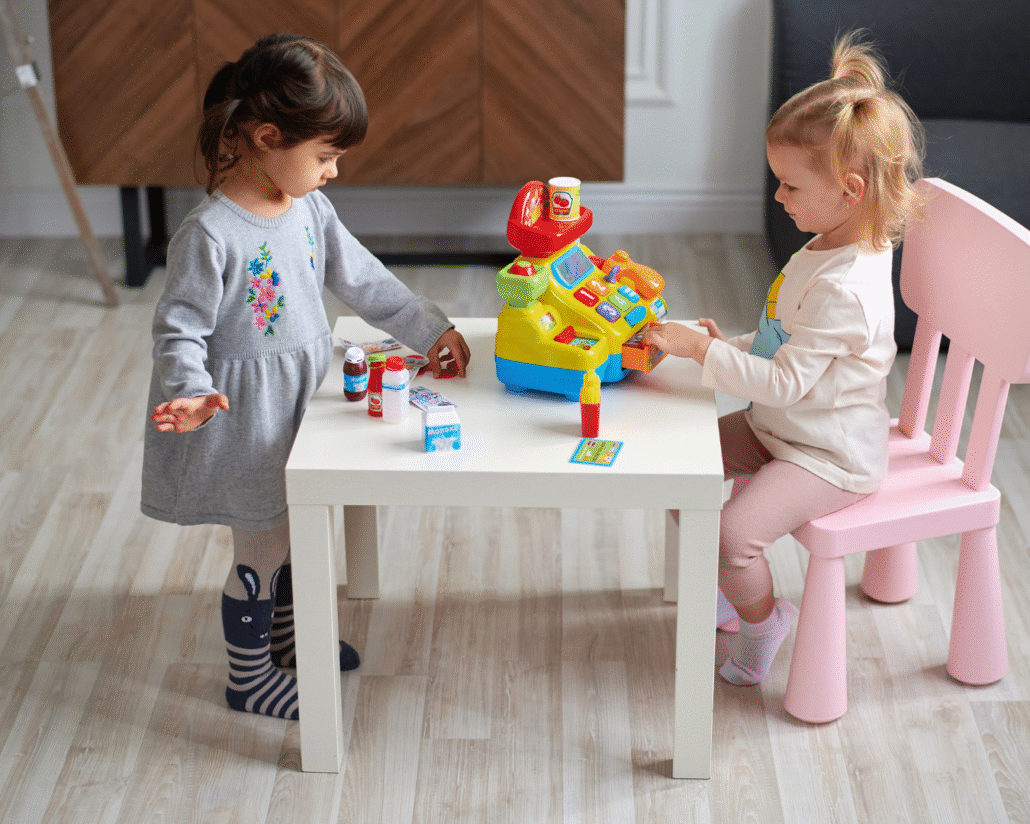
- Associative Play (3 – 4 years)
At this point, children are beginning to interact with others, sharing toys and ideas, but the play may not yet be fully organised. For example, two children may build towers side by side and occasionally exchange blocks.
How to encourage it:
- Provide open-ended toys like dress-ups, art supplies, or building materials.
- Encourage turn-taking games.
- Praise cooperative moments (“I love how you shared your truck with your friend”).
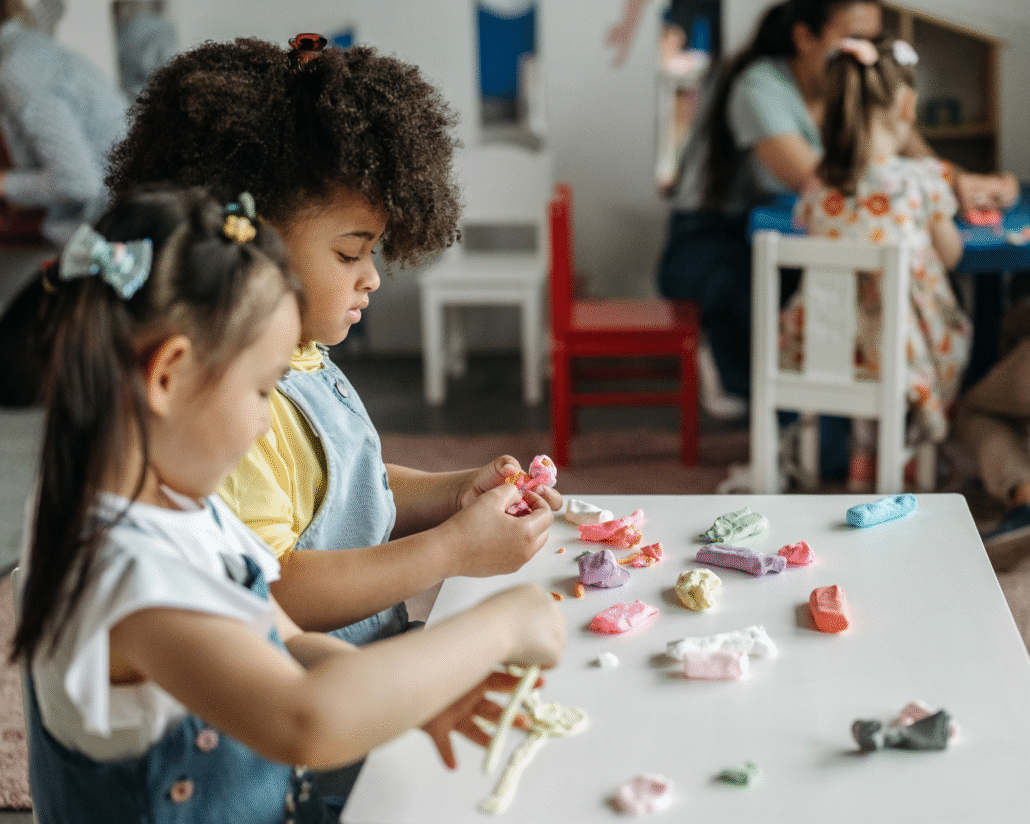
- Cooperative Play (4 – 5 years)
This is the most advanced stage of play in the early years. Children now play together with shared goals and rules whether it be building cities with blocks, playing pretend, or inventing group games. Cooperative play builds teamwork, empathy, and problem-solving.
How to encourage it:
- Suggest group activities like board games, role play, or outdoor games.
- Provide props for imaginative play (kitchen sets, costumes, dolls).
- Support children in resolving conflicts by modelling positive communication.

Each stage of play is a building block for learning. Even if your child prefers to play alone or just observe, they are still developing important skills. By recognising and supporting each stage, you’re helping your child gain confidence, independence, and social awareness.
Don’t rush your child through the stages, each one is valuable. With your support, encouragement, and the right environment, your child will naturally move forward in their play journey.
At Grow Early Education, we carefully design play-based environments and interactions to nurture every stage of development, helping children grow, explore, and thrive.
Follow us on Facebook to see how we incorporate these milestones into our everyday learning environments!
- Grow Early Education Bundaberg North
- Grow Early Education Darling Heights
- Grow Early Education Bridgeman Downs
- Grow Early Education Park Ridge
- Grow Early Education Toowoomba
- Grow Early Education Hervey Bay
- Grow Early Education Dalby
- Grow Early Education Riverton
- Grow Early Education Gunnedah
- Grow Early Education Kelso
- Grow Early Education Nowra Central
- Grow Early Education Narre Warren North
- Grow Early Education Heathmont
- Grow Early Education Frankston
At Grow Early Education, we believe science is a way for children to explore, question, and discover the world around them every day.
This National Science Week, we’re sharing a collection of simple, age-appropriate science experiments you can try at home with your little one. These activities fun and engaging, plus they also help build important skills such as problem-solving, observation, and prediction. Skills we nurture in our own science-based learning experiences across our centres.
Babies (0–1 years)
Rainbow Ice
Create colourful ice cubes using water and a few drops of food colouring. Place them in a large container or sensory tray and let your baby explore the melting ice. You can add a small container of warm water for them to experiment with melting the ice faster.
This activity encourages sensory exploration through temperature, texture, and colour while helping babies develop early observation skills. They begin to understand cause and effect as they notice the ice melting more quickly in warm water, and their language skills grow as you introduce new words like “cold,” “melting,” “blue,” and “mixing.”

Sound Bottles
Fill a clear, empty plastic bottle with items such as beads, rice, or bells. Let your baby shake the bottle to explore the different sounds each filling makes.
Shaking the bottle helps babies discover cause and effect while developing their listening skills as they hear the different sounds. It also promotes fine motor development through grasping and shaking, as well as visual tracking, as they watch the items move inside the bottle.

Toddlers (1–3 years)
Fizzing Colours
Add baking soda to a tray. Mix vinegar and food colouring in small cups, then use droppers to release the coloured vinegar onto the baking soda. Watch the fizzy reaction unfold right in front of your eyes!
This experiment introduces Toddlers to basic chemistry as they watch the acid and base reaction create fizz. They strengthen colour recognition and begin exploring colour mixing, while using droppers supports fine motor skills. Asking them to guess what will happen next also encourages curiosity and early prediction skills.

Sink or Float
Fill a large tub with water. Collect natural materials from around the home. Before dropping each item in, ask your child to guess: “Will this sink or float?”
This hands-on activity helps Toddlers begin to think like scientists by making predictions and testing their ideas. They practise categorisation skills and start to understand buoyancy, while also expanding their vocabulary with words such as “heavy,” “light,” “float,” and “sink.”

Pre-Kindy (3–4 years)
Walking Rainbow
Arrange jars of water coloured with food dye and blank water in a circle, alternating blank water with coloured water. Place a strip of paper towel between each jar, making sure the ends dip into the water. Watch the colours travel and mix over time.
Children strengthen their observation skills as they watch the colours slowly move, mix, and blend over time. This experiment introduces them to absorption and capillary action in a visual way, supports their understanding of colour mixing, and encourages them to talk through the sequence of events they see.

Shadow Tracing
Lay paper or card next to an object’s shadow and have your child trace its outline. Return throughout the day to see how the shadow has changed.
Shadow tracing helps children understand how the position of the sun changes shadows throughout the day. It also develops early measurement and comparison skills, supports fine motor control through drawing, and sparks curiosity about nature and the passing of time.

Kindergarten & Preschool (4–5 years)
Colour Changing Flowers or Celery
Place white flowers or celery stalks in a jar of coloured water. Over time, the stems will draw up the coloured water and change colour.
This activity introduces children to plant biology by showing how plants absorb water through their stems. It encourages them to observe and record changes over time, developing patience, attention to detail, and early scientific thinking.

Blowing Up a Balloon With Gas
Use a funnel to insert baking soda into a deflated balloon. Fill a bottle with vinegar, then carefully attach the balloon to the bottle’s neck without spilling the baking soda. Lift the balloon so the baking soda falls in. This will create a fizzy reaction, causing gas to inflate the balloon.
This experiment demonstrates chemical reactions and gas formation in a way children can see and enjoy. It promotes problem-solving and sequencing as they follow the steps, encourages them to make predictions, and gives them a memorable “wow” moment that builds excitement for science.

At Grow Early Education, science is a part of our everyday learning. From sensory exploration with our youngest babies to hands-on STEM projects with our older children, we create opportunities for children to investigate, experiment, and discover.
By trying these activities at home, you’re extending your child’s learning and giving them the chance to see science as something fun, exciting, and part of the world around them. Together, we can help inspire the next generation of curious thinkers and problem-solvers.
To further enrich these activities, you can use the Abecedarian Approach Australia (3a) Language Priority by talking your child through each reaction and change they observe during the experiment. This ongoing conversation helps build their communication skills and introduces them to a wider range of new words.
Follow us on Facebook to keep up to date with our Grow Early Education centres and see how we have acknowledged and celebrated National Science Week this week:
- Grow Early Education Bundaberg North
- Grow Early Education Darling Heights
- Grow Early Education Bridgeman Downs
- Grow Early Education Park Ridge
- Grow Early Education Toowoomba
- Grow Early Education Hervey Bay
- Grow Early Education Dalby
- Grow Early Education Riverton
- Grow Early Education Gunnedah
- Grow Early Education Kelso
- Grow Early Education Nowra Central
- Grow Early Education Narre Warren North
- Grow Early Education Heathmont
- Grow Early Education Frankston
