We’re proud to share that Grow Early Education Dalby has been nominated for Excellence in Education, Employment, and Training at this year's Dalby Business Excellence Awards.
This nomination is a wonderful recognition of the passion, dedication, and teamwork that our team of Educators at Grow Dalby demonstrate each and every day. At Grow Early Education, we believe that providing exceptional early learning experiences begins with investing in our people, from our Educators and Trainees to the future leaders of early childhood education.
Our Grow Dalby centre has become a vibrant part of the local community, nurturing children through high-quality programs that focus on learning through play, curiosity, and meaningful connections. Every experience at Grow Early Education is guided by our belief that the early years are the foundation for a lifelong love of learning.
We’re honoured to see this commitment reflected through our nomination, which acknowledges our focus on professional development, quality education, and creating an environment where both children and Educators can thrive.
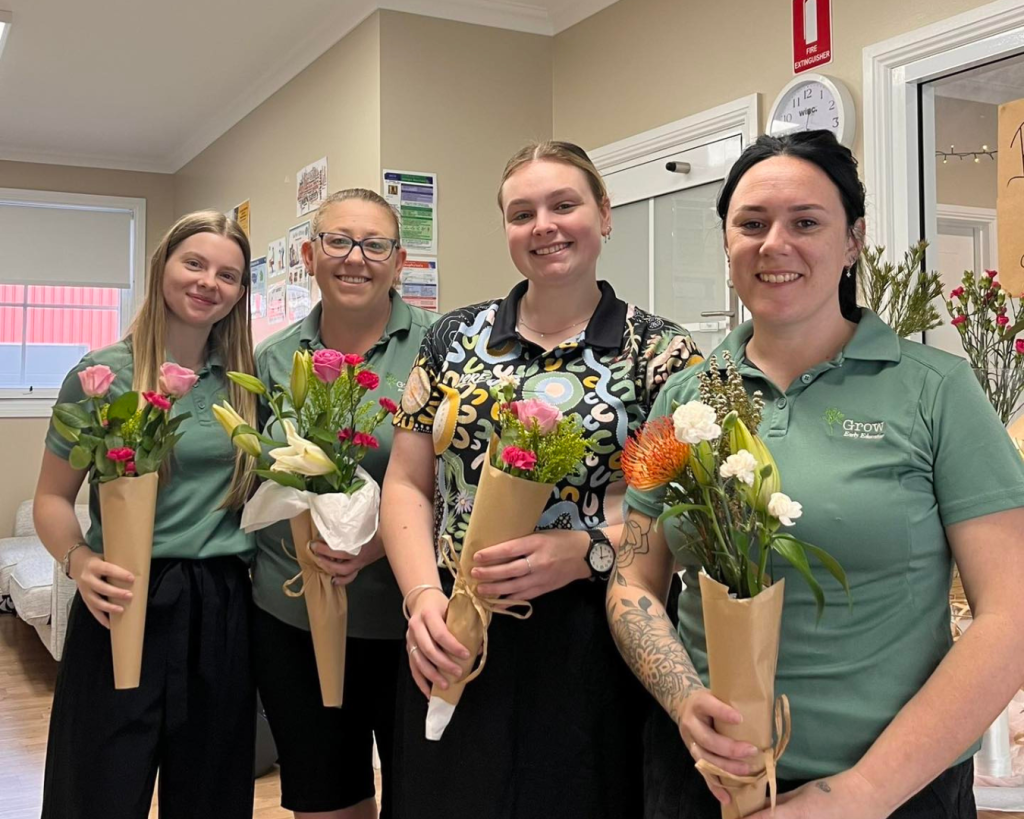

As a proud local employer, Grow Early Education Dalby is committed to fostering career pathways within the early childhood sector. We provide ongoing training opportunities, mentorship, and support for Educators at every stage of their journey, from Trainees to Lead Educators and beyond.
This nomination recognises the role we play not only in early education, but in building strong, skilled teams that make a lasting impact on the Dalby community.
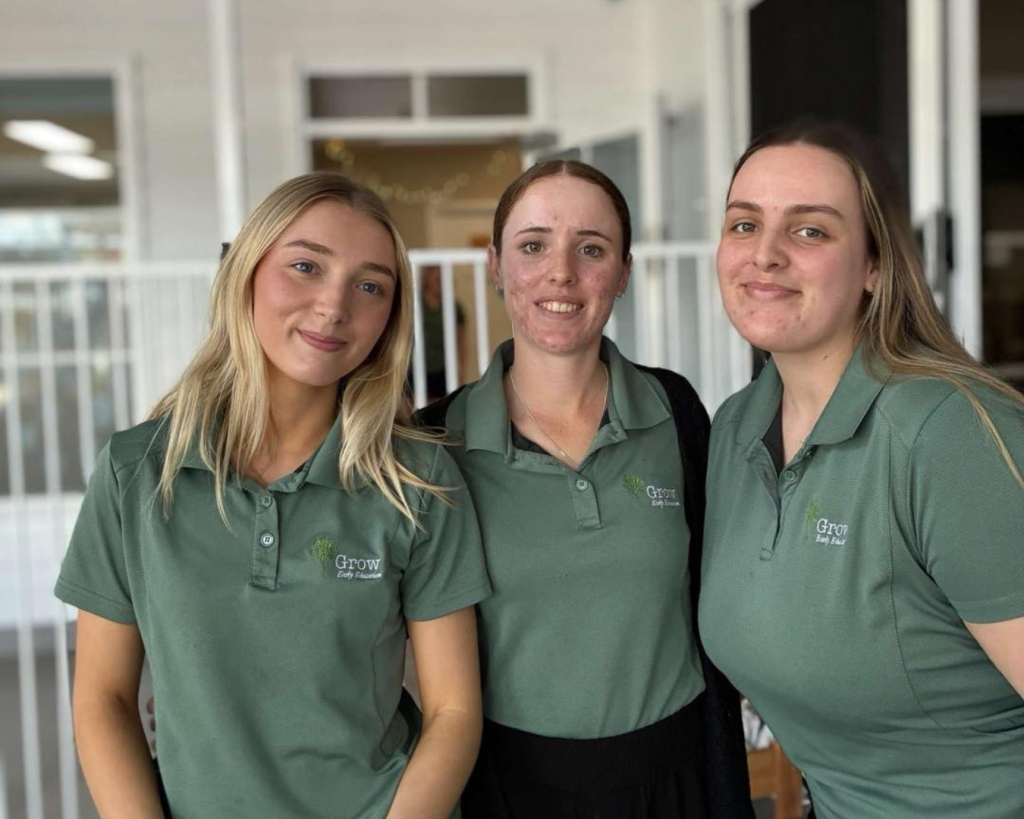

The winners will be announced at the Dalby Business Excellence awards night on Saturday, 18 October 2025. No matter the outcome, we are incredibly proud of our Educators and the work they do every day to make a difference in children’s lives.
Congratulations to all of this year’s nominees, and thank you to the Dalby Chamber of Commerce for recognising local businesses who go above and beyond for their community. We’re so proud of our team and honoured to be nominated for Excellence in Education, Employment, and Training, a true reflection of the Grow Early Education Dalby spirit.
Stay up to date with Grow Early Education and the result of the 2025 Dalby Chamber of Commerce Awards of our Facebook page here.
It is never too early to introduce and encourage independence. When children are given small responsibilities, they not only learn essential life skills but also build confidence, a sense of accomplishment, and a feeling of being capable. Age-appropriate chores are a fantastic way to introduce responsibility and independence in a fun and supportive way.
Chores aren’t just about keeping your home tidy, they’re opportunities for learning. By participating in everyday tasks, children:
- Develop fine and gross motor skills
- Learn to follow instructions
- Build confidence and pride in their abilities
- Practice problem-solving and teamwork
- Gain a sense of responsibility
Even simple tasks can make a big difference. When children are trusted with responsibilities, they feel valued and empowered.
Here are some ways you can match chores to your child’s developmental stage:
Toddlers (2–3 years)
- Put toys back in their place
- Help water plants
- Wipe up small spills
- Place napkins on the table

Preschoolers (4–5 years)
- Set the table for meals
- Help pack away groceries
- Feed pets
- Help with dishes and laundry

Early school age (6–7 years)
- Make their bed
- Help prepare simple meals or snacks
- Take out recycling
- Sweep small areas or dust

- Keep it simple; choose tasks your child can realistically do while making it fun by turning chores into games or challenges. Children thrive within routine, by making sure you remain consistent in the chores helps children to understand the expectations and feel secure.
- Handling Resistance; It’s normal for children to resist chores at first. Offer choices (“Do you want to put the toys away before or after you snack?”) and keep a calm, encouraging tone. Avoid turning chores into power struggles, consistency and gentle guidance work better than pressure.
- Making Chores Enjoyable; Make it a family routine, children often engage more when they see adults participating alongside them. Use songs, timers, or small challenges to turn chores into fun activities.
- Celebrating Progress; Encourage intrinsic motivation by focussing on how proud they feel rather than just rewards. Consider a “chore chart” for older children to visualise their achievements.
- Teaching Problem-Solving; If a child struggles with a task, guide them to figure it out rather than doing it for them. Ask questions such as, “what’s the first thing we need to do to clean up this space?”
- Balancing Expectations; Remember: independence grows gradually, some tasks will be messy or incomplete at first, but that’s part of the learning.
Even small accomplishments deserve recognition! A high-five, sticker, or verbal praise reinforces positive behaviour and encourages children to keep trying. Over time, these small responsibilities grow into lifelong skills and a strong sense of independence.
At our Grow Early Education centres, we see this in action every day when children serve their own lunch and snacks, tidy up after meal times, help prepare their beds for naps, and pack away the educational resources they use throughout the day. These daily routines not only support independence but also foster confidence, responsibility, and pride in their abilities.
Follow us on Facebook to stay up to date with each of our Grow Early Education centres:
- Grow Early Education Darling Heights
- Grow Early Education Bridgeman Downs
- Grow Early Education Park Ridge
- Grow Early Education Toowoomba
- Grow Early Education Hervey Bay
- Grow Early Education Dalby
- Grow Early Education Riverton
- Grow Early Education Gunnedah
- Grow Early Education Kelso
- Grow Early Education Nowra Central
- Grow Early Education Narre Warren North
- Grow Early Education Heathmont
- Grow Early Education Frankston
From 5 January 2026, big changes are coming to the Child Care Subsidy (CCS). The government has confirmed the introduction of the long-discussed “3-Day Guarantee”, along with updates to how the CCS Activity Test works.
In this week’s blog, we are helping parents better understand the new changes with an easy-to-follow breakdown of what this change means for families, and how you can prepare.
Eligible families for the CCS will now have access to at least 72 hours of subsidised care per fortnight, that’s the equivalent of 3 days a week for most families.
This change gives families more certainty. Even if your recognised activity hours (such as work, study, or volunteering) are low, you’ll still receive a baseline level of subsidised care.
While the 3-Day Guarantee provides a strong foundation, many families will still be able to access up to 100 hours of subsidised care per fortnight. This applies if:
- Both parents (if partnered) complete more than 48 hours of recognised activity each fortnight; or
- Your family has a valid exemption from the activity test.
In addition, Aboriginal and Torres Strait Islander children will automatically be eligible for the full 100 hours of subsidised care, regardless of activity levels.
Recognised Activity – What Counts?
The activity test is still an important part of determining your CCS hours. Recognised activities include things like:
- Paid work or self-employment
- Looking for work
- Volunteering
- Studying or training
- Participation in programs that build skills or capacity
If you’re unsure whether your situation qualifies, you can check the full list on the Services Australia website here.
It’s important to remember that the CCS doesn’t always cover the full cost of childcare. Families will still be responsible for gap fees or out-of-pocket expenses charged by their provider.
The good news? With more subsidised hours guaranteed, many families are likely to see significant savings compared to previous arrangements.
What Does This Means for Families?
Parents with lower activity hours: You’ll still receive 72 hours of subsidised care each fortnight, giving you more flexibility for work, study, or family needs.
Families with higher activity levels: You can continue to access the full 100 hours.
Aboriginal and Torres Strait Islander families: Automatically receive the maximum 100 hours.
Families with exemptions: You’ll also be eligible for the full 100 hours.
How to Prepare for the Changes
With changes coming into effect from early 2026, now is a great time to prepare yourself for the changes to ensure your family doesn’t miss out. You can do this by:
- Talking to your Centre Director to understand how the changes may affect your gap fees
- Talking to your Centre Director about availability to book in for 3 days per week in 2026 (if you currently are only have 1-2 days booked per week)
- Checking your CCS eligibility to make sure you’re receiving the right level of support.
- Reviewing your activity hours – if you’re close to the 48-hour threshold, you may want to track your participation more carefully.
- Staying updated through Services Australia for further details and examples.
The introduction of the 3-Day Guarantee is a major win for families, helping to ensure that all children can access quality early education and care, regardless of their parents’ activity levels.
By locking in a minimum of 72 hours and keeping pathways to 100 hours of subsidised care, these changes aim to support families, strengthen workforce participation, and give every child the best possible start.
Looking for more information on the 2026 CCS changes? Read our blog deep-diving the changes here or head to the Services Australia website.
Follow us on Facebook to stay up to date with our Grow Early Education Childcare centres.
- Grow Early Education Bundaberg North
- Grow Early Education Darling Heights
- Grow Early Education Bridgeman Downs
- Grow Early Education Park Ridge
- Grow Early Education Toowoomba
- Grow Early Education Hervey Bay
- Grow Early Education Dalby
- Grow Early Education Riverton
- Grow Early Education Gunnedah
- Grow Early Education Kelso
- Grow Early Education Nowra Central
- Grow Early Education Narre Warren North
- Grow Early Education Heathmont
- Grow Early Education Frankston
Starting Kindergarten or Preschool is a big milestone not just for your child, but for your whole family. Especially if it is your first time sending your child to an early education centre. Whether you’re enrolling for the first time or just want to learn more about what to expect, we’ve answered some of the most frequently asked questions from parents to help you feel confident and prepared.
What age does my child need to be to start Kindergarten or Preschool?
In Queensland, your child must turn 4 by June 30th in the year they attend an approved Kindergarten program. Kindergarten is typically a one-year program that runs the year before Prep.
In Victoria, both 3-Year-Old and 4-Year-Old Kindergarten programs are on offer. The Victorian Government provides two years of funded Kindergarten for children to maximise the benefits of early childhood education, which has been shown to improve a child’s learning, development, health, andGrow Early Education wellbeing. This investment aims to give children a strong foundation for future learning and life success. For 3-year-old Kinder, children are eligible if they are attending the program the year they turn 3. In the 4-year-old Kinder, children must turn 4 before April 30th that year to participate in the approved Kindergarten Program.
In New South Wales, Preschool Programs are offered to children who are turning 4 years old before July 31st and attending an approved Preschool Program.
What does a typical Kindergarten or Preschool day look like at Grow Early Education?
Each day is thoughtfully structured to support your child’s development. A Kindergarten or Preschool day usually includes:
- Group time and story sessions
- Outdoor play and physical activity
- Creative play and sensory experiences
- Early literacy and numeracy games
- Mealtimes and rest
- Opportunities for children to explore their interests
These routines help children feel secure and give them a sense of belonging in the classroom.
Is the Kindergarten or Preschool Program play-based at Grow Early Education?
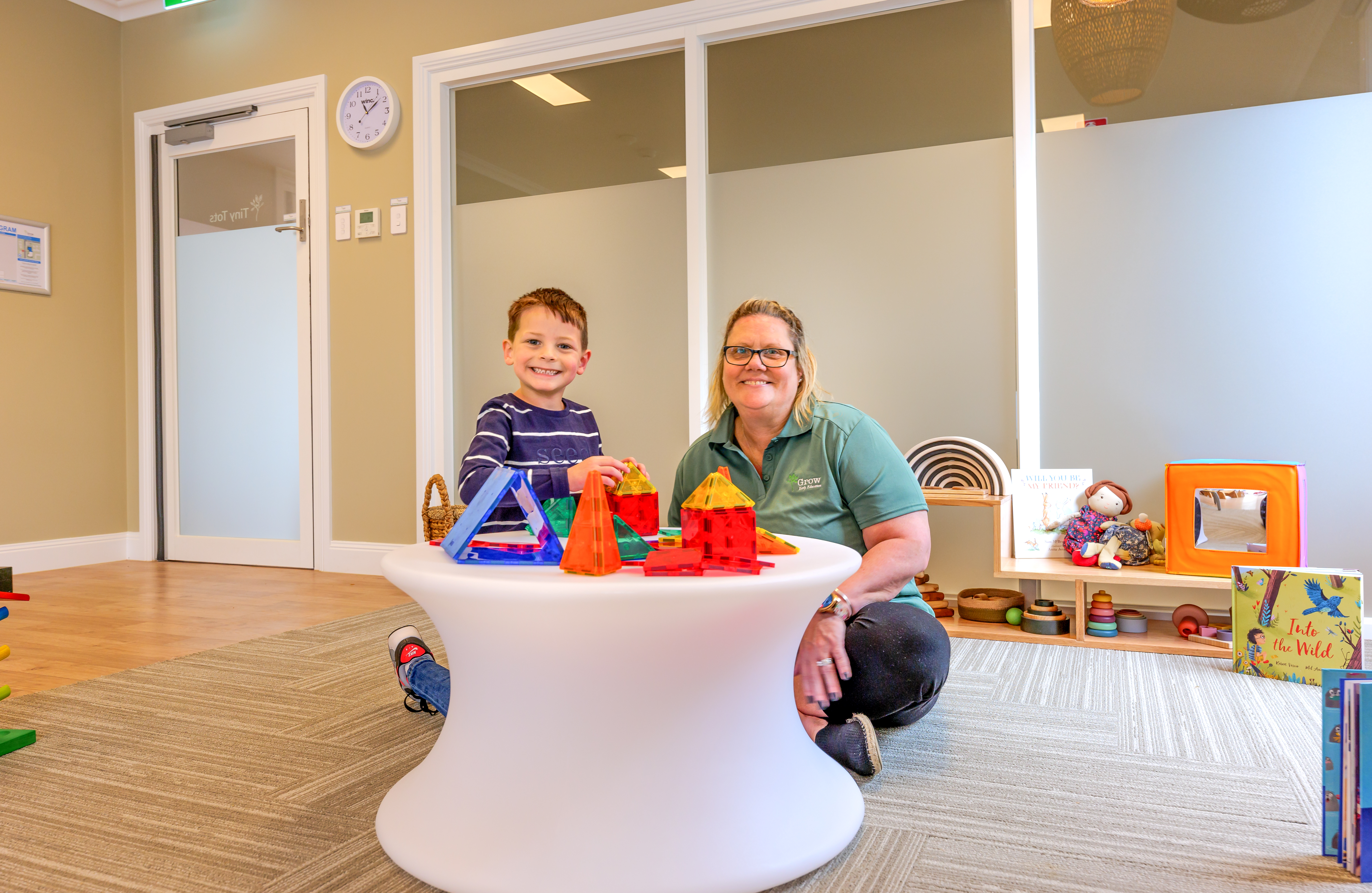
Yes! Our Kindergarten and Preschool Programs are proudly play-based. Our Teachers adopt a stimulating play-based approach to their curriculum delivery, as well as tailoring the program to each child’s individual development needs.
Learning through play is one of the most important ways children learn and develop. You may have realised that as a parent, you don’t generally have to make children play or provide incentives to play. This is because children have a natural urge to play and playing brings a level of pleasure and interest which means it can be maintained without external rewards.
We also believe children learn best through hands-on, meaningful experiences. Through play, children build essential skills in:
- Language and early literacy
- Early maths and problem-solving
- Social interactions and emotional regulation
- Fine and gross motor development
We follow the Early Years Learning Framework and guidance from the Abecedarian Approach Australia (3a), which supports school readiness through fun, rich, and engaging learning. We also focus on providing a variety of extra-curriculars, incursions and excursions to ensure your child has a well-rounded early childhood education with us.
Will my child be ready for traditional schooling after Kindergarten or Preschool at Grow Early Education?
Yes! Our program is designed to prepare children for a smooth and confident transition to school. We focus on developing:
- Independence and self-help skills
- Confidence in learning and trying new things
- Social and emotional skills to make friends and work with others
- Foundational early literacy and numeracy skills
- Name recognition
Our Kindergarten or Preschool Teacher will also coordinate several visits to local schools across the year as part of your child’s transition to school process. By the end of their Kindergarten or Preschool year, children are well equipped to take on the routines and expectations of traditional schooling.
Do you provide a Transition Statement?
Yes! A formal discussion towards the end of the Kindergarten Year is scheduled to share information with parents and Teachers and support each child’s transition to school. This discussion provides an opportunity for parents and other partners to collaboratively create a summary of a child’s learning in the form of a Transition Statement.
This is a helpful summary of your child’s learning progress, strengths, and interests and it is shared with your child’s future school to help their new teachers support them from day one.
Do you offer Free Kindergarten or Preschool Fee Relief?
Yes, we do! Our established early education centres provide Government-approved Kindergarten or Preschool Programs, which means that families may be eligible for Free Kindergarten or Preschool Fee Relief (depending on your location and circumstances).
In Queensland, the state Government offers ‘Free Kindy’ for eligible children attending a Government-approved Kindergarten Program for up to 15 hours per week, 40 hours per year. For more information and eligibility criteria, head to the Queensland Government website.
In New South Wales, all our centres currently participate in the NSW Government’s ‘Start Strong’ program by providing a Government-approved Preschool Program. This means families may be eligible for Fee Relief, which provides up to $2,110 per year in fee subsidies for children enrolled in eligible community or long daycare settings. For more information and eligibility criteria, head to the New South Wales Government website.

In Victoria, the Victorian Government offers two years of ‘Free Kinder’ for eligible families who attend an approved 3-year-old and 4-year-old Kindergarten Programs. Funding will save Victorian families up to $2,627 per year per child. For more information and eligibility criteria, head to the Victorian Government website.
What does my child need to bring?
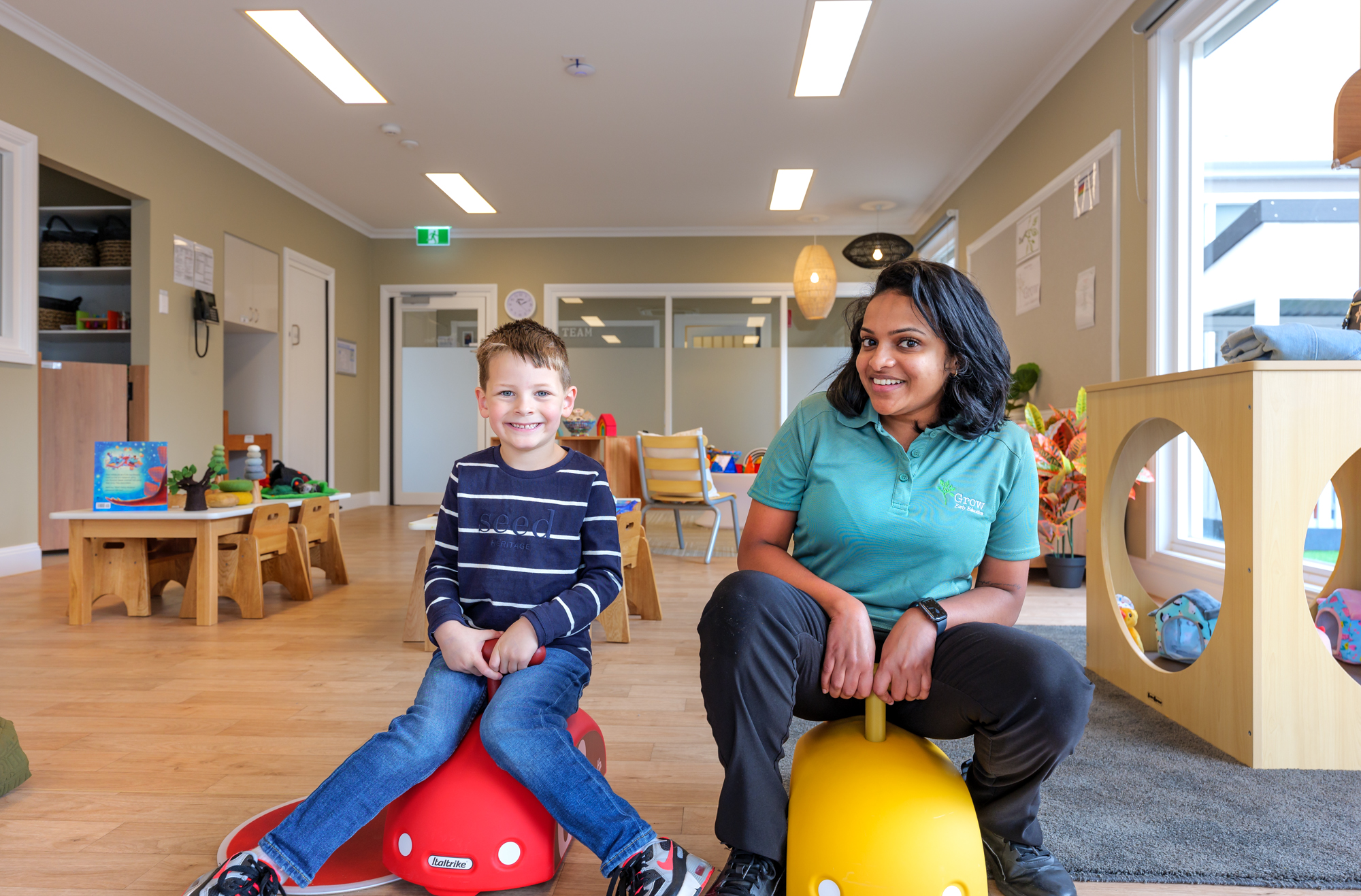
Our all-inclusive daily fee offers families a stress-free experience by providing children with all hats, sunscreen, meals, and snacks. This means all you need to pack is your child’s water bottle and hat (which we provide you as part of our ‘Enrolment Pack’) and a spare change of clothes!
Our Centre Chefs prepare nutritious meals and snacks fresh, daily in our in-house kitchen. Have peace of mind knowing your child is getting the nutrition they need to learn and grow with our seasonal menus providing over 50% of your child’s recommended daily nutritional intake.
Do you have qualified Teachers at your long daycare centres?
Yes! Our Teachers are University-qualified Teachers!
They have achieved a Bachelor of Early Childhood or equivalent qualification as approved by ACECQA (or are actively working towards their Bachelor qualification). In addition to being degree qualified, they must also have:
- Current approved first aid, anaphylaxis and asthma qualifications
- Current Working with Children Check
- Sound understanding of the EYLF and NQF

Why Choose Grow Early Education's Kindergarten or Preschool Program?
At Grow Early Education, our Kindergarten or Preschool Programs offer more to families than just preparation for school. It offers a nurturing, play-based environment where children feel safe, supported, and inspired to learn. With qualified Early Childhood Teachers; a variety of rich learning opportunities and experiences; nutritious chef-prepared meals; convenient long daycare hours; and our evidence-based Abecedarian Approach Australia (3a) approach to teaching, your child will thrive in every way.
How and when can we enrol for 2026?
Enrolments for our 2026 Kindergarten and Preschool Programs are opening very soon! To get a head start to securing your child’s place for next year, you can Register Your Interest now and Book a Tour of our inspiring centres today!
Follow us on Facebook to keep up to date with our Grow Early Education Kindergarten and Preschool Programs in action;
- Grow Early Education Bushland Beach
- Grow Early Education Bundaberg North
- Grow Early Education Darling Heights
- Grow Early Education Bridgeman Downs
- Grow Early Education Park Ridge
- Grow Early Education Toowoomba
- Grow Early Education Hervey Bay
- Grow Early Education Dalby
- Grow Early Education Riverton
- Grow Early Education Gunnedah
- Grow Early Education Kelso
- Grow Early Education Nowra Central
- Grow Early Education Narre Warren North
- Grow Early Education Heathmont
- Grow Early Education Frankston
Your go to guide for making care more affordable this financial year.
Starting childcare is exciting, but navigating fees and government subsidies can feel overwhelming and confusing. To make your transition to childcare as easy and stress-free as possible, we’ve updated our popular CCS cheat sheet with all the key information that will apply from 7 July 2025 through 30 June 2026.
What is CCS?
The Child Care Subsidy is a payment the Australian Government sends straight to your childcare provider. It reduces your out of pocket fees so quality early education is within reach for every family.
Who can get it?
You or your partner must:
- Meet Australian residency requirements
- Be liable for childcare fees under a written agreement
- Meet the requirements for the CCS activity test or hold an approved exemption.
Your child must:
- Attend an approved childcare service in Australia
- Be under 13 years and not attending secondary school
- Be up to date with immunisations or have an approved exemption.
How much CCS will I receive?
The amount of CCS you are entitled to is based on a few key areas, such as your combined household income and the results of the CCS Activity Test.
- Family Income
Services Australia determines a family’s CCS percentage based on their estimated family income.
A family’s CCS subsidy rate is the percentage of the hourly rate that the government will subsidise. It will apply to the hourly fee or the relevant hourly rate cap, whichever is lower.
 Standard subsidy rates for the first child, 0-5 years of age.
Number of Children in Care
Families with more than one child aged 5 or under in care may receive a higher subsidy for their second child and younger children. Siblings do not need to attend the same service to get a higher subsidy.
The rates for each child are worked out using two separate income tests.
 Higher subsidy rates for second and younger siblings
- Activity Test
The hours of subsidised care a family can get each fortnight depends on their activity level. The higher the level of activity, the more hours of subsidised care families can get.
Services Australia looks at both parents’ activity levels. They use the parent with the lower activity level to determine a family’s hours of subsidised care.
Families need to do a recognised activity to get CCS. Exemptions apply for parents who cannot meet activity test requirements.
 Activity hours according to the Services Australia website for the 2025-2026 financial year
There are certain circumstances that you may meet, where you will be exempt from the activity test, and be eligible for 100 hours of subsidised care per fortnight. These include: if you have a disability or impairment or if you are a grandparent who is the principal carer for your grandchild, and you do not receive income support payments (see our section on Additional Child Care Subsidy if you do). There are many other reasons you may be exempt.
Visit the Services Australia website to find out if you are within the guidelines for an exemption.
What’s changes are coming in 2026?
The Government’s proposed 3 day guarantee would give every CCS eligible child 72 hours (~3 days) per fortnight, and 100 hours for First Nations children, regardless of activity.
Legislation is before parliament, watch this space for a 2026 start date.
Payments, withholding & reconciliation
Your CCS is paid directly to your childcare provider. This means you’ll only ever pay your childcare provider the difference between your subsidy amount and the full fee.
That’s why it’s essential to apply for the Child Care Subsidy well before your child begins care. We recommend submitting your application at least two months in advance to allow time for approval and ensure your subsidy is in place from day one.
While your child can start care before your CCS is approved, please note that you will be responsible for paying full fees during this time. If you’re a new applicant, CCS can only be backdated up to 28 days from the date your application is submitted, and any back payments will be reimbursed to you directly, not to the centre.
The Australian Government will withhold 5% of your CCS entitlement before it is paid to your childcare provider. This is to reduce the likelihood of you incurring a debt by being overpaid your CCS entitlement.
Absences
You can claim CCS for up to 42 paid absence days per child, per financial year (public holidays, sickness, family reasons). Additional absences may be covered in special circumstances and require further evidence. Find out more on absences here.
Additional absence days can be paid by Centrelink, provided the circumstances meet those defined by the Family Assistance Law. Some of these include if the service is closed due to an emergency.
Additional Child Care Subsidy (ACCS)
ACCS tops up CCS for families:
- Facing financial hardship
- Caring for a grandchild full time
- Transitioning to work from income support
- Where a child is vulnerable or at risk
Find the full list of circumstances for eligible ACCS here.
New to CCS? Here's a final checklist for you:
✔ Apply at least two months before the start date
✔ Update MyGov quickly if your income or activity changes
✔ Keep immunisations current and up to date
Need a hand?
Our Grow Early Education Enrolments Team is here to guide you through the CCS maze. Book a centre tour or call us anytime. Let’s make quality early education affordable for your family in 2025-2026!
Please note, this is only a simplified guide to CCS. For a more detailed overview and more information, head to the Australian Government Services Australia website at https://www.servicesaustralia.gov.au/child-care-subsidy
Find a Grow Early Education centre near you and book a tour to discover the Grow difference!
- Grow Early Education Bushland Beach
- Grow Early Education Bundaberg North
- Grow Early Education Darling Heights
- Grow Early Education Bridgeman Downs
- Grow Early Education Park Ridge
- Grow Early Education Toowoomba
- Grow Early Education Hervey Bay
- Grow Early Education Dalby
- Grow Early Education Riverton
- Grow Early Education Gunnedah
- Grow Early Education Kelso
- Grow Early Education Nowra Central
- Grow Early Education Narre Warren North
- Grow Early Education Heathmont
- Grow Early Education Frankston
- Grow Early Education Tarneit
The Australian Government is making significant changes to the Child Care Subsidy (CCS) to provide more support for families and move towards a universal early education and care system. Announced on 11 December 2024, these changes will take effect from 5 January 2026, ensuring that more families receive subsidised childcare hours.
Key Changes to the CCS in 2026
The new subsidy rules will make childcare more accessible by adjusting how subsidised hours are calculated. Here’s what will change:
Minimum of 3 Days of Subsidised Care per Week for All Families
- All CCS-eligible families will now receive three days of subsidised childcare per week for each child, regardless of their work or study commitments.
- This means that more children will have access to early education and care, supporting their learning and development.
Increased Support for First Nations Families
- Families caring for First Nations children will receive 100 hours of subsidised care per fortnight per child.
- This measure aims to provide greater access to childcare and early education for Indigenous communities, supporting cultural and educational growth.
Additional Support for Working, Training, and Volunteering Families
Families will continue to receive 100 hours of subsidised care per fortnight per child if they:
- Work, train, study, or volunteer for more than 48 hours per fortnight.
- Qualify for an exemption under the CCS rules.
How CCS Eligibility is Determined
While the changes expand access to subsidised care, the actual subsidy percentage families receive will still depend on:
- Combined family income – Higher-income families may receive a lower subsidy rate.
- Hourly rate caps – The government sets limits on the amount of subsidy per hour.
- Number of children in care – Families with multiple children in care may receive additional support.
- Age of children – Different rates apply depending on whether the child is in early learning or school-age care.
What’s Next?
The Australian Government is working with Services Australia to ensure childcare providers and families are prepared for the transition in January 2026. More details and guidance will be provided in the coming months to help families understand how these changes will affect them.
Final Thoughts
The 2026 CCS changes represent a significant step towards making early childhood education more accessible for Australian families. By ensuring that all CCS-eligible families receive at least three days of subsidised care and increasing support for First Nations children, these reforms will ease financial pressures and improve early learning opportunities.
As we approach the rollout, families are encouraged to stay informed and check their eligibility to make the most of these new benefits. Stay tuned for further updates as the government finalises the implementation process!
Stay up to date with our Grow Early Education centres on Facebook!
- Grow Early Education Bushland Beach
- Grow Early Education Bundaberg North
- Grow Early Education Darling Heights
- Grow Early Education Bridgeman Downs
- Grow Early Education Rochedale Central
- Grow Early Education Park Ridge
- Grow Early Education Toowoomba
- Grow Early Education Hervey Bay
- Grow Early Education Maroochydore
- Grow Early Education Dalby
- Grow Early Education Riverton
- Grow Early Education Gunnedah
- Grow Early Education Kelso
- Grow Early Education Nowra Central
- Grow Early Education Narre Warren North
- Grow Early Education Heathmont
- Grow Early Education Frankston
