At Grow Early Education, we believe in giving every child the best start to their educational journey. One of the most powerful tools we use in our long day care and kindergarten/Preschool programs is phonics. Phonics is a foundational skill that plays a key role in developing early reading, language, and communication abilities and supports confidence in early childhood.
In this week’s blog, we’re exploring the importance of phonetic sounds and how they help shape confident, capable learners—setting children up for success not only in school but in life.
What is Phonics?
Phonics is the method of teaching children the relationship between sounds and the letters or groups of letters that represent those sounds. Rather than memorising whole words by sight, phonics helps children decode words by sounding them out.
For example:
- A makes the sound “ah” as in apple.
- B makes the sound “buh” as in ball. ⚽
- S makes the sound “sss” as in sun. ☀️
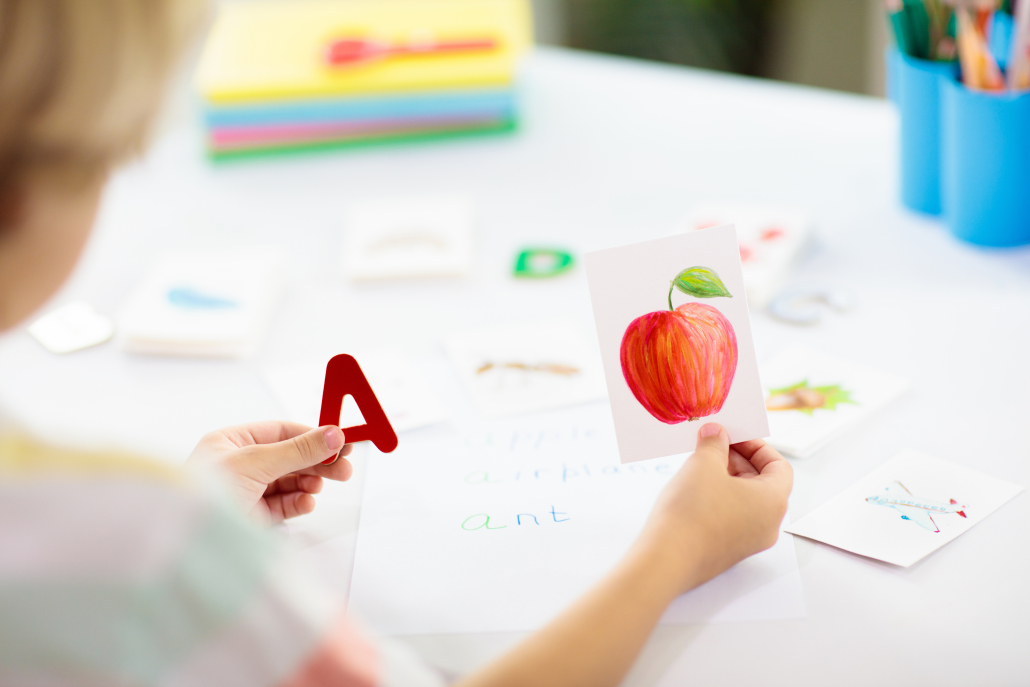
Understanding these sounds gives children the tools they need to decode unfamiliar words, improve their spelling, and become confident readers and communicators.
Research shows that phonics instruction significantly improves children’s reading and writing skills. At Grow Early Education, we understand how critical this stage is in a child’s development. That’s why our qualified Educators and Early Childhood Teachers incorporate phonics and phonemic awareness into our daily routines.
Phonics helps children:
- Recognise and produce individual letter sounds
- Blend sounds together to read new words
- Identify sounds at the beginning, middle, and end of words
- Develop strong vocabulary and comprehension skills
- Grow in confidence and enjoy the process of learning

Our curriculum is guided by the Early Years Learning Framework (EYLF), which emphasises communication, literacy, and language development as key learning outcomes. Phonetic learning aligns beautifully with the EYLF’s vision for children to become confident and effective communicators.
Through play-based learning experiences that are both meaningful and engaging, we provide opportunities for children to explore sounds, language, and storytelling in ways that feel natural and fun.
At Grow Early Education, we also follow the Abecedarian Approach – a research-based teaching method that supports language development through intentional, high-quality interactions. This includes strategies such as:
- Learning Games that promote turn-taking and communication
- Conversational Reading that fosters vocabulary and comprehension
- Language Priority in everyday routines
These strategies complement phonetic learning, helping children not only understand sounds but also use language to express ideas, ask questions, and build relationships.
Families play an important role in supporting their child’s early literacy journey. Here are a few simple ways you can reinforce phonics at home:
- Read with your child every day and talk about the sounds letters make
- Sing songs and nursery rhymes that play with rhyme and rhythm
- Play games like “I Spy” using beginning letter sounds
- Encourage your child to sound out words while reading signs, labels, and books
We are passionate about creating a love for learning that lasts a lifetime. By integrating phonics into our early education program, we empower children to build strong literacy foundations, setting them up for success as they move through kindergarten and beyond.
Discover how we bring the Early Years Learning Framework and the Abecedarian Approach Australia (3a) to life with phonics and more —follow us on Facebook to see meaningful learning in action.
- Grow Early Education Bushland Beach
- Grow Early Education Bundaberg North
- Grow Early Education Darling Heights
- Grow Early Education Bridgeman Downs
- Grow Early Education Park Ridge
- Grow Early Education Toowoomba
- Grow Early Education Hervey Bay
- Grow Early Education Maroochydore
- Grow Early Education Dalby
- Grow Early Education Riverton
- Grow Early Education Gunnedah
- Grow Early Education Kelso
- Grow Early Education Nowra Central
- Grow Early Education Narre Warren North
- Grow Early Education Heathmont
- Grow Early Education Frankston
In recent years, the educational landscape has witnessed a significant shift towards play-based learning curricula, particularly in early childhood education. This approach recognises the inherent value of play as a fundamental aspect of how children learn and develop. In this blog, we will explore play-based learning, its key principles, and its numerous benefits to young learners.
What is Play-Based Learning?
Play-based learning is an educational philosophy that emphasises the importance of play as a primary mode of learning for children. Unlike traditional, teacher-directed instruction, play-based learning encourages children to engage in hands-on, experiential activities that stimulate curiosity, creativity, and critical thinking. This curriculum is designed to be flexible, allowing children to explore their interests and learn at their own pace.

Key Principles of Play-Based Learning
- Child-Centred Approach: At the heart of play-based learning is the belief that children are active participants in their own learning. Educators serve as facilitators, providing guidance and support while allowing children to take the lead in their exploration.
- Integration of Learning Areas: Play-based curriculum often integrates various learning domains, such as social-emotional, cognitive, physical, and language development. Through play, children can engage in activities that promote multiple skills simultaneously.
- Real-Life Experiences: Play-based learning often involves real-life scenarios and experiences, allowing children to make connections between their play and the world around them. This relevance enhances their understanding and retention of information.
- Collaboration and Social Interaction: Play encourages collaboration and social interaction among children. Through group activities, children learn to communicate, negotiate, and work together, fostering essential social skills.
- Encouragement of Creativity: Play-based learning nurtures creativity by providing children with the opportunities to express themselves through imaginative play, art, music, and storytelling. This creative exploration is vital for cognitive and emotional development.
Benefits of Play-Based Learning
- Enhanced Cognitive Development: Play-based activities stimulate critical thinking and problem-solving skills. Children learn to ask questions, experiment, and find solutions, which are essential cognitive skills for lifelong learning.
- Improved Social Skills: By engaging in cooperative play, children develop social skills such as sharing, empathy, and conflict resolution. These interactions help them build friendships and navigate social dynamics effectively.
- Emotional Growth: Play allows children to express their emotions and experiences in a safe environment. Through role-playing and imaginative scenarios, they can explore feelings, learn self-regulation, and develop emotional resilience.
- Physical Development: Many play-based learning activities involve physical movement, which supports the development of gross and fine motor skills. Activities such as climbing, jumping, and manipulating objects enhance coordination and overall physical health.
- Increased Motivation and Engagement: Play-based learning fosters intrinsic motivation. Children are more likely to engage deeply with activities that they find enjoyable and interesting, leading to a positive attitude towards learning.
- Preparation for Future Learning: The skills acquired through play-based learning set a solid foundation for future academic success. Children develop a love for learning, curiosity, and the ability to think critically, which are essential for their educational journey.

How do we Implement Play-Based Learning in Early Childhood Education?
To effectively implement a play-based learning curriculum, Educators can:
- Create a stimulating environment that encourages exploration and creativity.
- Provide a variety of materials and resources that support different types of play, including sensory play, dramatic play, and construction play.
- Observe and assess children's interests and learning styles to tailor activities that resonate with them.
- Foster a positive and supportive atmosphere where children feel safe to express themselves and take risks in their learning.
- Have fun, engage and play with children. Choose your moments to sit back and observe, actively engage or wait to be invited into the play. Make play-based learning a fun and engaging time for children to have your full attention.
Play-based learning is more than just fun; it is a powerful educational approach that supports holistic development in children. By embracing play as a fundamental part of the learning process, educators can create enriching experiences that foster cognitive, social, emotional, and physical growth. As we continue to recognize the significance of play in education, we pave the way for a generation of curious, confident, and capable learners ready to thrive in an ever-changing world.
Stay up to date with our Grow Early Education centres on Facebook to see what amazing play-based activities Educators incorporate into their daily curricula.
- Grow Early Education Bushland Beach
- Grow Early Education Bundaberg North
- Grow Early Education Darling Heights
- Grow Early Education Bridgeman Downs
- Grow Early Education Park Ridge
- Grow Early Education Toowoomba
- Grow Early Education Hervey Bay
- Grow Early Education Maroochydore
- Grow Early Education Dalby
- Grow Early Education Riverton
- Grow Early Education Gunnedah
- Grow Early Education Kelso
- Grow Early Education Nowra Central
- Grow Early Education Narre Warren North
- Grow Early Education Heathmont
- Grow Early Education Frankston
At Grow Early Education, we embrace Australia’s rich multicultural heritage and believe in fostering a sense of belonging, respect, and inclusivity within our long daycare centres. Harmony Week, celebrated from March 17th to 23rd, is a wonderful opportunity to teach children about acceptance, respect, and unity while celebrating the diverse backgrounds that make up our communities.
This nationwide celebration highlights the importance of inclusiveness and cultural respect for all Australians, regardless of their background. The signature orange colour of Harmony Week represents meaningful conversations, communication, and mutual understanding—values we strive to instil in the children every day.
Throughout Harmony Week, our Grow Early Education centres across Australia will engage in various fun and educational activities that celebrate diversity and inclusion. Here’s how we have been getting involved so far:
- Dress-Up Day – At Grow Early Education Gunnedah, children and Educators embraced diversity by dressing in traditional attire or wearing orange. They engaged in fun, themed activities, including arts and crafts sessions to further develop their understanding of what Harmony Week represents.

- Multicultural Experiences – Across our Grow Early Education centres, we regularly engage with and share stories from different cultures, whether it be from our local Indigenous Australians or international cultures and holidays.

- Diversity Art Projects – The children at Grow Early Education Bridgeman Downs created art pieces to showcase to their families around the centre. With the help of the Educators, children used their handprints to create personal details on their Harmony Day flowers. They also worked together to create their "Diversity Tree" using handprints as the leaves.

At Grow Early Education, we understand that early childhood is a critical time to instil values of respect, understanding, and inclusivity. By celebrating Harmony Week, we provide children with meaningful experiences that help them appreciate and embrace the differences that make each person unique. These celebrations encourage lifelong respect for diversity, fostering a future generation that values unity and kindness.
Let’s celebrate Harmony Week together and continue to nurture a world where everyone belongs!
Stay up to date with your nearest Grow Early Education centres Harmony Week celebrations on Facebook.
- Grow Early Education Bushland Beach
- Grow Early Education Bundaberg North
- Grow Early Education Darling Heights
- Grow Early Education Bridgeman Downs
- Grow Early Education Rochedale Central
- Grow Early Education Park Ridge
- Grow Early Education Toowoomba
- Grow Early Education Hervey Bay
- Grow Early Education Maroochydore
- Grow Early Education Dalby
- Grow Early Education Riverton
- Grow Early Education Gunnedah
- Grow Early Education Kelso
- Grow Early Education Nowra Central
- Grow Early Education Narre Warren North
- Grow Early Education Heathmont
- Grow Early Education Frankston
Play dough has been a staple in an early childhood setting for decades and there is a good reason why! Play dough is a great tactile resource, holding a number of benefits including encouraging creativity in Kindergarten, boosting fine motor skills in Junior Kindy, and discovering new senses with Toddlers.
As an incredibly loved resource for both children and Educators, play dough is often used for free play time and scheduled learning activities. During this blog, we will be sharing the many ways we find joy in using play dough across our Grow Early Education centres and share some insight on how you can replicate our play dough recipe and learnings in a home setting.
How to make your own home-made playdough!
What is needed:
Measuring cup
Mixing spoon
Tbsp
Mixing bowl
1/2 cup table salt
1 tbsp of oil
Food colouring
1 cup of flour
2 Tbsp cream of tartar
1 cup of water
Instructions:
- Combine flour, salt, and cream of tartar together in a bowl.
- Mix well with mixing spoon.
- Add in the oil and mix together.
- Add food colouring and water together in a separate bowl.
- Once the colour has spread in the water then add the now coloured water into the other bowl combining all ingredients together.
- Mix all ingredients together with a mixing spoon.
- Once the mixture becomes firm use hands to mix and finish blending together - this will enable it to become more of a dough texture.
- Place on the table for the children to use.
Using this recipe as your play dough base, you can get creative and add your own variations to build on the sensory elements. Try adding a few drops of essential oils to discover new smells or add herbs to further develop the sensory aspect of texture and touch.
Across our Grow Early Education centres, there are a number of ways that our Educators incorporate play dough into our educational programs.
- Pattern Reognition
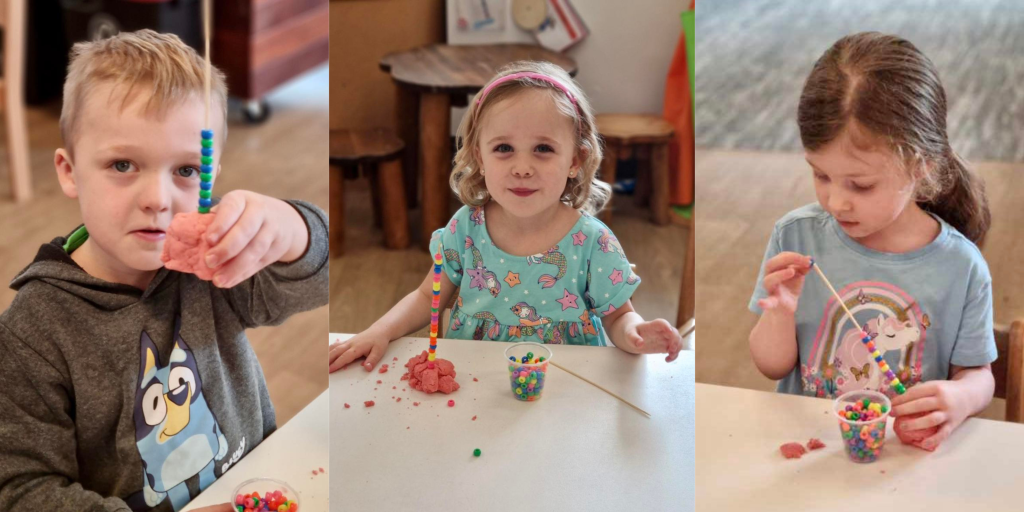
The Kindergarten children at our Grow Early Education Darling Heights centre used play dough as the base to their pattern making as a part of their introduction to pattern recognition. Pattern recognition in early childhood education refers to the ability young children have in identifying, understanding, and predicting sequences in their environment. It is a fundamental skill that lays the ground work for more complex problem-solving and mathematical solutions.
By adding the element of play dough and beads to this task, they are working on their fine motor skills, pincer grip skills, and hand-eye coordination.
2. Indigenous Culture
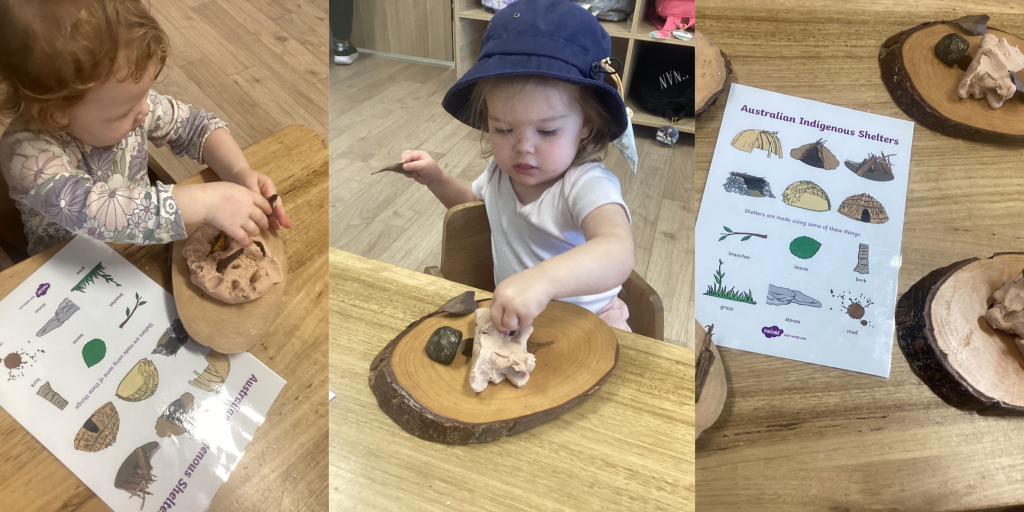
The Toddler children at our Grow Early Education Riverton centre learnt about the temporary shelters traditionally used by Australian Indigenous Peoples as a part of the Toddlers introduction to Aboriginal and Torres Strait Islander cultures.
This by utilising play dough in this activity, it allowed the children to learn in a more hands-on way, while also encouraging further development of their comprehension, hand-eye coordination, and fine motor skills
Our Educators often use play dough as a learning resource on significant and special days happening across the country.
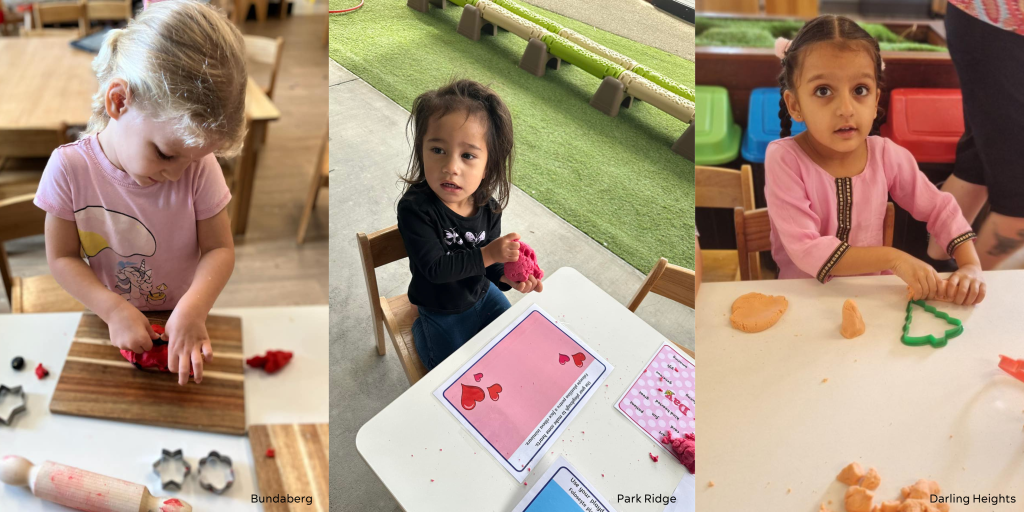
Grow Early Education Bundaberg created their own versions of poppies as a part of the ANZAC Day learning, this is a great way to encourage inquisitive thinking as the children ask questions about the significance of the flower.
Grow Early Education Park Ridge used their own play dough recipe to create heart-shaped decorations as a part of their Valentines Day celebrations.
Grow Early Education Darling Heights used orange play dough to create different shapes as they celebrated Harmony Day across their centre.
4. Educational Programming
Grow Early Education Bundaberg used play dough to create blue birds nests as a part of their discussions on the Bowerbird Blues book that was this year's pick for National Simultaneous Storytime.
This activity allowed the children to discuss certain parts of the book they enjoyed with their peers, while also talking about what they know about birds and their nests.

By making your own play dough, you provide a wonderful sensory experience for children and also create lasting memories through shared activities. We hope this guide inspires you to experiment with different textures and colours, and most importantly, to have fun. Stay tuned for more exciting tips and ideas to enhance your playtime adventures.
Find your own printable version of our home-made play dough here!
We would love to see your at home play dough creations, tag us in your creativity on Instagram @grow_early_education or on Facebook @growearlyeducation
The 2024 theme for International Yoga Day is “Yoga for Self and Society.” Providing a holistic approach to health and well-being, yoga has been proven to assist in restoring balance in our busy lives.
International Yoga Day was officially adopted by the United Nations in December 2014 after the Indian Prime Minister, Narendra Modi, gave a speech proposing that the day fall on June 21st to align with the Northern Hemispheres summer solstice – the longest day of the year.
While yoga has been known in the past for bringing improved posture, flexibility, and balance to adults, it has grown increasingly popular for children over recent years with benefits proven to encourage physical health, build on emotional regulation, improve concentration, boost confidence, and increase social skills.

Unsurprisingly, children’s yoga is very different to any kind of yoga session you would attend as an adult. Most children’s yoga sessions incorporate games, storytelling, and singing to assist with their shorter attention span. Children’s yoga sessions often are a mix of practicing yoga poses suitable for younger children and song and dance.
At Grow Early Education, we believe so strongly in the benefits we have seen through children’s yoga that we have yoga as a weekly extracurricular at 15 of our centres located across Queensland, New South Wales, and Victoria – and it is included in our daily fee.
Grow Early Education Tarneit have weekly sessions run by Yoga Bears where they start their week on a Monday with a yoga class ending in guided meditation. Guided meditation reduces stress, improves sleep, encourages resilience, and boosts emotional regulation.

At Grow Early Education Gunnedah, instructor Dee walks the children through their weekly session, working on their emotional and physical skills. By practising yoga regularly, we are promoting flexibility, coordination, strength, and posture.

Grow Early Education Maroochydore involves sound healing in their weekly children’s yoga sessions with Yoga Bears. Sound healing in combination with yoga promotes a sense of wellbeing in the children while further developing body awareness and mindfulness practices.

At Grow Early Education Dalby the children enjoy moving their bodies with Miss Linda, while they practice their mindfulness, strength, balance, and coordination.

Are you looking for ways to celebrate International Yoga Day with your family? Why not try out some of these common yoga poses and test your skills!

We are proud to provide children’s yoga as an extra-curricular included in our daily fee at the following centres:
- Grow Early Education Bridgeman Downs
- Grow Early Education Tarneit
- Grow Early Education Narre Warren
- Grow Early Education Toowoomba
- Grow Early Education Riverton
- Grow Early Education Bundaberg North
- Grow Early Education Darling Heights
- Grow Early Education Gunnedah
- Grow Early Education Dalby
- Grow Early Education Maroochydore
- Grow Early Education Nowra Central
- Grow Early Education Frankston
- Grow Early Education Bushland Beach
- Grow Early Education, Park Ridge
- Grow Early Education Hervey Bay
By incorporating yoga into our weekly routine, we are providing children with invaluable tools to navigate life’s challenges with grace and resilience and guiding them towards a healthier, happier, and more balanced future. Namaste!
If you are interested in finding out more about our children’s yoga program and other extra-curriculars we offer as part of our early education program, please phone us on 1300 934 769.
Congratulations to our Educators who have been recognised for their dedication, commitment and skill in early childhood education, by being finalists in this year’s 'Fraser Coast’s Favourite Childcare Educator' Awards run by the Courier Mail.
An impressive five Educators from Grow Early Education Hervey Bay have been honoured in this year’s awards by being nominated. Congratulations to those Educators for this amazing achievement!

Let’s get to know our award finalists a little better…
Mikayla Matheson
Mikayla is our Nursery Classroom Lead Educator at Grow Early Education Hervey Bay and strongly believes in the saying 'If it doesn’t feel like work, it's what your meant to do'.
"I know what I’m meant to be doing, because I have the best job in the world. Watching little children grow into the amazing humans they are is truly special. I have built so many relationships and memories over my years in the industry and can’t wait for many more to come", said Mikayla. She has been in the industry for five years and has successfully achieved her Diploma of Early Childhood Education.

Gorgia Green
In our Tiny Tots Classroom we have Gorgia Green who is our Assistant Educator. Gorgia's favourite part about her job is watching the children grow and develop, while being part of their journey. She also enjoys building strong and positive relationships with each and every child and their families. Gorgia has her Certificate III in Early Childhood Education and has been in the industry for three years.

Pamela Fidge
Our next award finalist is the Lead Educator in our Toddlers Classroom and has achieved her Advanced Diploma in Early Childhood Education. Pamela has been in the industry for 25 years and loves coming to work and providing children with the love and care they deserve.
"It is very heartwarming to be able to care for all the children and nurture their needs, while they develop their own independence and resilience," say Pamela.

Jaimie Ruse
Jaime has been in the industry for eleven years and is the Lead Educator in our Pre-Kindy Classroom at Grow Early Education Hervey Bay. Jaimie's favourite part of the job is watching the children's eyes light up when they learn about something they love, or the moment they master something new. Jaimie is has successfully achieved her Diploma of Early Childhood Education.

Brodie Murray
Brodie is also in the Pre-Kindy Classroom and is the Assistant Educator. Brodie has been in the industry for six years. She is a Certificate III qualified Educator and what she loves most about her role is the relationship she gets to build with the children and their families. She also loves seeing them grow into their own little person as she supports them in their development.

At Grow Early Education Hervey Bay, our caring and passionate Educators are the heart of our childcare centre. Our Educators are dedicated to each child’s individual learning journey, and promote a sense of belonging to ensure that every child feels welcome and safe whilst in our care.
While most people don’t remember much from when we were little, most of us can remember that special Educator who helped us feel safe, protected, loved and of course helped us develop a lifelong love of learning.

This is why we believe this amazing achievement should be recognised and celebrated by the entire Fraser Coast community. We are also calling for you to vote and support your favourite Educator from Grow Early Education Hervey Bay from the list of finalists.
You will need to be quick as voting closes at midnight tomorrow night (Wednesday 5th June, 2024). To vote, CLICK HERE and follow the instructions.
Disclaimer: In order to vote, you are required to have a Courier Mail subscription.

Entering the world of early childhood education can be both an exciting and daunting experience for young children and their families. Most importantly though, it marks the beginning of a new chapter filled with opportunities for growth, learning, and socialising with peers.
As early education providers, we play a crucial role in ensuring that this transition is as smooth as possible, providing a supportive environment for both children and their parents.
All our long day care centres offer families additional support during their initial weeks of enrolment. Even our brand-new centres like Grow Early Education Heathmont, will implement processes like gradual entry programs which allow children to acclimate to the new environment at their own pace. This approach helps build a sense of trust between the child and the caregivers, promoting a smoother transition.
In this blog, we will explore the ways in which our Grow Early Education centres assist new children and families settle into care; transition to new classrooms; and graduate to a formal school environment.

Supporting New Families
First and foremost, it is important to create a welcoming atmosphere for both children and parents so that they feel comfortable right from the get go. We encourage parents to bring their children with them when they take an initial tour of one of our centres to see if the centre is the right fit for their family.
At Grow Early Education Gunnedah, they schedule tours at times when the whole centre can be on display to families. This ensures the families can meet the entire team and view all their wonderful facilities.
‘We love to introduce the children and parents to their potential new Educators on a tour of our centre. This assists new families with making the important decision of which childcare centre best suits them and is an important part of the orientation process at Grow’ says Grow Early Education Gunnedah Centre Director, Brianna McCumstie.
‘One of the things parents love most about our centre is our large outdoor areas. Not only do we have lots of room for children to explore outside, but our facilities are also state-of-the-art. We have creek beds, sandpits, adventure forts, bike tracks, vegetable gardens, jumbo games and more. We like to do our centre tours when the children are actively playing in these spaces as it helps potential new families better visualise their own children utilising these facilities’, continued Brianna.
As part of our enrolment process at Grow Early Education, we book ‘Meet & Greets’ for our new families. These ‘Meet & Greets’ are also known as ‘Stay & Plays’ and this initial connection meeting is a great way to help build trust and establishes a positive foundation for the child’s experience.
Families are invited to attend 1-3 ‘Meet & Greets’ at our centres prior to their first official day of care, however they can have as many as they need to start building that important bond between Educator and child. It is important for children to feel safe and somewhat familiar in their new environment on day one of care.
Our aim at Grow Early Education is for our long day care centres to be a home away from home for the children in our care, because children thrive in environments that feel safe and familiar. Our purpose-built childcare centres are carefully designed to be child-friendly, inspiring and filled with age-appropriate educational resources. Creating an environment that mirrors the comforts of home helps children feel at ease and more willing to explore their new surroundings.
As part of our enrolment process, we also ask new parents to fill out an ‘All About Me’ form on behalf of their children. This provides important information like how to best comfort them, what they enjoy playing, their interests etc. so that our Educators can provide build a bond as quickly as possible and provide the highest quality of care.
To best support parents, effective communication between our childcare centres and parents is essential. Regular updates, whether through daily reports or informal conversations, keep parents informed about their child's experiences, milestones, and any concerns. This transparent communication helps parents feel involved in their child's daily life at the centre, easing any anxieties they may have.
At Grow Early Education we provide families with a parent communication mobile app called Kindyhub. The app allows you to share in your child’s learning journey, including providing daily photos, stories and achievements and is a valuable tool for us to support parents.

Transitioning to a New Classroom
This is the key time of year when children begin transitioning to their new classrooms. Children who have completed the Kindergarten or Preschool Program will be starting primary school in January or February and so many children will move up to their new classroom as space becomes available.
At Grow Early Education Gunnedah, they have children ‘visit’ their new classroom multiple times over a two-week period so that can become familiar with their new classroom, Educators and routine.
Knowing what to expect provides a sense of security for children, helping them settle into the new environment more comfortably. This predictability fosters a sense of stability, which is crucial for early childhood development.
‘We have found that classroom visits in small groups are a great way to support a smooth transition into new classrooms. They can become familiar with the environment and Educators and know what to expect when it comes time to officially changing rooms,’ said Brianna, Centre Director for Grow Early Education Gunnedah.
‘We find that most children are excited to be in their new classroom when they know what to expect. A classroom change is a positive experience as it provides new inspiration, stimulation, interactions and new resources to play with,’ continues Brianna.

Preparing for Formal School
Knowing what to expect in the school environment helps children to make a smooth transition, and preparing children for this needs to begin long before their first day of school.
Our school readiness programs (Kindergarten or Preschool depending on which state you live in), equips children with the skills needed to transition to a formal school environment. However, at Grow Early Education our aim is to also ensure they are well prepared for their onward learning journey into a formalised school setting.
As part of our programs, Teachers will coordinate several visits to local schools across the year to support the children’s transition to school process. At Grow Early Education Gunnedah, in addition to organising visits to their local primary school, Gunnedah South Public School, they are also looking to introduce ‘Lunch Box Days’!
‘We know the importance of incorporating activities to support the transition to school in everyday play-based learning opportunities, such as encouraging children’s participation in group games and experiences, and having regular ‘lunch box’ days so children can practice opening and eating their own lunch,’ said Brianna.
At all our Grow Early Education centres, a formal discussion towards the end of the year is scheduled to share information with parents and Teachers and support each child’s transition to school. This discussion provides an opportunity for parents and other partners to collaboratively create a summary of a child’s learning in the form of a transition statement.
Celebrating with a Graduation Ceremony at the end of the year is also an important part of supporting children to transition to school at Grow Early Education. A graduation event can help ease the transition to big school, by showing children that it is exciting that they are moving on and there are more thrilling things to come. Above all, it allows children to feel proud for all they have achieved while they have been at Preschool or Kindergarten.
Our childcare centres play a pivotal role in helping families settle into care by creating welcoming environments, establishing consistent routines, providing relationship building opportunities, maintaining open communication, and offering transition support. Through these thoughtful practices at Grow Early Education, we contribute to the positive development and well-being of the children in our care and inspire a foundation for future learning and growth.
Are you looking to start your child in care this year? We are still accepting enrolments for 2024, so book a tour at your closest Grow Early Education centre and start your transition journey today! Call 1300 934 769 to book.
As we bid farewell to 2023, it's time to take a moment and reflect on the journey we've collectively experienced over the past 12 months.
From opening eight new Grow Early Education centres, to triumphs in professional development for our team members, this year has been progressive with lots of lessons and growth.
We would like to take this opportunity to thank all our Grow families for choosing us for your child’s care and allowing us to celebrate educational and development milestones with your family throughout the year.
Join us now for the highlights and milestones that made this year truly progressive for our Grow family.
Our Growth
As we continue to support families across Australia, we are proud to say we opened eight new long day care centres this year and expanded our footprint in Queensland, New South Wales and Victoria.
We take enormous pride in delivering communities with a personalised approach to childcare through our local Early Childhood Teams, establishing community connections and empowering our centre management teams to raise the bar in early education.
Our new childcare centres and the local communities we are now part of include:
- Grow Early Education Riverton
- Grow Early Education Hervey Bay
- Grow Early Education Maroochydore
- Grow Early Education Dalby
- Grow Early Education Frankston
- Grow Early Education Bushland Beach
- Grow Early Education Heathmont
- Grow Early Education Nowra Central
We are also pleased to reveal that Grow Early Education Park Ridge will be opening early 2024!
Our Team
Passionate and caring, our Educators are the heart and soul of our childcare centres. They are dedicated to supporting every child on their individual learning journey, and ensuring their time in our care is a rewarding one.
In 2023, we employed 346 passionate early childhood professionals to nurture, educate and support the children in their care.
To ensure our Educators keep abreast with current developments and research in the area of early childhood education, Grow Early Education runs ongoing training and professional development programs across the year.
In 2023, we ran a robust training program which saw an incredible 351 courses delivered so our Educators have the most up-to-date knowledge and certifications.
Our Service
For the convenience and peace of mind of parents, we operate all-inclusive fee childcare centres. This means we have thought of everything children will need to thrive at our centres and included it in our daily fee, including nappies, wipes, sunscreen, meals and more!
In 2023, we supplied the following as part of our service offering:
- 378,573 Nappies
- 956,616 Baby Wipes
- 320 L of sunscreen (we take sun safety VERY seriously)
- 1,320 Hats and drink bottles were provided to families as part of our free enrolment packs
- 2,106,225 healthy and nutritious meals, all prepared by our Centre Chefs in our onsite kitchens
Another one of the amazing benefits we provide as part of our daily fee are extracurricular activities. In 2023, we organised 1,040 extra-curricular classes, with popular activities at our centres being multi-sport classes, music and movement, Japanese lessons, children’s yoga, cooking and gardening lessons.
Whilst we’re here to nurture the children in our care, our free barista coffee was there to care for our parents! Drumroll please… in 2023 we made over 38,254 barista coffees for our Grow parents to enjoy!
Our Families
We view parents and families as invaluable collaborators in a child’s educational journey. Open, transparent, and collaborative communication is fundamental to creating a supportive and enriching experience for every child.
A strong partnership establishes a crucial bridge between home and early education, fosters holistic development and also contributes to a child's sense of belonging and security. In 2023 we were fortunate to partner with 1,356 amazing families and inspire 1,665 little ones to learn and grow!
Again, we would like to thank our Grow families for entrusting us with your child’s education and care. We wish everyone a safe and happy holiday season and we look forward to sharing this wonderful learning journey again with you all in 2024.

As the festive season gets into full swing, what better way to embrace the holiday spirit than by engaging in delightful Christmas crafts with your children?
Crafting is not just a fun way to spend quality time with your little ones; it's also a crucial component of a child's development and comes with a myriad of benefits.
At Grow Early Education, we recognise its role in nurturing various skills in children. So throughout the year, arts and crafts is a significant component of our educational programs at our long day care centres.
Why are arts and crafts beneficial for children? Engaging in craft activities fosters communication, attentiveness, imagination, and crucial developmental skills!
Here's a short outline of the skills children can grow through doing arts and crafts:
Fine Motor Skills:
- Enhancing hand-eye coordination
- Developing manual dexterity
Identification of Shapes, Colours, and Texture:
- Exploring materials to comprehend colours, shapes, and textures
- Learning about the workings of things and how they interconnect
Creativity:
- Fostering a playful and experimental spirit in an enjoyable and laid-back setting
In this blog, we've curated our top five favourite and most popular Christmas craft ideas for you to enjoy at home with your children:
1. Paper Plate Baubles
This versatile craft allows you to use a variety of materials to decorate and hang paper plates, creating your own unique Christmas baubles. Whether it's stickers, paint, or coloured felt, choose materials that suit your child's age and development.
Here are some finished creations to give you and your little one some visual inspiration:

2. Popsicle Stick Ornaments
Transform ordinary popsicle sticks into festive ornaments, ranging from stars to Christmas trees and snowflakes. The possibilities for shapes and decorating ideas are infinite.
See below for different shape constructions and decorating ideas:

3. Hand Print Christmas Tree
Combining sensory play with craft, the handprint Christmas tree design is simple yet effective. After creating the tree on paper, canvas, or even a Christmas card, once it is dry it is then time to decorate your tree.
Here are some different designs you can make using your hand print:

4. Christmas Cookie Decorating
Perfect for baking enthusiasts, you can also involve your children in the baking part to extend their culinary skills. Use Christmas-themed cookie cutters or a cherished family recipe to start a lovely Christmas family tradition.
See below for some cookie decorating ideas and even how to create a Christmas cookie decorating board:

5. Pine Cone Ornaments
Incorporate natural materials into your arts and crafts by turning pine cones into mini-Christmas trees or creating unique figures like reindeers, angels, or owls. The natural texture of pine cones adds a unique element for children to discover and explore.
Here’s some amazing pine cone creations for you to see:

As Christmas Day fast approaches, our aim is to populate this month with festive experiences and activities for the children to enjoy in our childcare centres.
Follow us on Facebook for regular updates on our Christmas arts and craft activities, and get ready to be inspired by the wonderful Christmas creations from our Grow Early Education centres.
The holiday season, particularly Christmas, holds a special place in our hearts. It's a time for reflection, gratitude, and it’s also a chance to extend a helping hand to those less fortunate.
This sentiment is widely shared among Australians, as evidenced by the significant number of people planning to contribute to charitable causes this Christmas (47%). This makes the holiday season an optimal period for our childcare centres to perform philanthropic activities and community support work.
Since 2014, our Grow Early Education Centres have actively participated in the Salvation Army Christmas Appeal, or selected local charities to support. This annual tradition serves as a valuable connection to our local communities, fostering a sense of unity and shared responsibility.

In November of this year, we launched the Grow Early Education 'Annual Christmas Food and Toy Drive.' This initiative involved selecting charities, creating donation hampers, and gearing up for the generous contributions of books, toys, and non-perishable food items.
While supporting the Salvation Army and their Christmas Appeal remains a priority, some Grow Early Education centres have chosen to back other not-for-profits, such as Angel Paws, Ronald McDonald House, Give a Little Hope, Defenders for Hope, and Act for Kids to name a few.

With our childcare centres spread across Australia in Queensland, Victoria and New South Wales, each hosting their own Christmas Appeal, the collective efforts of the Grow Early Education childcare centres can make a significant and positive difference.
Moreover, our Annual Christmas Food and Toy Drive demonstrates our commitment to making a positive impact locally and instilling a sense of community contribution in children. It serves as a crucial opportunity to initiate and expand conversations about generosity and gratitude with the children in our childcare centres.
At Grow Early Education, we firmly believe that it's never too early to instil the value of giving back in little ones. Nurturing generosity and teaching children about the significance of charity from an early age empowers them to have a meaningful impact on the lives of others.

For parents wondering how to introduce charity to their children, simple actions like dropping money into charity boxes, involving them in selecting canned foods for a drive, or taking them to fundraising events can be impactful. Plus, these moments offer an opportunity to discuss the importance of giving and the joy it brings.
If you're interested in joining your local Grow Early Education centre's Christmas Appeal, there's still time to get involved. You will need to be quick though, as donations and hampers are set to be collected by December 12th from all centres!

