Halloween is the perfect time for little hands to get creative! Beyond the costumes and treats, craft time can be a wonderful opportunity for children to learn, explore, and strengthen important developmental skills, especially their fine motor skills.
Fine motor skills involve the small muscles in the hands and fingers, which children use for everyday tasks such as holding pencils, using scissors, and gluing. By incorporating themed crafts into play, we can make skill-building fun and meaningful.
To celebrate the spooky season, we have compiled some of our favourite Halloween-inspired and age-appropriate crafts for you and your little ones to try at home.
For Babies (0–2 Years): Sensory Play and Early Exploration
1. Pumpkin Sensory Bags
Fill a zip-lock bag with orange hair gel, googly eyes, and small Halloween-themed confetti or pom-poms. Tape it to the floor or a highchair tray and let your baby squish, poke, and press.
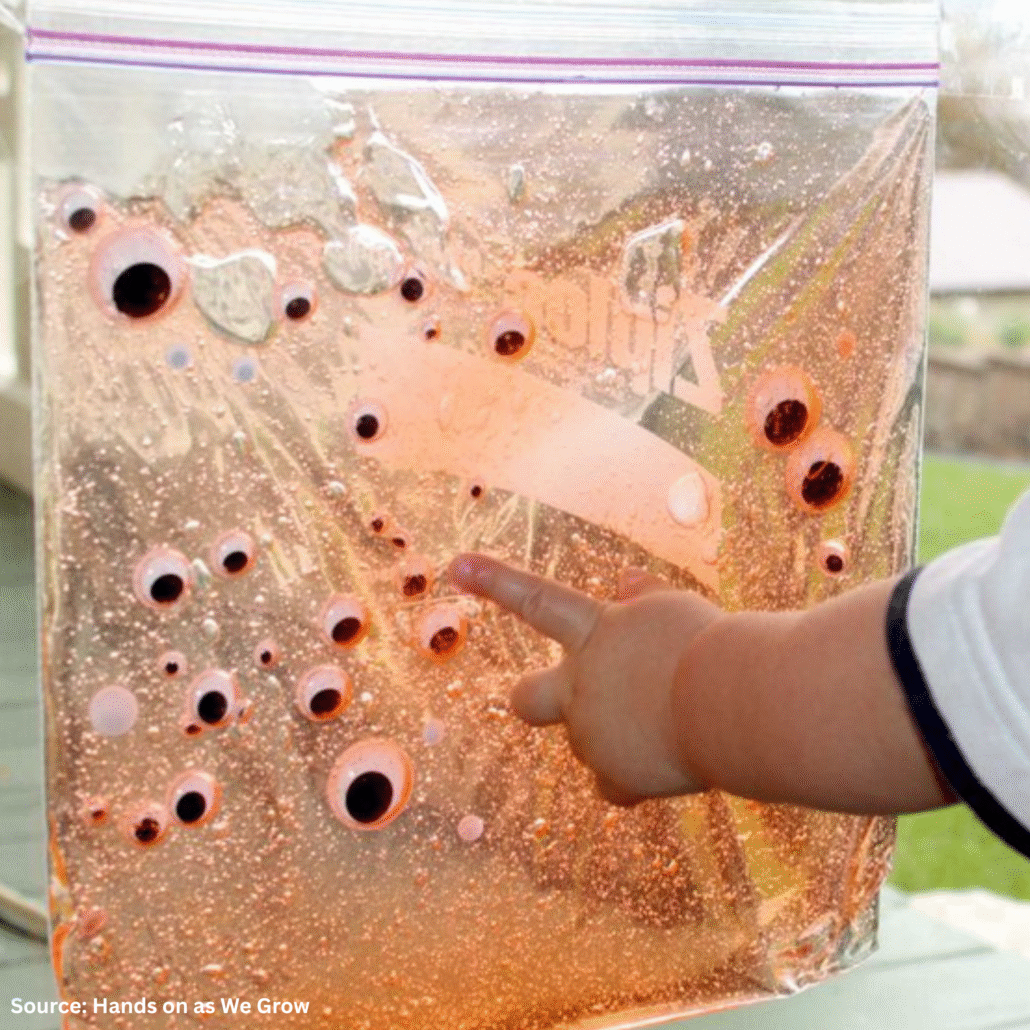
Learning focus: Hand-eye coordination, sensory exploration, and cause-and-effect thinking.
2. Ghost Footprint Art
Dip your baby’s foot in white paint and stamp it onto black paper. Add eyes and a mouth to create a ghostly footprint!
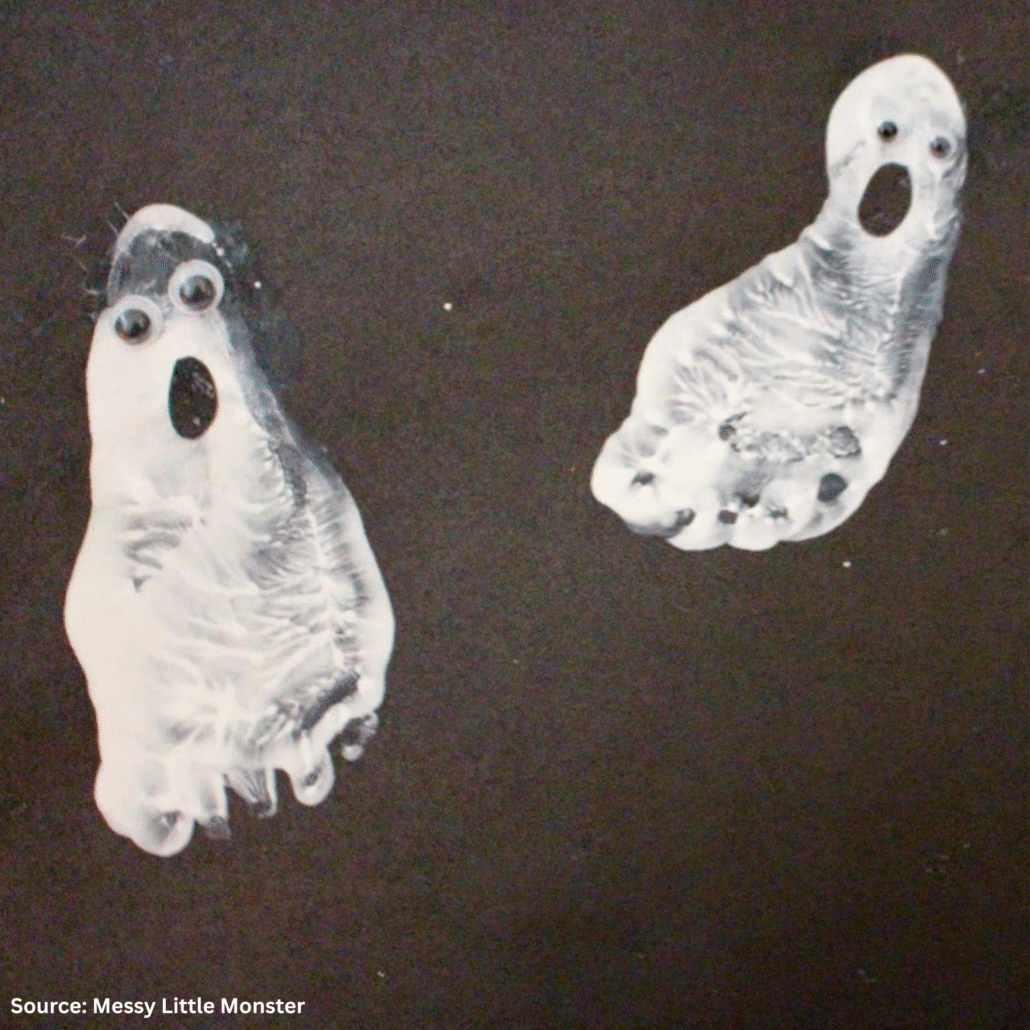
Learning focus: Early sensory awareness and recognition of body parts through play.
For Toddlers (2–3 Years): Tactile Play and Coordination
3. Cotton Ball Spiders
Give Toddlers black paper, glue, and cotton balls or pom poms. Help them pull apart and stretch the cotton to form a “spider body,” then stick on googly eyes and draw or paste pipe cleaner legs.
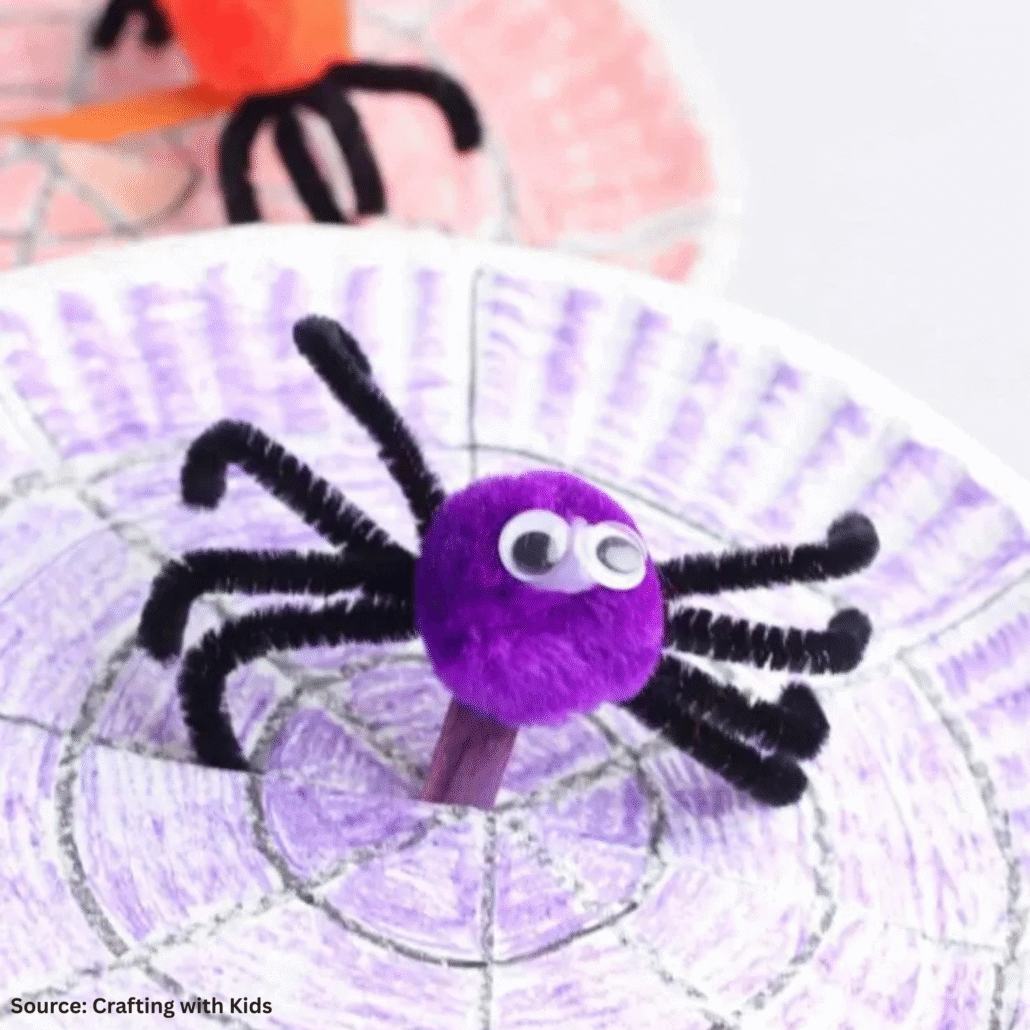
Learning focus: Strengthening finger muscles, hand–eye coordination, and creativity.
4. Sticker Pumpkins
Provide orange cut-out pumpkins or mini carving pumpkins and a sheet of Halloween stickers. Encourage your child to decorate however they like for a mess free and safe pumpkin decorating experience.
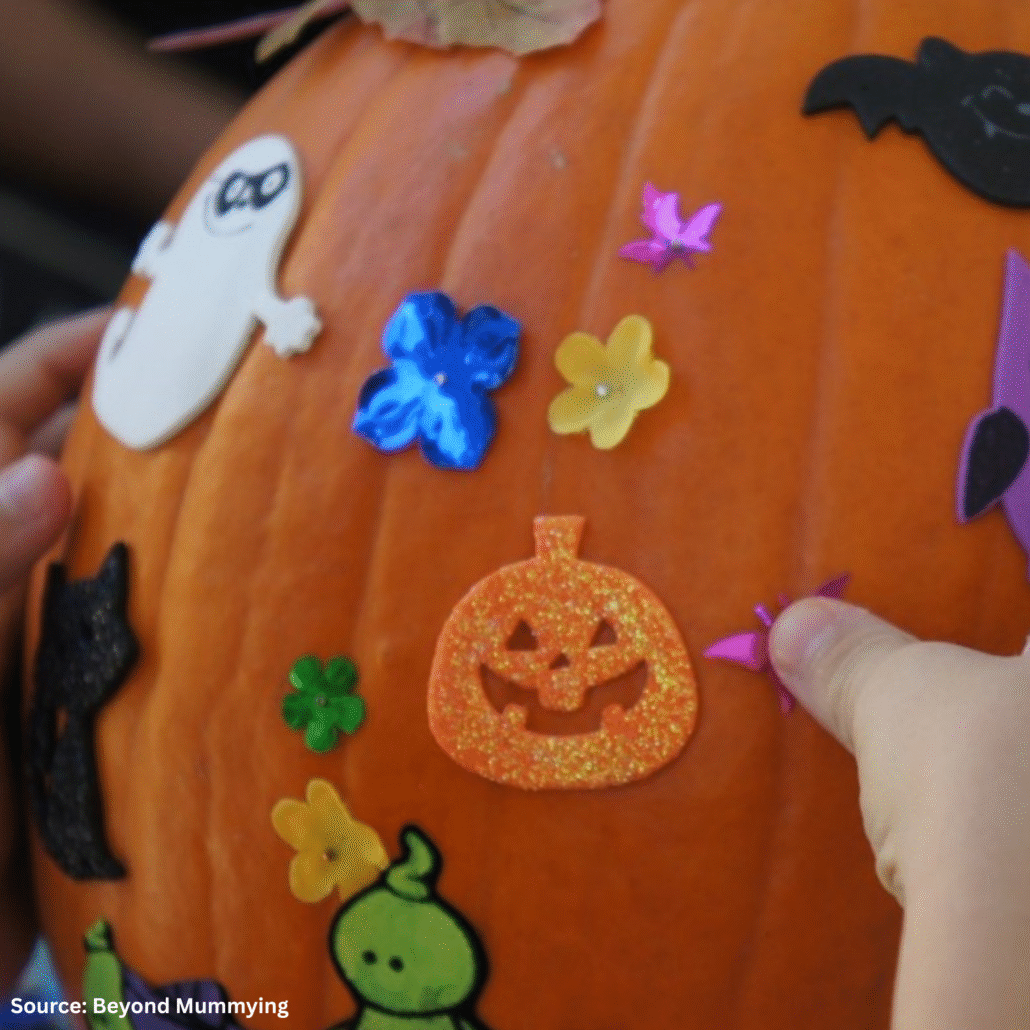
Learning focus: Fine motor control through peeling and sticking, as well as fostering independence and decision-making.
For Preschoolers and Kindergarteners (3–5 Years): Creativity and Control
5. Paper Plate Jack-O’-Lanterns
Using orange paint, black paper triangles, and glue, children can design their own jack-o’-lantern faces on paper plates. Let them cut out shapes (with safety scissors) for added practice.

Learning focus: Scissor control, bilateral coordination, and early geometry.
6. Yarn-Wrapped Mummies
Cut out simple mummy shapes from cardboard, draw on eyes, and give children white yarn or ribbon to wrap around their mummy.
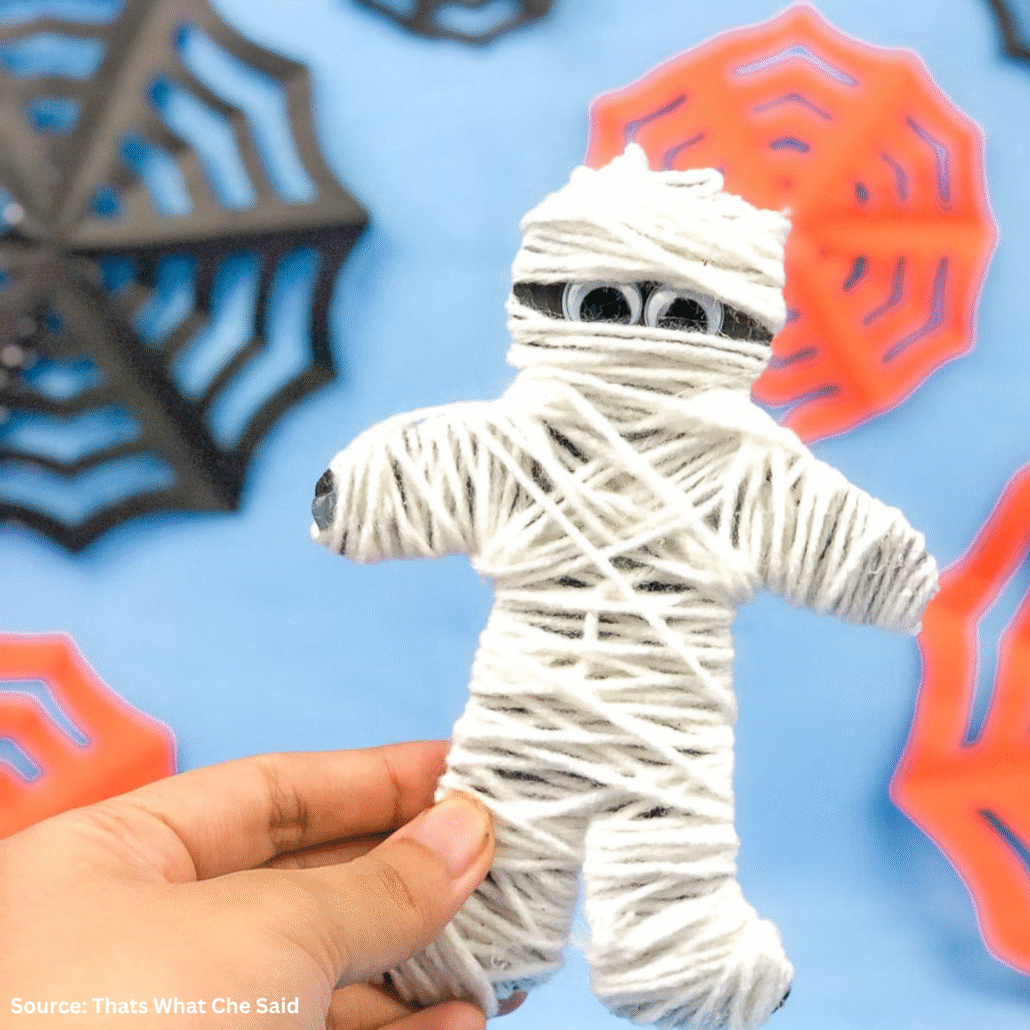
Learning focus: Strength and coordination as they wrap.
7. Magic Wand Craft
Provide sticks, ribbons, and paper stars for children to decorate. They can use paint, stickers, or glitter glue to make their wands magical!
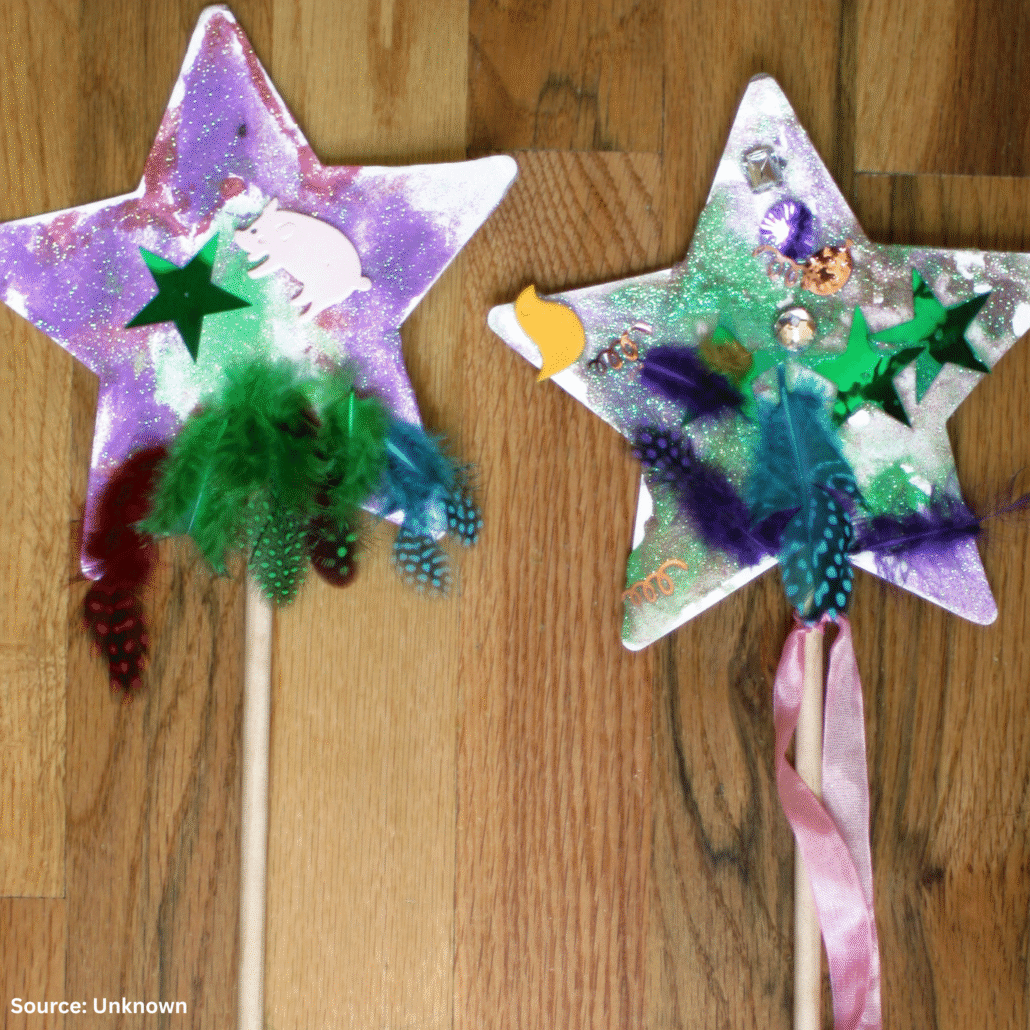
Learning focus: Strengthening fine motor precision, encouraging imaginative play, and boosting self-expression.
Why Craft Matters
Every time children paint, glue, or thread, they’re developing the skills needed for future learning success. These activities:
-
Strengthen hand and finger muscles for writing readiness
-
Encourage creativity and imagination
-
Build concentration and problem-solving skills
-
Support language development through discussion and storytelling
So this Halloween, grab the glue sticks and glitter — and let learning come to life through play!
Follow us on Facebook to see what spooky crafts children across our centres get up to:
- Grow Early Education Darling Heights
- Grow Early Education Bridgeman Downs
- Grow Early Education Park Ridge
- Grow Early Education Toowoomba
- Grow Early Education Hervey Bay
- Grow Early Education Dalby
- Grow Early Education Riverton
- Grow Early Education Gunnedah
- Grow Early Education Kelso
- Grow Early Education Nowra Central
- Grow Early Education Narre Warren North
- Grow Early Education Heathmont
- Grow Early Education Frankston
- Grow Early Education Tarneit
At Grow Early Education, we believe that reading with children is one of the richest learning experiences you can have. It’s because of this that the Children’s Book Council of Australia’s National Book Week is one of our favourite weeks on the calendar.
This year, Book Week is celebrating 80 years with the theme “Book an Adventure.” To honour the occasion, we’re discussing the importance of reading for children aged 0-5 and sharing some of the ways you can turn your bedtime routine into a rich learning and story-led adventure.
From birth to five years, reading with children is an important part of their developmental journey, helping to foster language skills and cognitive abilities while building a life-long love of reading and learning. Reading with children also encourages language development, problem-solving and critical thinking skills, and boosts children’s imaginations.
Research has found that the disparity between children’s vocabularies could be upwards of 1.4 million words, depending on how frequently they are read to. It is estimated that children who:
- Are never read to will learn 4,662 words
- Are read to once or twice a week will learn 63,570 words
- Are read to three to five times a week will learn 169,520 words
- Are read to every day will learn 296,660 words
- Or, if read five different books a day, will learn 1,483,330 words by the time they turn five.
For children under five, every rhyme, story, or picture book adds up, helping your little one build a richer, stronger vocabulary that they can carry through school and life.

One of the easiest ways you can introduce regular reading to your child’s day is through bedtime routines, but a bedtime story doesn’t have to be all about “winding down”. Reading to children creates magical moments where imagination and language thrive. Here are some ways you can turn bedtime routine into story-led learning adventure.
- Create a reading ritual: Set aside 10-15 minutes each night for story time – dim the lights snuggle up, and start reading. Predictability can help children settle and knowing what to expect can make them feel excited.
- Let your child choose the adventure: Offer a small selection of books each night for your little one to choose from. Having ownership over what they read helps children feel more engaged.
- Embrace the theatrics: Using props such as toys or puppets, and adding voices and sound effects can make the story sound like it's coming alive, adding more excitement and depth for the child.
- Connect storytelling to reality: After the book, take the time to ask some questions, such as “what adventure would you go on if you were in this story?” or “which character would you like to be?” These additional prompts help extend your child’s imagination as well as their language and comprehension skills.
- End the story time with some calm reflection: Ask your child to close their eyes and imagine themselves in the story world as they drift off to sleep. This bridges reading with dreaming, setting children up for an even more magical bedtime.
Just as stories can spark adventure at bedtime, Book Week allows children to bring these adventures to life across our childcare centres.
One of the most exciting parts of Book Week at our centres is seeing the children bring their favourite characters to life! From pirates and princesses to astronauts and dragons, dressing up gives children a chance to step into the world of their story and make the adventure their own. It’s a joyful, imaginative way to connect with books and characters while building confidence, creativity, and a love of storytelling. At Grow Early Education, our Educators love to join in the fun too! Dressing up alongside the children allows us to celebrate stories together and model creativity and imagination. Whether it’s becoming a fairy, a brave knight, or a quirky storybook character, our Educators help turn Book Week into a shared adventure, showing that reading and play can be magical at any age.

Book Week is a special time for children and families to celebrate the magic of reading. At Grow Early Education, we love creating adventures through stories, dress-ups, and imaginative play, helping every child discover the joy of reading and the worlds that await in every book.
Follow us on Facebook to see how our Grow Early Education centres are embracing this year's Book Week theme, “Book an Adventure”!
- Grow Early Education Bundaberg North
- Grow Early Education Darling Heights
- Grow Early Education Bridgeman Downs
- Grow Early Education Park Ridge
- Grow Early Education Toowoomba
- Grow Early Education Hervey Bay
- Grow Early Education Dalby
- Grow Early Education Riverton
- Grow Early Education Gunnedah
- Grow Early Education Kelso
- Grow Early Education Nowra Central
- Grow Early Education Narre Warren North
- Grow Early Education Heathmont
- Grow Early Education Frankston

Starting Kindergarten or Preschool is a big milestone not just for your child, but for your whole family. Especially if it is your first time sending your child to an early education centre. Whether you’re enrolling for the first time or just want to learn more about what to expect, we’ve answered some of the most frequently asked questions from parents to help you feel confident and prepared.
What age does my child need to be to start Kindergarten or Preschool?
In Queensland, your child must turn 4 by June 30th in the year they attend an approved Kindergarten program. Kindergarten is typically a one-year program that runs the year before Prep.
In Victoria, both 3-Year-Old and 4-Year-Old Kindergarten programs are on offer. The Victorian Government provides two years of funded Kindergarten for children to maximise the benefits of early childhood education, which has been shown to improve a child’s learning, development, health, andGrow Early Education wellbeing. This investment aims to give children a strong foundation for future learning and life success. For 3-year-old Kinder, children are eligible if they are attending the program the year they turn 3. In the 4-year-old Kinder, children must turn 4 before April 30th that year to participate in the approved Kindergarten Program.
In New South Wales, Preschool Programs are offered to children who are turning 4 years old before July 31st and attending an approved Preschool Program.
What does a typical Kindergarten or Preschool day look like at Grow Early Education?
Each day is thoughtfully structured to support your child’s development. A Kindergarten or Preschool day usually includes:
- Group time and story sessions
- Outdoor play and physical activity
- Creative play and sensory experiences
- Early literacy and numeracy games
- Mealtimes and rest
- Opportunities for children to explore their interests
These routines help children feel secure and give them a sense of belonging in the classroom.
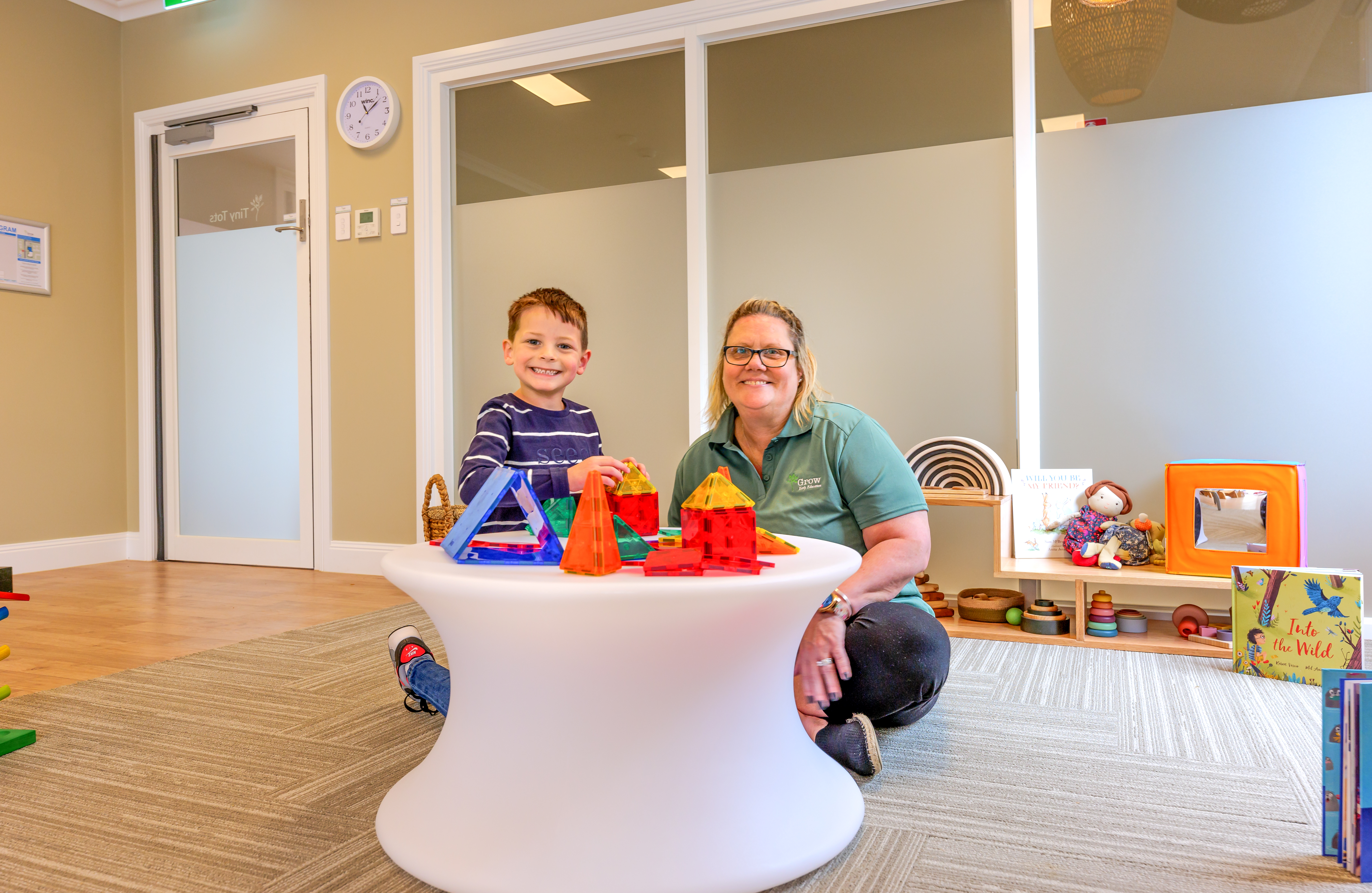
Is the Kindergarten or Preschool Program play-based at Grow Early Education?
Yes! Our Kindergarten and Preschool Programs are proudly play-based. Our Teachers adopt a stimulating play-based approach to their curriculum delivery, as well as tailoring the program to each child’s individual development needs.
Learning through play is one of the most important ways children learn and develop. You may have realised that as a parent, you don’t generally have to make children play or provide incentives to play. This is because children have a natural urge to play and playing brings a level of pleasure and interest which means it can be maintained without external rewards.
We also believe children learn best through hands-on, meaningful experiences. Through play, children build essential skills in:
- Language and early literacy
- Early maths and problem-solving
- Social interactions and emotional regulation
- Fine and gross motor development
We follow the Early Years Learning Framework and guidance from the Abecedarian Approach Australia (3a), which supports school readiness through fun, rich, and engaging learning. We also focus on providing a variety of extra-curriculars, incursions and excursions to ensure your child has a well-rounded early childhood education with us.
Will my child be ready for traditional schooling after Kindergarten or Preschool at Grow Early Education?
Yes! Our program is designed to prepare children for a smooth and confident transition to school. We focus on developing:
- Independence and self-help skills
- Confidence in learning and trying new things
- Social and emotional skills to make friends and work with others
- Foundational early literacy and numeracy skills
- Name recognition
Our Kindergarten or Preschool Teacher will also coordinate several visits to local schools across the year as part of your child’s transition to school process. By the end of their Kindergarten or Preschool year, children are well equipped to take on the routines and expectations of traditional schooling.
Do you provide a Transition Statement?
Yes! A formal discussion towards the end of the Kindergarten Year is scheduled to share information with parents and Teachers and support each child’s transition to school. This discussion provides an opportunity for parents and other partners to collaboratively create a summary of a child’s learning in the form of a Transition Statement.
This is a helpful summary of your child’s learning progress, strengths, and interests and it is shared with your child’s future school to help their new teachers support them from day one.
Do you offer Free Kindergarten or Preschool Fee Relief?
Yes, we do! Our established early education centres provide Government-approved Kindergarten or Preschool Programs, which means that families may be eligible for Free Kindergarten or Preschool Fee Relief (depending on your location and circumstances).
In Queensland, the state Government offers ‘Free Kindy’ for eligible children attending a Government-approved Kindergarten Program for up to 15 hours per week, 40 hours per year. For more information and eligibility criteria, head to the Queensland Government website.

In New South Wales, all our centres currently participate in the NSW Government’s ‘Start Strong’ program by providing a Government-approved Preschool Program. This means families may be eligible for Fee Relief, which provides up to $2,110 per year in fee subsidies for children enrolled in eligible community or long daycare settings. For more information and eligibility criteria, head to the New South Wales Government website.

In Victoria, the Victorian Government offers two years of ‘Free Kinder’ for eligible families who attend an approved 3-year-old and 4-year-old Kindergarten Programs. Funding will save Victorian families up to $2,627 per year per child. For more information and eligibility criteria, head to the Victorian Government website.

What does my child need to bring?
Our all-inclusive daily fee offers families a stress-free experience by providing children with all hats, sunscreen, meals, and snacks. This means all you need to pack is your child’s water bottle and hat (which we provide you as part of our ‘Enrolment Pack’) and a spare change of clothes!
Our Centre Chefs prepare nutritious meals and snacks fresh, daily in our in-house kitchen. Have peace of mind knowing your child is getting the nutrition they need to learn and grow with our seasonal menus providing over 50% of your child’s recommended daily nutritional intake.
Do you have qualified Teachers at your long daycare centres?
Yes! Our Teachers are University-qualified Teachers!
They have achieved a Bachelor of Early Childhood or equivalent qualification as approved by ACECQA (or are actively working towards their Bachelor qualification). In addition to being degree qualified, they must also have:
- Current approved first aid, anaphylaxis and asthma qualifications
- Current Working with Children Check
- Sound understanding of the EYLF and NQF

Why Choose Grow Early Education's Kindergarten or Preschool Program?
At Grow Early Education, our Kindergarten or Preschool Programs offer more to families than just preparation for school. It offers a nurturing, play-based environment where children feel safe, supported, and inspired to learn. With qualified Early Childhood Teachers; a variety of rich learning opportunities and experiences; nutritious chef-prepared meals; convenient long daycare hours; and our evidence-based Abecedarian Approach Australia (3a) approach to teaching, your child will thrive in every way.
How and when can we enrol for 2026?
Enrolments for our 2026 Kindergarten and Preschool Programs are opening very soon! To get a head start to securing your child’s place for next year, you can Register Your Interest now and Book a Tour of our inspiring centres today!
Follow us on Facebook to keep up to date with our Grow Early Education Kindergarten and Preschool Programs in action;
- Grow Early Education Bushland Beach
- Grow Early Education Bundaberg North
- Grow Early Education Darling Heights
- Grow Early Education Bridgeman Downs
- Grow Early Education Park Ridge
- Grow Early Education Toowoomba
- Grow Early Education Hervey Bay
- Grow Early Education Dalby
- Grow Early Education Riverton
- Grow Early Education Gunnedah
- Grow Early Education Kelso
- Grow Early Education Nowra Central
- Grow Early Education Narre Warren North
- Grow Early Education Heathmont
- Grow Early Education Frankston
NAIDOC Week is a time to celebrate the history, culture, and achievements of Aboriginal and Torres Strait Islander Peoples. It’s also an opportunity to educate future generations about the importance of cultural respect and reconciliation. At Grow Early Education, NAIDOC Week holds special significance as we strive to embed cultural understanding into our programs and daily practices.
This year’s theme, “The Next Generation: Strength, Vision & Legacy", inspired meaningful experiences across our centres that honoured traditions, promoted learning, and connected children to the stories and practices of First Nations People.
Connecting to Culture and Country
At Grow Early Education Toowoomba, children participated in a range of experiences that celebrated the rich history and traditions of First Nations Peoples. Activities included collaborative art inspired by Indigenous artists, Dreamtime storytelling sessions, and music and movement with traditional instruments and songs. Educators also supported discussions about the deep connection between people and Country, helping children understand the importance of caring for the land they live on.

Traditional Face Painting
Grow Early Education Bundaberg North explored culture with the children through face painting using markings created with traditional dots and colours. This activity sparked conversations about the meaning behind these markings and their cultural significance, providing children with a hands-on learning experience.

Natural Ochre Painting
At Grow Early Education Darling Heights, children and Educators engaged in a variety of NAIDOC-themed activities such as puzzles and hand flag painting. A highlight of the week was creating natural paint using ochre, a type of rock traditionally crushed into powder and mixed with water to form a vibrant natural pigment. This hands-on process gave children a tactile understanding of traditional art-making techniques and the cultural importance of natural resources.

Exploring Indigenous Symbols
Grow Early Education Heathmont focused on teaching children about Indigenous symbols and their meanings. Using flashcards for reference, children practised replicating these symbols through mark-making activities, supporting both fine motor skill development and cultural learning.

Community Showcase and Bush Tucker
To close out NAIDOC Week, Grow Early Education Hervey Bay hosted a showcase event for families. This celebration featured a display of NAIDOC-themed artwork created throughout the week and included an array of Aboriginal-inspired food incorporating traditional flavours such as native berries and lemon myrtle. It was a wonderful way to bring families together to reflect on culture, history, and the children’s learning.

Collaborative Aboriginal Flag
At Grow Early Education Kelso, children worked together to create a large-scale Aboriginal flag using cut pieces of red, black, and yellow paper. This collaborative project not only celebrated NAIDOC Week but also promoted teamwork and pride in cultural expression.

We are proud to create an environment that encourages and nurtures the next generation to be culturally aware, respectful, and inclusive. Celebrating NAIDOC Week is one of the many ways we strengthen these values in our programs and ensure children grow up with an appreciation for the rich history and ongoing contributions of First Nations peoples.
At Grow Early Education, cultural learning is embedded into everyday practice, not just during NAIDOC Week. We believe that education plays a powerful role in reconciliation and building a brighter, more inclusive future.
Find out more about our approach to early childhood education and book a tour at your nearest centre here.

Stay up to date with our centres to see how they celebrate and acknowledge Indigenous and Torres Strait Islander cultures throughout the year.
- Grow Early Education Bushland Beach
- Grow Early Education Bundaberg North
- Grow Early Education Darling Heights
- Grow Early Education Bridgeman Downs
- Grow Early Education Park Ridge
- Grow Early Education Toowoomba
- Grow Early Education Hervey Bay
- Grow Early Education Dalby
- Grow Early Education Riverton
- Grow Early Education Gunnedah
- Grow Early Education Kelso
- Grow Early Education Nowra Central
- Grow Early Education Narre Warren North
- Grow Early Education Heathmont
- Grow Early Education Frankston
Vegetables are an important part of a balanced diet, especially for young, growing children, but convincing little ones to eat them can be a daily challenge for many families. At Grow Early Education, we’re always looking for fun, creative ways to support healthy eating habits, and hidden vegetables are one of our favourites!
Children can be very selective eaters, especially when it comes to unfamiliar textures, colours, or flavours. By incorporating vegetables into meals in a sneaky yet nutritious way, children still receive the benefits of vitamins, minerals, and fibre, often without even realising they’re eating something “green.”
Hidden vegetables are also a great stepping stone towards helping fussy eaters become more familiar with the flavours of vegetables, while reducing the stress of mealtimes.

Moroccan Beef and rice with plenty of hidden nutrients at Grow Early Education Toowoomba
At Grow Early Education, our Centre Chefs and Educators know how to turn fussy mealtimes into vegetable victories. Here are some of our favourite ways we include hidden veggies in everyday meals:
Veggie-packed brownies – Grated carrot, zucchini, pumpkin, and even spinach are blended into brownie mixture.
Muffins with a twist – Carrot and zucchini muffins are a big hit with little tastebuds and a smart way to add extra fibre.
Homemade pizza with blended vegetable bases – We love using vegetable-rich tomato sauces on pizza. Children typically also have the option to add mushrooms, pineapple, capsicum, and other colourful fruits and vegetables to their toppings as well.
At Grow Early Education, our approach to healthy eating isn’t just about what's on the plate, it’s also about how children feel about food. We create a positive mealtime environment where children are encouraged to try new things without pressure. Through hands-on gardening activities, children plant seedlings, nurture them as they grow into herbs, fruits, and vegetables, and then help harvest and cook with them. When children are involved in the process from garden to plate, they feel proud of their contribution and are far more likely to taste and enjoy the final dish.

Children at Grow Early Education Tarneit making apple and cinnamon muffins for afternoon tea
We also use every opportunity to talk about food in fun and engaging ways such as discussing colours, shapes, and even where veggies come from. Through play-based learning, gardening activities, and sensory experiences, children build positive associations with healthy food.

Creating rainbow pizzas with a range of fruits and vegetables at Grow Early Education Frankston
Hidden vegetables are a great place to start, but the ultimate goal is helping children appreciate vegetables in all their crunchy, colourful glory. By combining creative cooking with positive food experiences, Grow Early Education supports children in building a healthy relationship with food that lasts a lifetime.
Follow us on Facebook to see other ways our Grow Early Education centres incorporate healthy eating habits into everyday curriculums.
- Grow Early Education Bushland Beach
- Grow Early Education Bundaberg North
- Grow Early Education Darling Heights
- Grow Early Education Bridgeman Downs
- Grow Early Education Park Ridge
- Grow Early Education Toowoomba
- Grow Early Education Hervey Bay
- Grow Early Education Dalby
- Grow Early Education Riverton
- Grow Early Education Gunnedah
- Grow Early Education Kelso
- Grow Early Education Nowra Central
- Grow Early Education Narre Warren North
- Grow Early Education Heathmont
- Grow Early Education Frankston
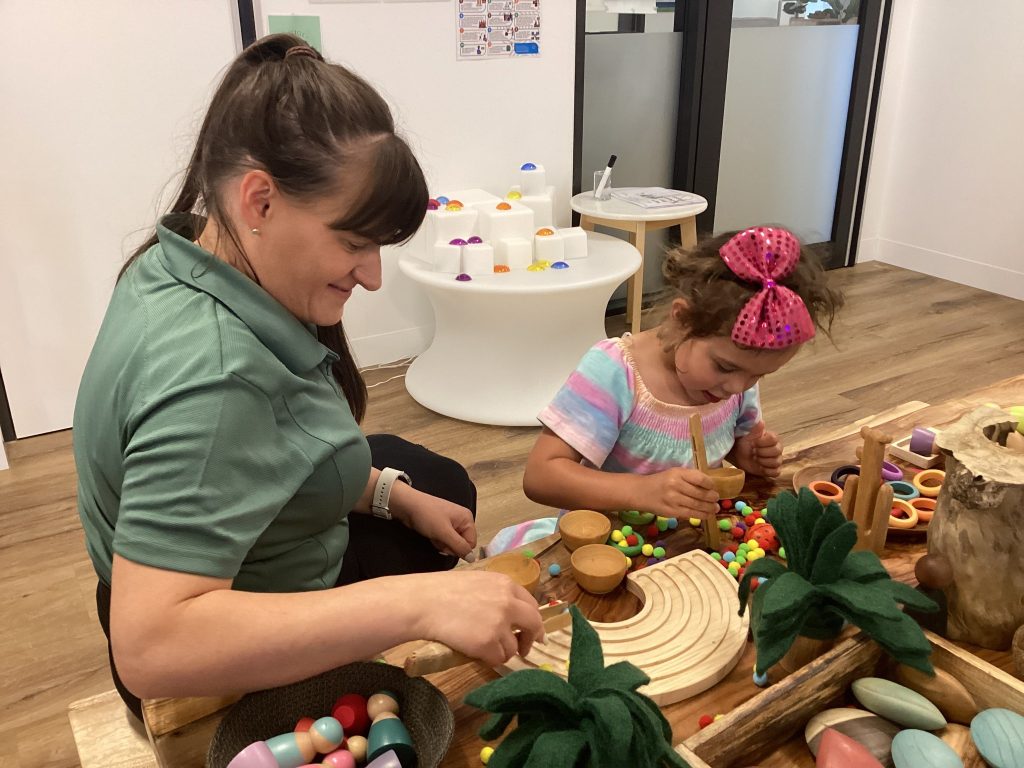
Choosing the right Kindergarten or Preschool Program for your child is an important decision, especially when balancing work; family life; and preparing your child for formalised schooling; all need to be considered. That’s why our Kindergarten and Preschool Programs are thoughtfully designed and led by Bachelor degree-qualified Teachers, to deliver educational excellence and a school readiness program - all with the convenience of long day care hours.
Led by university-qualified Early Childhood Teachers and guided by the approved Early Years Learning Framework (EYLF), our programs provide children with strong foundations for school and lifelong learning, all within a nurturing early education environment.
Why Choose Grow Early Education's Kindergarten or Preschool Program?
At Grow Early Education, our Kindergarten and Preschool Programs are designed to support busy families while still delivering a high-quality, government-approved early learning curriculum.
Here’s how Grow Early Education's Kindergarten or Preschool Program can be the perfect fit for your family:
- Long hours for working families: Enjoy extended care from early mornings to late afternoon, perfect for working parents or those with full schedules.
- 'Free' kindergarten or fee relief for Preschool for eligible children: Take advantage of Government funding, which means eligible children can attend 'Free' Kindergarten in Victoria and Queensland or receive fee relief for our Preschool Programs in New South Wales.

- Approved curriculum and added flexibility: Our program meets all of the educational requirements in a flexible, long day care environment. That means:
✅ flexibility for the number of hours and days you want your child to attend
✅ All-inclusive daily fees (meals, nappies, excursions, extra-curriculars, and access to our family communication app all in one fee)
✅ Year-round care, including school holidays
- A focus on key learning goals: We have been in consultation with local schools and they have guided us on the learning goals for children, that will assist them in their transition to formal school:
- Toileting – I can use the toilet and wash my hands by myself.
- Independence – I can open up my lunch box and fill up my own water bottle. I can dress and undress myself such as putting on my own shoes and hat.
- Emotional Skills – I can communicate my wants and needs.
- Name Writing & Recognition – I can recognise my name and attempt to write it.
- Cognitive Abilities – I can retell a story or event. I can solve problems on my own.
- Literacy & Numeracy Skills – I can recognise some letters and sounds. I can recognise some numbers. I can recognise some shapes.
- Social Skills Awareness – I can take turns with others. I can wait in line and follow instructions. I can ask and answer questions to take part in conversations.
- Fine Motor Skills – I can hold a pencil and crayon. I can cut and use scissors safely.
- Whole Body Listening – I can sit on the mat to participate in group time with my friends and teacher. I can actively take part in group learning.
- Formal discussions and transition statements: A formal discussion between parents and the teacher is held at the end of the year to support each child’s transition to school by collaboratively creating a transition statement. This strengths-based statement provides a snapshot of the child’s knowledge, skills, and dispositions across the five learning and development areas.
- School readiness initiatives to ease nerves: To help your child feel confident and excited about formalised school structures, we introduce regular school readiness initiatives. These could include fun and practical activities such as:
- Lunchbox days where children practice opening their own containers and eating from a packed lunch
- Uniform days where children wear their school uniforms, helping them prepare for daily routines and independence
- Visits to local schools across the year as part of your child’s transition to school process
- School-like routines such as sitting in group time, following simple instructions, and increasing independence with toileting and self-care
- Education-Focused: Children learn through play and structured learning activities in line with the Early Years Learning Framework (EYLF), led by qualified Early Childhood Teachers.
- Reduced transition stress: If your little one already attends one of our centres, our Kindergarten and Preschool Programs are delivered within the same nurturing environment your child already knows and loves. With consistent Educators, familiar routines, and strong peer relationships, children experience a smooth and secure learning journey. This continuity supports emotional well-being, builds confidence, and allows your child to fully engage in their day, without the added stress of adapting to multiple environments.
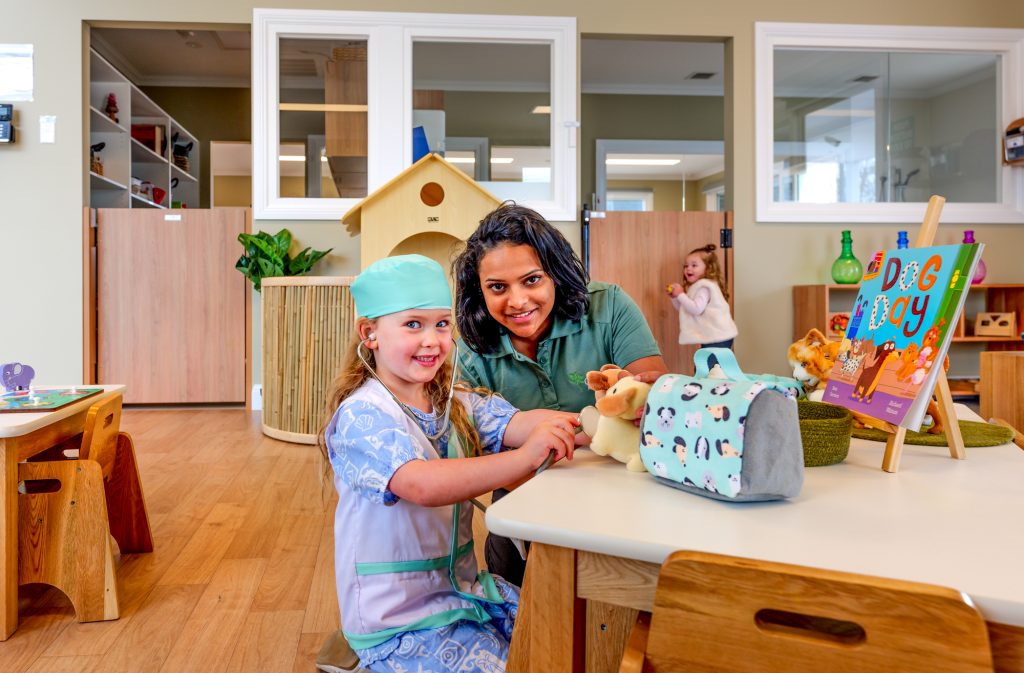
Planning ahead? We are now taking enquiries for our 2026 Kindergarten or Preschool Program. Register your interest today to secure your child’s place and give them a strong educational foundation.
Follow us on Facebook to stay up to date!
- Grow Early Education Bushland Beach
- Grow Early Education Bundaberg North
- Grow Early Education Darling Heights
- Grow Early Education Bridgeman Downs
- Grow Early Education Park Ridge
- Grow Early Education Toowoomba
- Grow Early Education Hervey Bay
- Grow Early Education Maroochydore
- Grow Early Education Dalby
- Grow Early Education Riverton
- Grow Early Education Gunnedah
- Grow Early Education Kelso
- Grow Early Education Nowra Central
- Grow Early Education Narre Warren North
- Grow Early Education Heathmont
- Grow Early Education Frankston
At Grow Early Education, Reconciliation Week is a time to come together to listen, learn, and reflect. In 2025, we embraced the powerful theme, Bridging Now to Next, with meaningful learning experiences that honoured Aboriginal and Torres Strait Islander history and culture. Across our centres, Educators thoughtfully created opportunities for children to explore, connect, and celebrate through art, music, storytelling, and sensory play.
Here’s a look at how our Grow Early Education centres brought Reconciliation Week to life:
Celebrating Culture and Community at Grow Early Education Hervey Bay
At Hervey Bay, children celebrated Reconciliation Week through a vibrant mix of storytelling, art, and music. They painted the Aboriginal and Torres Strait Islander flags on their hands, created dot paintings, and watched videos of the didgeridoo to deepen their cultural understanding. These engaging experiences fostered a sense of community and connection to Country.
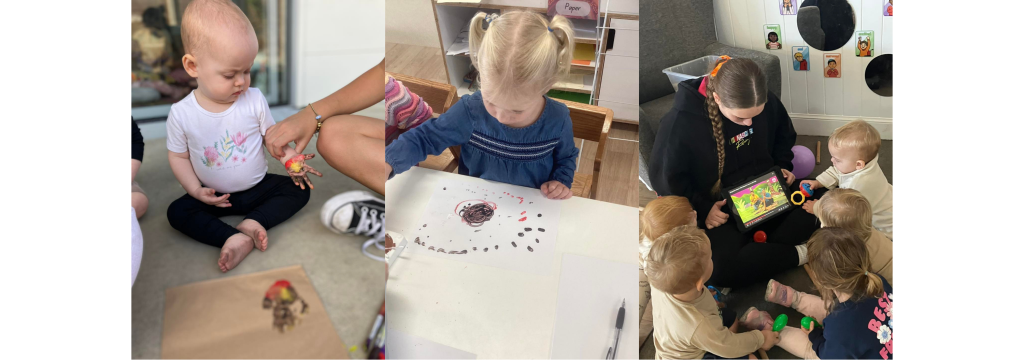
Sensory Play with Purpose at Grow Early Education Dalby
Children at Grow Early Education Dalby explored a unique sensory tray inspired by the Aboriginal flag. With colours and textures designed to spark curiosity, children squished and poked their way through the tray while being introduced to traditional Indigenous markings. Flashcards helped guide the children as they replicated the symbols, promoting conversation and cultural exploration through play.
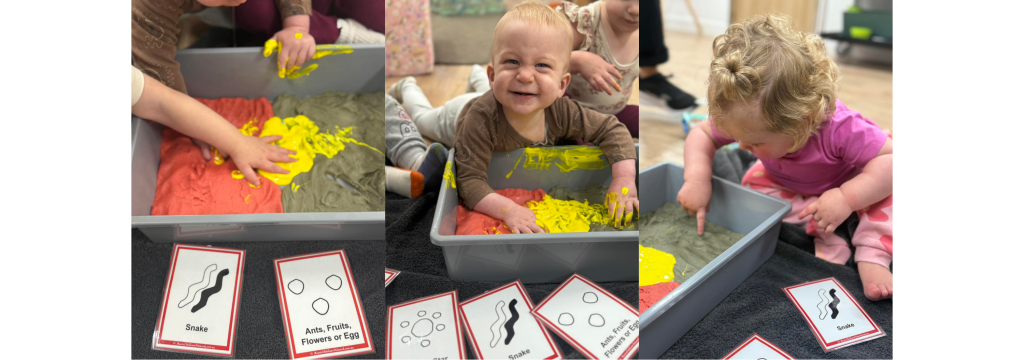
Natural Connections with the Toddlers at Grow Early Education Toowoomba
In the Toddler Classroom at Grow Early Education Toowoomba, children engaged in hands-on learning experiences that celebrated Indigenous culture. They practised stamping the Aboriginal flag using their hands and explored colour, patterns, and meaning, while drawing traditional cultural symbols in the sand. These experiences sparked rich, age-appropriate conversations about Reconciliation Week, helping children begin to understand the importance of connection to land, culture, and people.
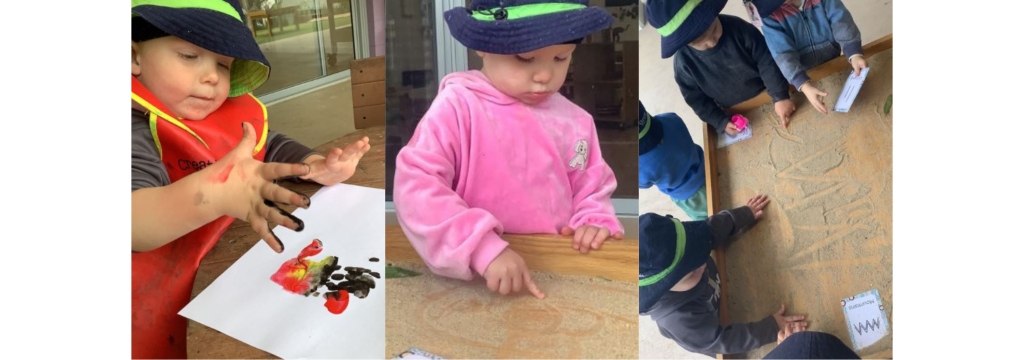
First Steps in Learning at Grow Early Education Toowoomba's Nursery Classroom
Even our littlest learners in the Nursery were invited to participate in age-appropriate ways. Educators introduced thoughtful books and resources to gently guide conversations around family, land, and connection to Country, laying the foundations for empathy and cultural awareness from the earliest years.
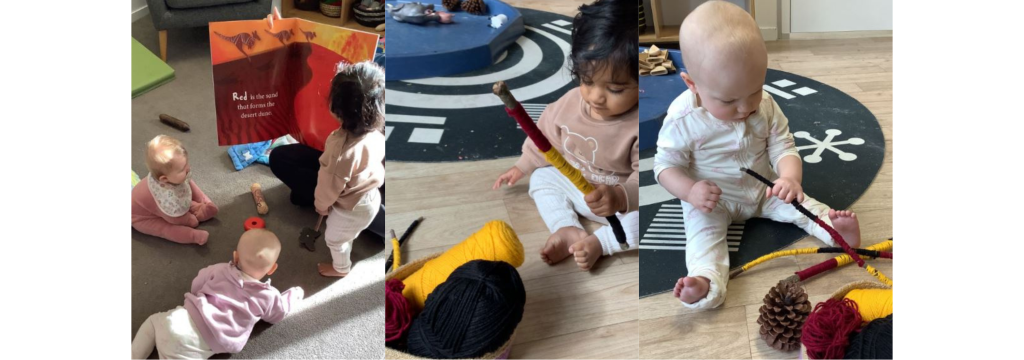
Reconciliation Week at Grow Early Education was a reminder that cultural understanding starts with open hearts and curious minds. Through age-appropriate and meaningful experiences, our Educators continue to embed First Nations perspectives into daily learning, ensuring every child grows up in an environment that values diversity, respect, and unity.
Together—now more than ever—we walk hand in hand toward a future built on truth, connection, and care for all cultures.
Follow us on Facebook to see how our Grow Early Education centres incorporate National Reconciliation Week into their curriculums.
- Grow Early Education Bushland Beach
- Grow Early Education Bundaberg North
- Grow Early Education Darling Heights
- Grow Early Education Bridgeman Downs
- Grow Early Education Park Ridge
- Grow Early Education Toowoomba
- Grow Early Education Hervey Bay
- Grow Early Education Maroochydore
- Grow Early Education Dalby
- Grow Early Education Riverton
- Grow Early Education Gunnedah
- Grow Early Education Kelso
- Grow Early Education Nowra Central
- Grow Early Education Narre Warren North
- Grow Early Education Heathmont
- Grow Early Education Frankston
At Grow Early Education, each day is a journey of discovery, growth, and fun. Our centres are thoughtfully designed to provide a nurturing environment where children feel safe, valued, and inspired to learn.
In today's blog, we are unpacking the routines at Grow Early Education, including child-initiated play, curriculum-led activities, and mealtimes.
Mealtime
At Grow Early Education, we offer fresh, healthy meals and snacks as part of our all-inclusive fee structure. Mealtimes are a valuable part of our educational program, and all meals are prepared fresh daily by our in-house chefs, with seasonal menus designed to provide over 50% of each child’s recommended daily intake of essential nutrients.
As children grow, they are encouraged to practice self-help skills, including serving themselves and cleaning up afterwards, building confidence, fine motor skills, and independence in a supportive environment.
For our youngest children in the nursery, we follow their home feeding routines as closely as possible. This helps create consistency between home and care, supporting both the child’s wellbeing and family routines.
Mealtimes at Grow Early Education are calm, social experiences where children learn about food, practice manners, and connect with others—all while enjoying healthy, delicious meals made with love.
Child-Initiated Play & Exploration
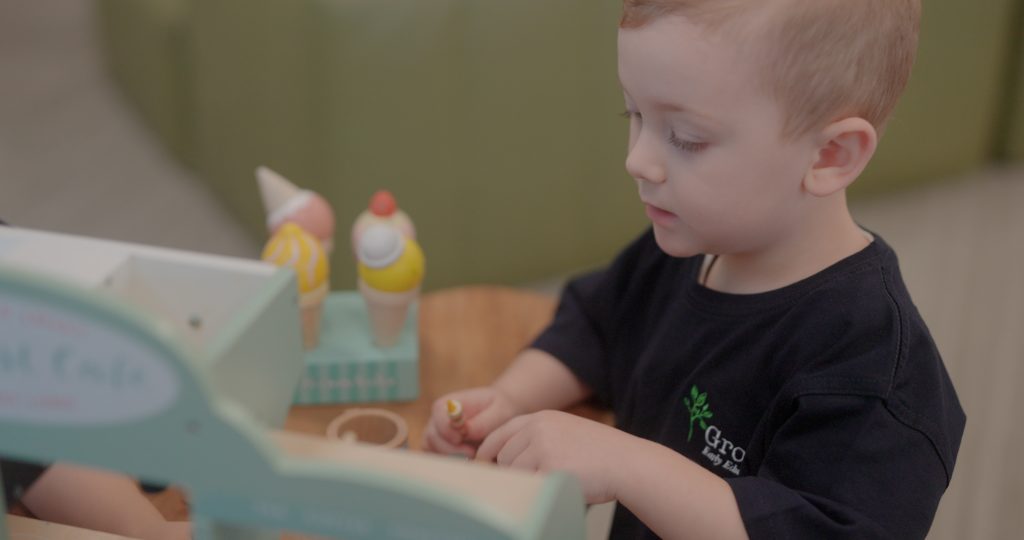
Children choose from a variety of inviting learning experiences, both indoors and outdoors. This time supports independence, creativity, and social interaction. Our environments are thoughtfully curated with open-ended materials that encourage exploration.
Group Time and Curriculum-Led Learning
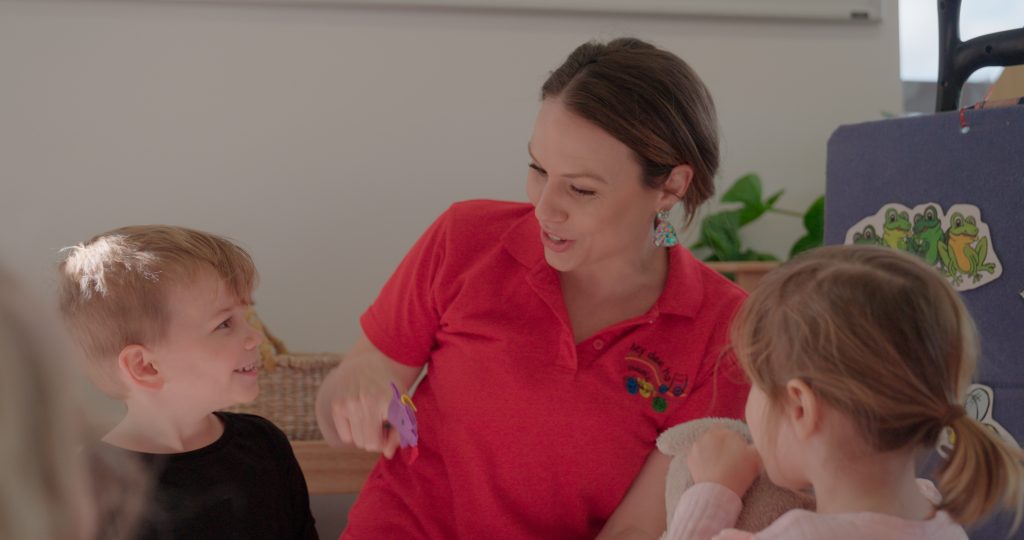
Educators introduce intentional, curriculum-led experiences based on children’s interests and developmental needs. This might include:
- Language and literacy activities
- Numeracy games
- Science and nature exploration
- Group discussions or stories
Children collaborate with their peers and continue working on their learning experiences based on the Early Years Learning Framework and curriculum. Educators use a play-based approach and exploration through art and creativity, STEM provocations, and social-emotional group discussions.
Extra-curricular Programs
We offer extra-curricular activities included in our daily fee. This could include specialist sessions such as music and movement, children’s yoga, physical activity and sports, language lessons, cooking classes, or gardening lessons. Each of these lessons sparks the children’s curiosities in a new and exciting way and allows them to further explore new experiences and work to complement our curriculum and support the development of young learners, whether it be intellectually, emotionally, physically, or socially.
Outdoor Discovery & Free Play
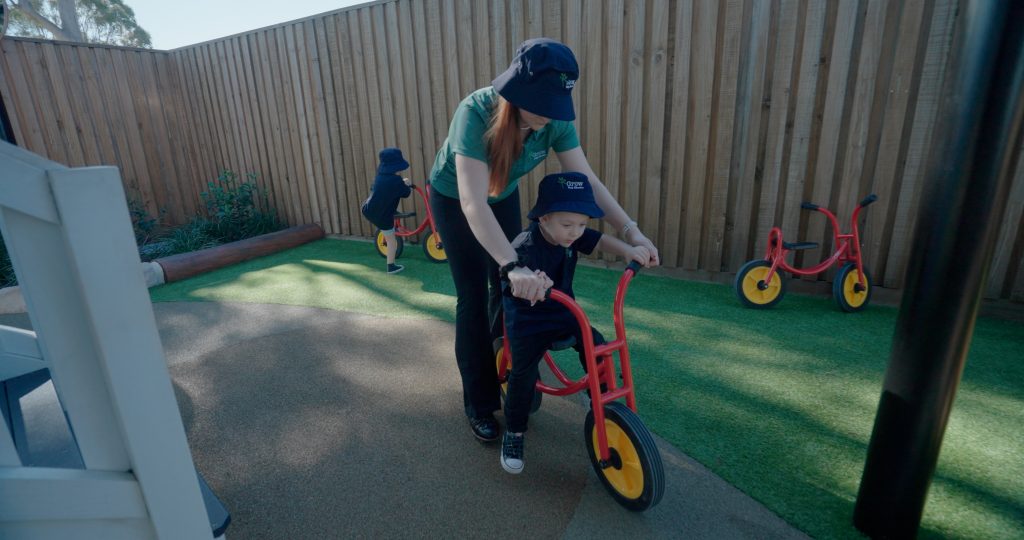
Outdoor play is a vital part of our day at Grow Early Education. Our large, spacious yards are the ideal environment for children to collaborate and explore open-ended play. Whether they are building in the sandpits, exploring the vegetable patch, playing games with peers or practising risk-play, children are constantly learning through movement and discovery.
We also embrace nature-based learning as part of our core philosophy where children engage in their natural surroundings through activities such as gardening, water play, or scavenger hunts. Some of our centres also include Bush Kindy as an extra-curricular whereby the children explore nature outside of the centre. These moments foster a deep sense of wonder and appreciation for their surroundings.
Sleep and Rest
At our centres, we recognise the importance of rest in a child’s development. While our Younger children transition into a restful nap in calm, cozy sleep spaces, the older children who don’t sleep are offered quiet activities such as puzzles, books, or mindfulness moments to relax. These experiences help children to reset, process their learning, and develop emotional regulation.
By respecting each child’s individual needs, we are ensuring that each and every child is feeling refreshed, supported, and ready for the afternoon ahead.
For our youngest children in the nursery, we follow their home sleeping routines as closely as possible. This helps create consistency between home and care, supporting both the child’s wellbeing and family routines.
Once the day begins to slow down with indoor play, quiet reading, and reflective conversations. Educators support conversations on the children’s days by encouraging reflection on what they learned or accomplished, helping to build a sense of pride and self-awareness.
At Grow Early Education, every moment is filled with purpose, whether it’s guided by our educational program or led by the child’s natural curiosity. Each moment at our centre is a chance to learn, connect, and develop.
Each of our Grow Early Education centres routines vary across age groups, locations, and days. Give our Enrolments Team a call today on 1300 934 769 to book a tour of your local Grow Early Education centre to learn more about their individual daily routines.
Find a Grow Early Education centre near you!
- Grow Early Education Bushland Beach
- Grow Early Education Bundaberg North
- Grow Early Education Darling Heights
- Grow Early Education Bridgeman Downs
- Grow Early Education Park Ridge
- Grow Early Education Toowoomba
- Grow Early Education Hervey Bay
- Grow Early Education Maroochydore
- Grow Early Education Dalby
- Grow Early Education Riverton
- Grow Early Education Gunnedah
- Grow Early Education Kelso
- Grow Early Education Nowra Central
- Grow Early Education Narre Warren North
- Grow Early Education Heathmont
- Grow Early Education Frankston
At Grow Early Education, we believe that learning goes far beyond the classroom, and one of the most powerful lessons begins right in the garden. As part of our all-inclusive childcare programs, gardening is a key component of our curriculum for children across all of our classrooms. Through our hands-on gardening lessons, children are learning valuable life lessons on curiosity, wellbeing, and healthy habits.
Gardening provides a wealth of benefits during the early learning years, from Toddlers exploring the textures in the soil to Kindergarten and Preschoolers nurturing growth from seeds through to harvest. This type of sensory-rich, outdoor activity supports holistic development across physical, cognitive, social, and emotional skillsets.
Here’s how gardening at our childcare centres helps young children thrive:
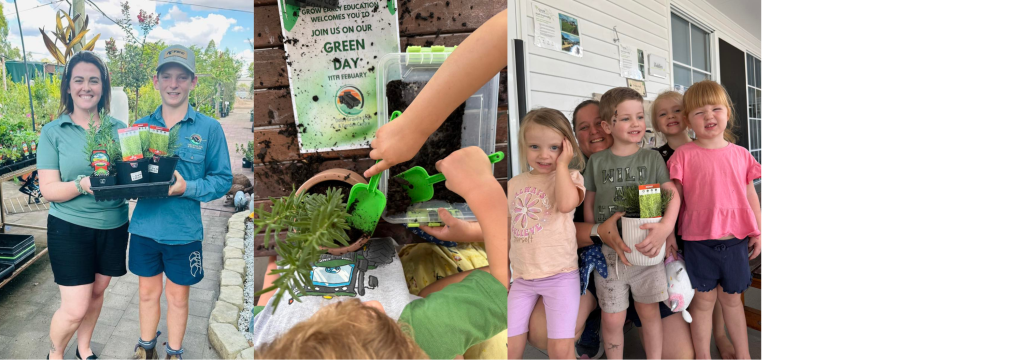
Physical Development
Digging, planting, watering, and harvesting help build fine and gross motor skills. Children develop strength, coordination, and dexterity while staying active and engaged outdoors.
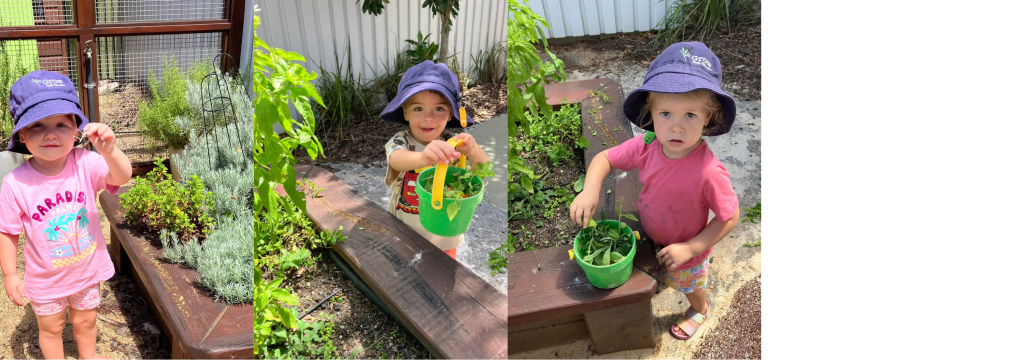
Cognitive Growth
Gardening teaches science in real-time. Children explore plant life cycles, weather patterns, and ecosystems, helping them understand the world around them. They also learn responsibility and patience as they care for their growing plants.
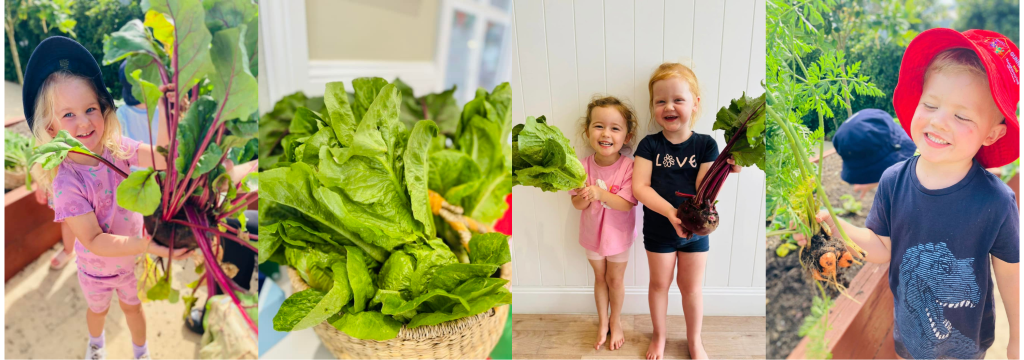
Emotional Wellbeing
Spending time in nature has been proven to reduce stress and increase calmness in children. Gardening builds self-esteem and pride, as children see the results of their efforts bloom and grow.
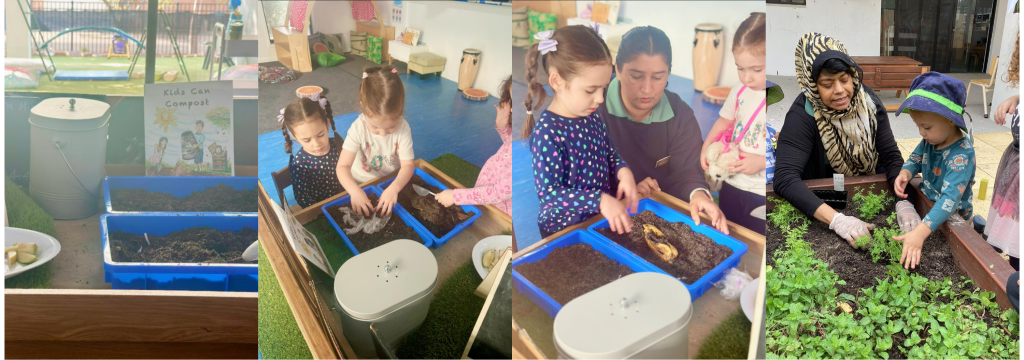
Social Skills
Whether they’re working in teams to tend to a veggie patch or taking turns with watering cans, gardening encourages cooperation, communication, and empathy.
At Grow Early Education, we’re proud to offer gardening experiences at all of our daycare centres as part of our all-inclusive fee structure. That means families can enjoy the benefits of this enriching activity at no extra cost. Our outdoor learning environments are purposefully designed to include edible gardens, flower beds, and even worm farms, giving children a deeper connection to nature and sustainable living.
Our passionate Educators integrate gardening into our daily routines and learning programs, aligning with both the Early Years Learning Framework and the Abecedarian Approach Australia to nurture a love of the environment from an early age.
Whether it’s tasting and smelling the herbs they’ve grown or spotting the first sprout from a seed they planted, children at Grow Early Education are constantly discovering, experimenting, and learning. And as any gardener knows, those early roots make all the difference.
Stay up to date with our Grow Early Education centres on Facebook to see how they use gardening in their everyday curriculums.
- Grow Early Education Bushland Beach
- Grow Early Education Bundaberg North
- Grow Early Education Darling Heights
- Grow Early Education Bridgeman Downs
- Grow Early Education Park Ridge
- Grow Early Education Toowoomba
- Grow Early Education Hervey Bay
- Grow Early Education Maroochydore
- Grow Early Education Dalby
- Grow Early Education Riverton
- Grow Early Education Gunnedah
- Grow Early Education Kelso
- Grow Early Education Nowra Central
- Grow Early Education Narre Warren North
- Grow Early Education Heathmont
- Grow Early Education Frankston
At Grow Early Education, we believe in giving every child the best start to their educational journey. One of the most powerful tools we use in our long day care and kindergarten/Preschool programs is phonics. Phonics is a foundational skill that plays a key role in developing early reading, language, and communication abilities and supports confidence in early childhood.
In this week’s blog, we’re exploring the importance of phonetic sounds and how they help shape confident, capable learners—setting children up for success not only in school but in life.
What is Phonics?
Phonics is the method of teaching children the relationship between sounds and the letters or groups of letters that represent those sounds. Rather than memorising whole words by sight, phonics helps children decode words by sounding them out.
For example:
- A makes the sound “ah” as in apple.
- B makes the sound “buh” as in ball. ⚽
- S makes the sound “sss” as in sun. ☀️
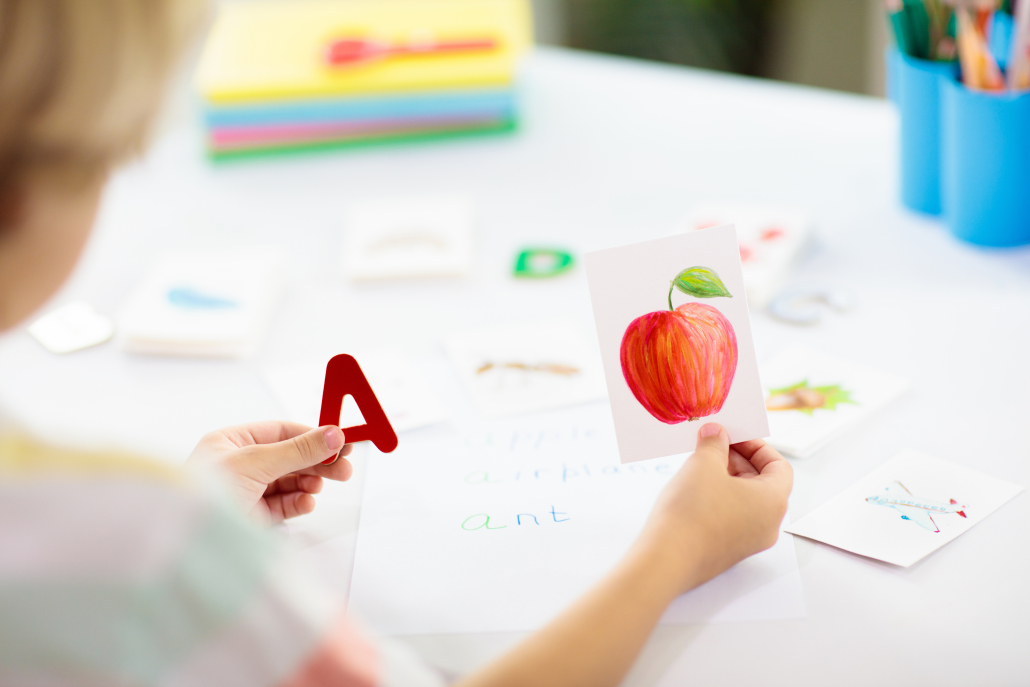
Understanding these sounds gives children the tools they need to decode unfamiliar words, improve their spelling, and become confident readers and communicators.
Research shows that phonics instruction significantly improves children’s reading and writing skills. At Grow Early Education, we understand how critical this stage is in a child’s development. That’s why our qualified Educators and Early Childhood Teachers incorporate phonics and phonemic awareness into our daily routines.
Phonics helps children:
- Recognise and produce individual letter sounds
- Blend sounds together to read new words
- Identify sounds at the beginning, middle, and end of words
- Develop strong vocabulary and comprehension skills
- Grow in confidence and enjoy the process of learning

Our curriculum is guided by the Early Years Learning Framework (EYLF), which emphasises communication, literacy, and language development as key learning outcomes. Phonetic learning aligns beautifully with the EYLF’s vision for children to become confident and effective communicators.
Through play-based learning experiences that are both meaningful and engaging, we provide opportunities for children to explore sounds, language, and storytelling in ways that feel natural and fun.
At Grow Early Education, we also follow the Abecedarian Approach – a research-based teaching method that supports language development through intentional, high-quality interactions. This includes strategies such as:
- Learning Games that promote turn-taking and communication
- Conversational Reading that fosters vocabulary and comprehension
- Language Priority in everyday routines
These strategies complement phonetic learning, helping children not only understand sounds but also use language to express ideas, ask questions, and build relationships.
Families play an important role in supporting their child’s early literacy journey. Here are a few simple ways you can reinforce phonics at home:
- Read with your child every day and talk about the sounds letters make
- Sing songs and nursery rhymes that play with rhyme and rhythm
- Play games like “I Spy” using beginning letter sounds
- Encourage your child to sound out words while reading signs, labels, and books
We are passionate about creating a love for learning that lasts a lifetime. By integrating phonics into our early education program, we empower children to build strong literacy foundations, setting them up for success as they move through kindergarten and beyond.
Discover how we bring the Early Years Learning Framework and the Abecedarian Approach Australia (3a) to life with phonics and more —follow us on Facebook to see meaningful learning in action.
- Grow Early Education Bushland Beach
- Grow Early Education Bundaberg North
- Grow Early Education Darling Heights
- Grow Early Education Bridgeman Downs
- Grow Early Education Park Ridge
- Grow Early Education Toowoomba
- Grow Early Education Hervey Bay
- Grow Early Education Maroochydore
- Grow Early Education Dalby
- Grow Early Education Riverton
- Grow Early Education Gunnedah
- Grow Early Education Kelso
- Grow Early Education Nowra Central
- Grow Early Education Narre Warren North
- Grow Early Education Heathmont
- Grow Early Education Frankston
